What “Lodges in Uganda” Actually Means
The term “lodge” in Uganda covers a wider range of accommodation than most first-time visitors expect. At the top end, properties such as Sanctuary Gorilla Forest Camp and Clouds Mountain Gorilla Lodge offer full-board stays with private guides, bush dinners and rates above $500 per night. In the mid-range, lodges like Murchison Treehouse, Kyambura Gorge Lodge and Kyaninga Lodge provide comfortable rooms, good food and knowledgeable staff for $120–$300 per night. And at the budget end, community-run properties — Bwindi Backpackers Lodge, Red Chilli Rest Camp, the Buhoma Community Rest Camp — offer clean beds within walking distance of park gates for as little as $20–$40 a night.
All lodges operating inside or adjacent to Uganda’s national parks fall under the jurisdiction of the Uganda Wildlife Authority (UWA), which has managed the country’s ten national parks since its establishment in 1996. UWA oversees more than 30 tourism concessions across wildlife reserves and forest reserves, and works alongside the Ministry of Water and Environment (MWE), the National Environment Management Authority (NEMA), and the National Forestry Authority (NFA). Under the National Environment (Audit) Regulations S.I. No. 47 of 2020, luxury tented camps, lodges, hotels, resorts and beach facilities in or near wildlife reserves, forest reserves or wetlands are required to undergo environmental compliance audits. This regulatory framework means that lodges in Uganda’s protected areas operate under meaningful environmental oversight — a fact that often surprises visitors accustomed to looser standards elsewhere in East Africa.
The Uganda Hotels and Lodges Association and the Association of Uganda Tour Operators coordinate industry standards across the private sector. The Uganda Community Tourism Association promotes community-based ecotourism — properties owned and run by local communities adjacent to national parks. These organisations, together with the Tour Guides Forum for Uganda and the Uganda Travel Agents Association, form the institutional backbone of an industry that generated 7,311 billion Uganda shillings in gross value added in 2023, according to the Uganda Tourism Satellite Account Report of March 2025.
Where to Stay — Lodges in Every Region
Uganda’s lodge landscape spans the country’s entire geography, from the shores of Lake Victoria to the semi-arid plains of Karamoja. Below is an honest summary of each major region, based on properties I have visited, researched individually, or spoken to managers about directly.
Bwindi Impenetrable National Park
Bwindi is the reason most travellers come to Uganda. Roughly half of the world’s remaining mountain gorillas live here, and the lodges cluster around four trekking sectors. In Buhoma, the most established sector, you will find Buhoma Lodge, Sanctuary Gorilla Forest Camp and budget options like Bwindi Backpackers Lodge. Ruhija, the highest-altitude sector, is served by Ruhija Gorilla Safari Lodge and Cuckooland Tented Lodge. Rushaga, the largest sector with the most gorilla families, offers Clouds Mountain Gorilla Lodge and Chameleon Hill Lodge. Nkuringo, the steepest sector, has Nkuringo Bwindi Gorilla Lodge.
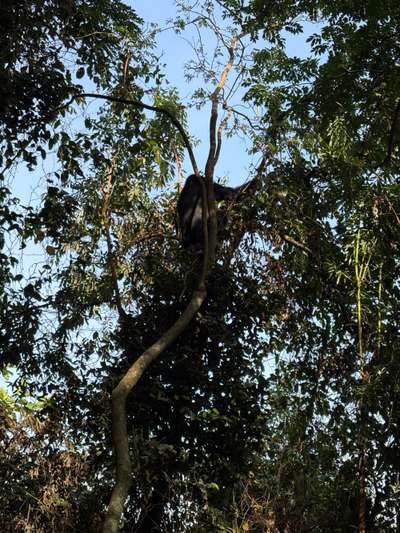
During our January 2026 gorilla trekking, we set out from the registration point in Buhoma shortly after seven in the morning. Within the first hour of walking, the tracking guides located a gorilla family. The silverback was perched in the canopy of a large tree, tearing off leaves and eating with an unhurried calm that made it impossible to look away. That single encounter — roughly forty minutes of watching and photographing from a few metres’ distance — justified everything: the long drive from Kampala, the muddy trails, the altitude. Every lodge in Bwindi exists because of moments like this one.
Queen Elizabeth National Park
Queen Elizabeth National Park is Uganda’s most-visited savanna park, known for tree-climbing lions in the Ishasha sector and hippo-dense boat safaris along the Kazinga Channel. Mweya Safari Lodge occupies a peninsula between Lake Edward and the Kazinga Channel — one of the most scenic lodge locations in the country. Kyambura Gorge Lodge overlooks the gorge where habituated chimpanzees live. In the Ishasha sector, Ishasha Jungle Lodge and Ishasha Wilderness Camp put you within driving distance of the famous fig trees where lions drape themselves across branches. Kasenyi Safari Camp and Ihamba Lakeside Safari Lodge serve the central circuit.
Murchison Falls National Park
Murchison Falls is Uganda’s largest national park, split by the Nile into a northern game-viewing sector and a southern sector with primate walks in Budongo Forest. Paraa Safari Lodge sits at the ferry crossing and has been hosting safari visitors since the 1950s. Bakers Lodge, named after the explorer Samuel Baker, offers luxury tented accommodation on the south bank. Chobe Safari Lodge and Pakuba Safari Lodge provide river-facing rooms on the north bank. For mid-range stays, Murchison Treehouse and Fort Murchison offer solid value. Budget travellers use Red Chilli Rest Camp. On the Budongo side, Budongo EcoLodge combines forest walks with chimpanzee tracking.
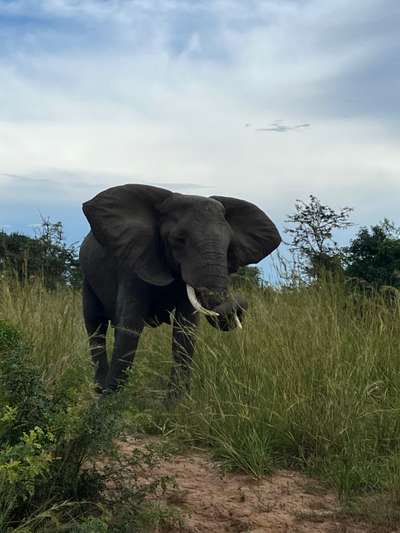
Our October 2024 visit to Murchison lasted several days. We left the lodge before dawn for the morning game drive and watched the sunrise break across the savanna in deep orange and red, with palm trees and acacias silhouetted against the sky — one of those moments where the light itself justifies the early alarm. Later, on the boat safari upriver towards the falls, we spotted Nile crocodiles resting on the banks. They were at a comfortable distance from the boat, but even from there, the sheer size and speed of these animals was striking. On a separate drive, a solitary elephant emerged from the tall grass, tusks white against its dark hide, and walked parallel to us for several unhurried minutes. Each of these encounters happened within a short drive or boat ride of the lodge.
Kidepo Valley National Park
Kidepo Valley is Uganda’s most remote national park, in the far northeast near the South Sudan border. It is home to 77 mammal species and 475 recorded bird species, including species found nowhere else in Uganda. Apoka Safari Lodge is the only luxury option inside the park, with bandas overlooking the Narus Valley. Kidepo Savannah Lodge and Nga’Moru Wilderness Camp offer more affordable alternatives. Access is by domestic flight (Fly Uganda operates charters) or a ten-to-twelve-hour drive from Kampala.
Kibale Forest and Fort Portal
Kibale Forest National Park, often called the primate capital of the world, has 13 primate species including habituated chimpanzees. Kibale Primate Lodge is the closest property to the tracking starting point. The Ndali-Kasenda crater lakes area, a short drive from the park, offers some of Uganda’s most scenic lodge settings: Ndali Lodge overlooks its own crater lake, Kyaninga Lodge sits on the rim of Kyaninga Crater Lake, and Papaya Lake Lodge, Crater Safari Lodge, Isunga Lodge and Turaco Treetops Lodge are all within the same crater-studded landscape. Fort Portal town serves as the supply and transport hub for all Kibale-area lodges.
Rwenzori Mountains
The Rwenzori Mountains, a UNESCO World Heritage Site rising to 5,109 metres, are Uganda’s highest peaks. Lodge options are limited compared to the savanna parks — Equator Snow Lodge is the main base for trekkers, with Rwenzori Trekking Services coordinating the multi-day ascents. Hotel Margherita in the town of Kasese serves as a practical overnight stop before or after the mountains.
Jinja and the Nile
Jinja, at the historical source of the Nile, is Uganda’s adventure capital. Lemala Wildwaters Lodge sits on a private island in the Nile rapids and is one of the most unusual lodge locations in Africa. The Haven Eco River Lodge offers mid-range stays overlooking the river, and Nile River Camp provides tented accommodation upstream. Nile Horseback Safaris operates riding excursions from the area. Further east, Sipi Falls Lodge and Sipi River Lodge overlook the Sipi Falls on the western slopes of Mount Elgon.
Kampala and Entebbe
Most visitors to Uganda begin or end their trip in Kampala or Entebbe. In Kampala, the Serena Hotel — a five-star property of the Kenyan Serena group with 152 rooms and suites on Nakasero Hill — anchors the luxury end. Cassia Lodge, a boutique hotel with a wood-and-natural-stone facade on Buziga Hill about ten kilometres east of the city centre, run by Belgian owners, offers a quieter alternative. Yellow Haven Lodge sits on the shore of Lake Victoria in Kawuku, with a private jetty and apartments. In Entebbe, several properties within a short drive of the international airport cater to first-night and last-night stays — see our guide to lodges near Entebbe Airport for a full comparison.
Lake Bunyonyi and Mgahinga
Lake Bunyonyi, a crater lake with 29 islands at 1,962 metres altitude, sits between Bwindi and Mgahinga. Lodges here include Arcadia Lodge, Sharp Island Gorilla Lodge and Bunyonyi Safari Resort. Many travellers use the lake as a rest stop between gorilla trekking in Bwindi and golden monkey trekking in Mgahinga. At Mgahinga Gorilla National Park, Mount Gahinga Lodge is the primary accommodation, supported by the Mgahinga Community Development Organization.
Semliki and the Western Rift
Semliki Safari Lodge provides access to Semliki National Park and its hot springs. Further north, Ntoroko Game Lodge sits near the Toro-Semliki Wildlife Reserve, and Hoima Cultural Lodge serves as a transit point for travellers heading between Fort Portal and Murchison Falls. The area remains one of Uganda’s least-visited lodge regions — accommodation options are few, but the isolation is part of the appeal.
The People Behind the Lodge Door
Tourism in Uganda is not an abstraction. It is the reason Norman Noel has a motorcycle, and it is the reason Buhoma has a paved road, a health centre and a school that functions. When lodges fill, boda-boda riders have fares, market vendors sell fruit and crafts, and tracking guides earn a living that keeps their families in the village rather than pushing them towards Kampala. When lodges empty — during disease outbreaks, political instability, or global travel disruptions — the entire chain feels it within days.
Norman put it plainly during a later conversation: “If I can get a chance of getting a driving licence, I will have to expand my business of driving. At least I advance from a motorcycle to a car. I meet my friends from USA, UK, Germany, everywhere. I start exploring Uganda as my dream for exploring.” His ambition is modest and specific — a licence, a car, the chance to guide visitors himself. It depends entirely on the lodges staying open and the tourists continuing to arrive.
Community-run lodges formalise this relationship. Properties like the Buhoma Community Rest Camp, the Ruhija Community Rest Camp and the Amajambere Iwacu Community Camp return revenue directly to the villages that host them. The Uganda Community Tourism Association coordinates these initiatives, and several national parks operate revenue-sharing schemes where a percentage of park entry fees flows to adjacent communities. This is not charity — it is economic infrastructure. When travellers choose a community-owned lodge, they are putting money into an economy that has no meaningful alternative income source.
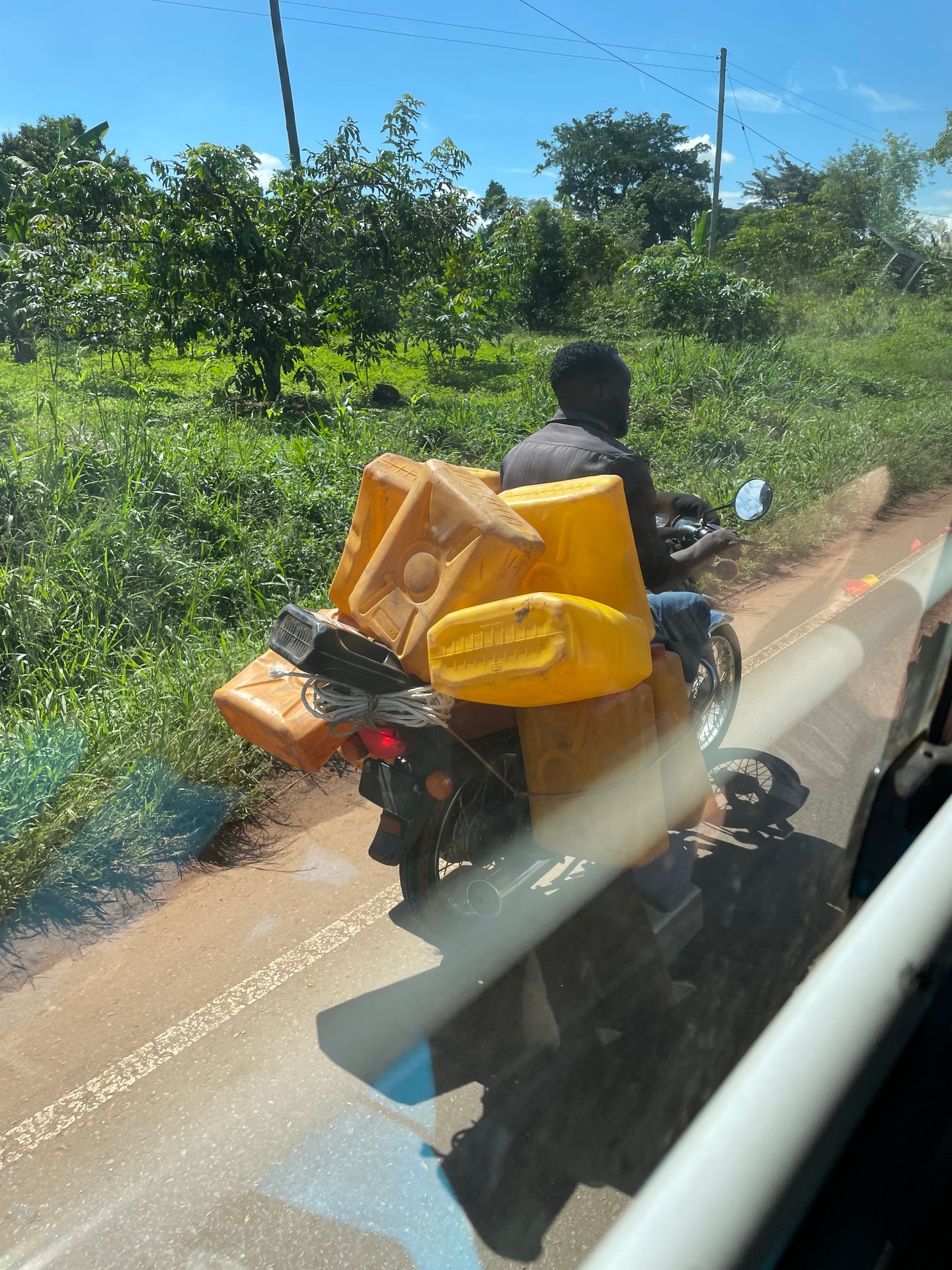
During our drives between parks, we saw the everyday reality of this economic dependence through the car window: boda-boda riders hauling impossible loads of water canisters without helmets or proper footwear, a sight that would be inconceivable in Europe but is simply how logistics work in rural Uganda. At a school near Mount Elgon, we walked into a kitchen where meals were being prepared over an open fire on a dirt floor, thick smoke filling the room because there was no ventilation or chimney. The conditions were, frankly, distressing — and a reminder that tourism revenue is one of the few mechanisms by which these communities can invest in better infrastructure.
How to Choose a Lodge in Uganda
Three variables drive the decision: where you are going, what you want to do, and what you are comfortable spending. The region determines the shortlist — gorilla trekking means Bwindi or Mgahinga; tree-climbing lions mean Ishasha; Nile boat safaris mean Murchison Falls. The activity determines proximity — you want the lodge closest to the starting point of the activity, because Uganda’s roads turn a twelve-kilometre drive into a forty-minute journey. And the budget determines the tier — luxury, mid-range or budget.
Luxury ($300–$800+ per night)
Properties like Clouds Mountain Gorilla Lodge, Sanctuary Gorilla Forest Camp, Bakers Lodge and Apoka Safari Lodge. Expect full board, private guides, bush dinners, and rates that include most activities. These lodges typically have twelve rooms or fewer, which keeps the experience intimate.
Mid-range ($100–$300 per night)
The sweet spot for most travellers. Lodges like Buhoma Lodge, Murchison Treehouse, Kyaninga Lodge, Kyambura Gorge Lodge, Mweya Safari Lodge and Ndali Lodge. Rooms are comfortable, food is good, and staff are knowledgeable. Most offer half-board or full-board options.
Budget ($20–$100 per night)
Bwindi Backpackers Lodge, Red Chilli Rest Camp, the community rest camps, and Y.E.S. Uganda Hostel. Basic but clean, often with a communal atmosphere. Many budget travellers combine these with self-catering or meals at nearby restaurants.
For timing, Uganda’s peak season runs from June to September and December to February. Gorilla permits should be booked three to six months ahead during these months. The rainy season (March to May, October to November) brings lower rates — often 20–40 per cent off — and fewer visitors on trails. International visitors stayed an average of 7.6 nights in 2023 (Uganda Tourism Satellite Account Report, March 2025), but ten to fourteen days is a more realistic minimum if you want to combine Bwindi with a savanna park.
Our Lodge Finder lets you filter by region, price level and activities. The full lodge directory lists every property individually, with descriptions, categories and contact information. For route planning, the Entebbe-to-Bwindi route guide and the region-by-region accommodation overview provide practical starting points.
Environmental Standards for Lodges in Uganda
Uganda takes the environmental footprint of its tourism accommodation seriously. Four key institutions oversee compliance: the Ministry of Water and Environment (MWE), the National Environment Management Authority (NEMA), the Uganda Wildlife Authority (UWA), and the National Forestry Authority (NFA). Together, they administer the regulations that govern how lodges operate in sensitive ecosystems.
Under the National Environment (Audit) Regulations S.I. No. 47 of 2020, any luxury tented camp, lodge, hotel, resort or beach facility located in or near a wildlife reserve, forest reserve or wetland must undergo regular environmental compliance audits. These audits assess waste management, water use, energy consumption and impact on surrounding biodiversity. The National State of the Environment Report 2024 (NSOER 2024) documents both the pressures on Uganda’s tourism industry — including disease outbreaks, climate-related disruptions and infrastructure gaps — and the policy responses designed to balance economic growth with conservation.
For travellers, this means that most established lodges in Uganda’s national parks are not operating in a regulatory vacuum. The properties listed on this site have been individually researched, and our eco-tourism guide explains how revenue-sharing, conservation fees and environmental standards work in practice.