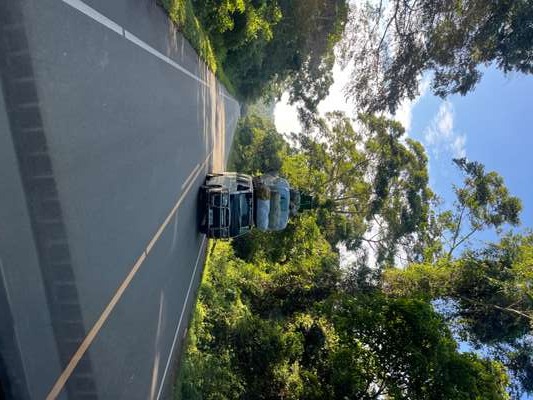
Somewhere between Butiru and Murchison Falls National Park, on a well-paved stretch of road flanked by tropical vegetation, a passenger minibus appeared in the oncoming lane carrying a load that defied belief. Stacked on its roof, rising to roughly double the vehicle’s height, was a tower of mattresses and household goods lashed down with ropes and optimism. The scene looked precarious, comical, and entirely ordinary — other drivers passed it without a second glance. It was, as I would come to understand after multiple visits, typical Uganda: a country where logistics are improvised, resources are maximised, and the road between you and your safari lodge is part of the experience.
That moment happened during my five-day trip in October 2024, the first of three visits I made to Uganda between 2024 and 2026. Over those trips, I drove through Kampala’s chaotic traffic, stopped at the newly built entrance gate to Murchison Falls National Park, watched Nile crocodiles from a boat on the Victoria Nile, and photographed boda-boda riders hauling water canisters on rural roads. Every image on this page is one I took myself, GPS-tagged to the location where I stood. The lodges in Uganda that I visited and the roads I took to reach them form the basis of this guide — not desk research, but boots on the ground.
Choosing a safari lodge in Uganda involves more than comparing prices and reading reviews. It means understanding the road conditions between Kampala and the national parks, knowing what environmental standards the lodge must meet under Ugandan law, and deciding whether Kampala itself deserves a night of your itinerary. This guide covers what most lodge directories leave out: the journey, the regulations, and the context that turns a booking into an informed decision.
Environmental Audits — What Lodges in Uganda Are Required to Do
Every lodge and hotel operating in or near a protected area in Uganda is subject to environmental audit requirements under Statutory Instrument No. 47 of 2020 — the National Environment (Audit) Regulations. This legislation, issued under Uganda’s National Environment Act, requires tourism businesses to undergo periodic environmental audits that assess waste management practices, water consumption, energy use, chemical handling, and ecological impact on surrounding ecosystems. The regulatory authority is NEMA, the National Environment Management Authority, which reviews audit reports and can issue compliance orders or penalties for non-conforming properties.
For travellers choosing between lodges in Uganda, this regulation matters more than most realise. A lodge that complies with S.I. 47 of 2020 has demonstrated that its waste does not contaminate local water sources, that its construction did not encroach on protected wetlands, and that its operations are periodically reviewed by qualified environmental auditors. The audit process covers the full operational footprint of a lodge: kitchen waste disposal, sewage treatment, firewood or charcoal sourcing, generator fuel storage, and the impact of guest activities on surrounding wildlife habitats.
The practical implication for lodge owners is significant. Environmental audits require engaging certified auditors, preparing documentation on resource consumption, and implementing corrective actions where deficiencies are identified. For smaller, community-run lodges operating on thin margins, the compliance costs can be burdensome. For larger properties with international backing, the audits are an operational routine that aligns with the sustainability commitments they market to environmentally conscious travellers. The gap between these two realities — the well-resourced lodge that treats compliance as a marketing asset and the community lodge that struggles to afford the process — is one of the structural tensions in Uganda’s tourism sector.
Tourism itself is a major economic sector in Uganda: it creates jobs, generates foreign exchange revenue, and drives infrastructure investment in regions that would otherwise receive minimal public spending. The lodges, hotels, and safari camps that serve international visitors are the commercial interface between Uganda’s wildlife assets and the global tourism market. Environmental regulations like S.I. 47 of 2020 exist to ensure that this commercial activity does not degrade the natural resources it depends on — a tension that every tourism-dependent country must navigate, and that Uganda has addressed with specific, enforceable legislation.
Emily Assimwe, a store owner in Buhoma who supplies provisions to several nearby lodges, has observed the relationship between lodge operations and community life first-hand over many years. [QUOTE: Emily Assimwe on how lodge sustainability practices affect local businesses and water sources in Buhoma] Her perspective captures something that environmental audit reports do not: the lived experience of communities whose daily resources — water, firewood, road access — are shared with tourism operations that serve international guests.
The Road to Your Lodge — Kampala, Murchison Falls, and Everything Between
Every safari in Uganda begins with a road journey from Kampala or Entebbe, and the character of that journey is part of what makes the country’s lodge experience distinctive. Driving through Kampala after being collected from Entebbe Airport in January 2026, the capital was exactly as I remembered from my first visit fifteen months earlier: a dense, honking, vibrant press of boda-boda motorcycles, matatu minibuses, trucks, bicycles, and pedestrians occupying every available metre of road. The roadside was lined with small stalls and shops — vendors selling airtime, roasted maize, jerry cans, and everything else a city of nearly two million people needs. The impression was one of relentless energy, of a city operating at full capacity with infrastructure struggling to keep pace.
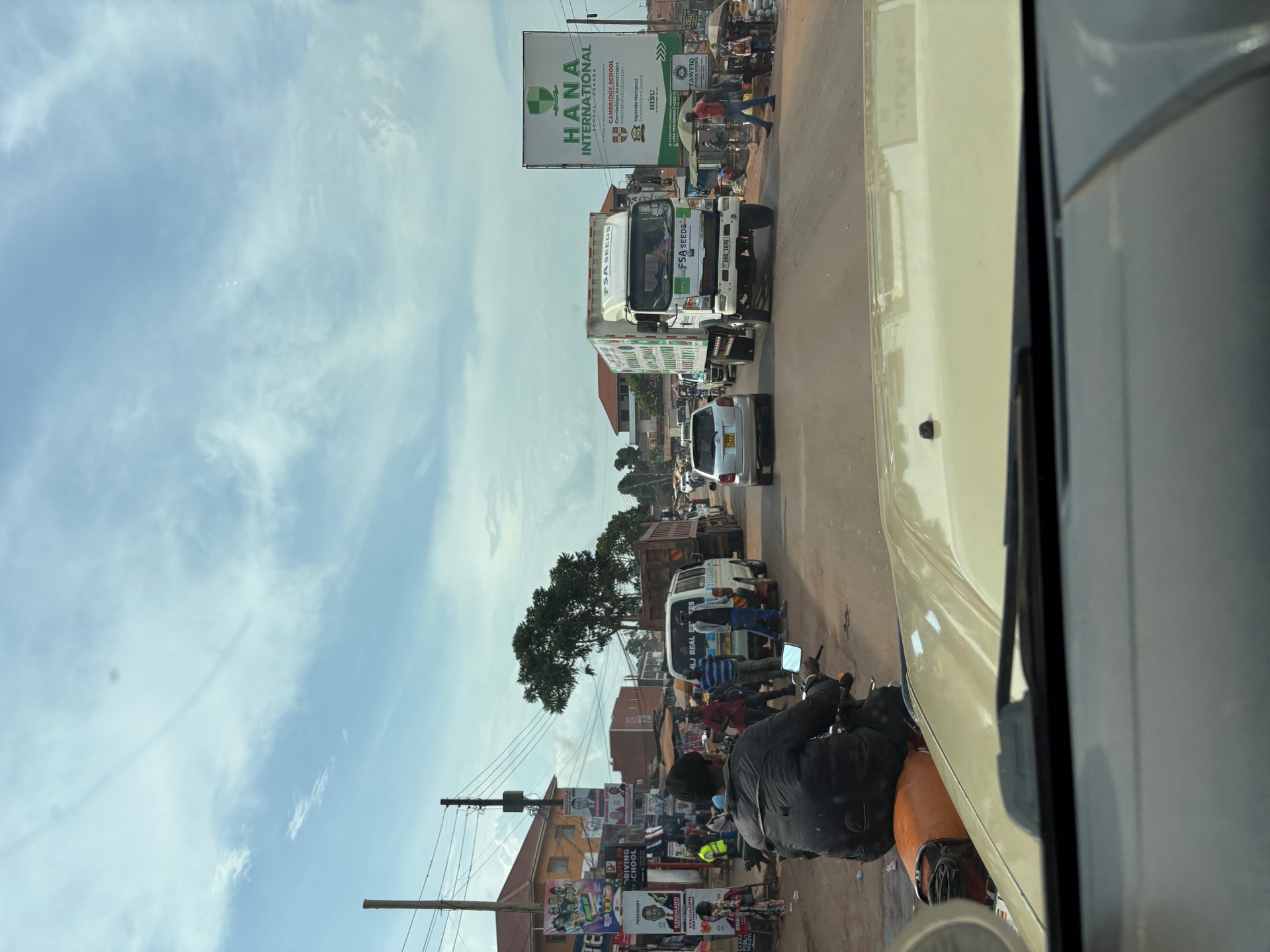
The Greater Kampala Metropolitan Area — encompassing Kampala, Wakiso, and Mukono districts — concentrates more than 32 per cent of Uganda’s manufacturing activity and serves as the starting point for nearly every safari itinerary. The GKMA developed a Multi Modal Transport Master Plan in 2018 to address the region’s growing mobility challenges, and the Kampala Capital City Authority (KCCA) continues to invest in tourism-supporting infrastructure: information centres for visitors, roadside rest areas, improved arterial roads, and the development of what it calls the GKMA Heartland Circuit — a network of urban tourism routes connecting Kampala’s cultural, historical, and commercial attractions (according to the KCCA Strategic Plan, 2025).
For travellers heading to lodges in Uganda, Kampala is most often a transit point rather than a destination. But it rewards a deliberate pause. A night in the capital allows you to recover from your flight, adjust to the time zone, and experience East African urban life before the comparative quiet of the bush. The Kasubi Tombs, a UNESCO World Heritage Site, and the Uganda National Museum are both within easy reach of the city’s hotel district. Kampala lodges — though fewer in number and different in character from their safari counterparts — serve as practical staging points for early-morning departures to the national parks.
On the northern route toward Murchison Falls, the road quality shifts as you leave Kampala’s metropolitan area. The trunk road through Luwero is generally well-surfaced, passing small trading towns with colourful roadside markets. On a rural stretch near Luwero during my October 2024 visit, I watched a boda-boda rider transporting several large water jerry cans on his motorcycle — no helmet, sandals on his feet, navigating potholes with practised ease. It was a scene that would be unthinkable on a European road, but here it was simply a man bringing water home. The boda-boda is Uganda’s primary last-mile transport: it carries passengers, produce, building materials, and anything else that fits on two wheels.
The Masaka Highway, the main south-western route toward Queen Elizabeth and Bwindi, presents a different challenge. During my January 2026 visit, long sections were under rehabilitation — stripped back to sand and laterite, with trucks, cars, and boda-bodas sharing a single unpaved carriageway in clouds of red dust. For travellers heading to lodges in the Bwindi gorilla trekking region or the Queen Elizabeth savanna, this route is unavoidable. The rehabilitation, once complete, will significantly improve travel times, but in the interim, expect dusty, slow stretches that add hours to the journey. The full picture of Uganda’s road conditions and what to prepare for is covered in our Kampala roads and transport guide.
Murchison Falls — Lodges, Wildlife, and the Victoria Nile
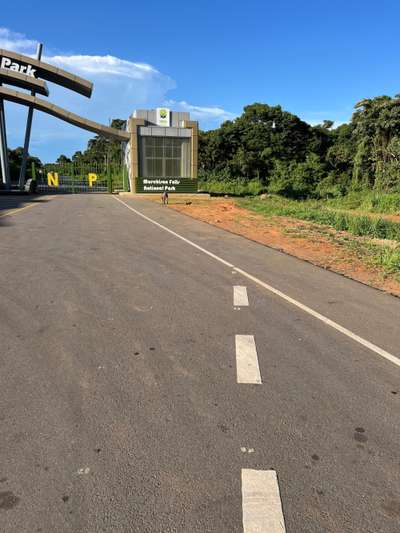
Murchison Falls National Park is Uganda’s largest protected area and home to some of the country’s most impressive lodge infrastructure. The park entrance, which I photographed during a brief stop in October 2024, has been rebuilt with a modern visitor centre and a freshly paved access road — a stark contrast to the dusty rural roads that lead to it. The smooth asphalt with crisp white markings signals the level of investment that Uganda is making in its flagship national parks, and it sets the tone for what lies beyond the gate.
Lodges in the Murchison Falls area cluster along the Victoria Nile on both the northern and southern banks. The northern bank, accessible via the Paraa ferry, offers the best game drive circuits — open savanna where giraffes, elephants, lions, buffaloes, and Uganda kob are regularly spotted. Lodges on this side tend toward the mid-range and luxury tiers, with riverside locations that allow guests to watch hippos from their terraces. The southern bank lodges serve as bases for the boat safari on the Victoria Nile and for visits to the falls themselves, where the entire river forces through a gap just seven metres wide with thunderous force.
The boat safari on the Victoria Nile was the standout activity of my Murchison Falls visit. From the boat, we spotted Nile crocodiles basking on the riverbanks — massive, ancient-looking animals that remained motionless until the boat drew too close, at which point they slid into the water with surprising speed. Even from a safe distance, the sheer size of these crocodiles was striking: three metres or more of armoured muscle, with jaws designed for an entirely different era of natural history. The river itself was a green corridor bordered by dense vegetation, with elephants occasionally visible on the banks and fish eagles circling overhead.
For travellers deciding between Uganda’s safari regions, Murchison Falls lodges offer a different experience from the gorilla trekking properties in Bwindi. The landscape is flatter, the wildlife more varied, and the activities less physically demanding. A game drive through the northern savanna requires nothing more than sitting in a vehicle with binoculars; a boat safari involves sitting in a boat with a camera. This makes Murchison Falls lodges particularly suitable for families with younger children, older travellers, or anyone who wants a classic East African safari experience without the steep-terrain trekking that defines Bwindi. Our Murchison Falls safari guide covers the lodge options and activities in greater detail.
How to Choose Your Safari Lodge in Uganda
Decide your destination first. Lodges in Uganda are distributed across distinct safari circuits, and each circuit serves a different type of wildlife experience. Murchison Falls for big game and the Victoria Nile. Bwindi and Mgahinga for gorilla trekking. Queen Elizabeth for the Kazinga Channel, tree-climbing lions in Ishasha, and crater lakes. Kibale for chimpanzee tracking. Kidepo Valley for remote, off-grid savanna. Your destination determines your lodge options — not the other way around. The full directory of lodges across Uganda is searchable by region.
Understand the difference between lodges and hotels. In Uganda, the distinction is geographic and experiential. Hotels are concentrated in Kampala and Entebbe, serving business travellers, conference attendees, and airport overnighters. Lodges sit inside or adjacent to national parks and wildlife reserves, offering an immersive environment where the surrounding bush, forest, or savanna is the primary attraction. Lodges consistently record the highest occupancy rates of any accommodation type in Uganda, reflecting the strong international demand for safari experiences. If your reason for visiting Uganda is wildlife, you want a lodge, not a hotel.
Ask about environmental compliance. Under S.I. 47 of 2020, lodges near protected areas are required to undergo environmental audits. While most travellers will never see an audit report, the question itself signals awareness. A lodge that readily discusses its waste management, water sourcing, and energy practices is likely one that takes compliance seriously. Properties associated with international conservation organisations or certified under sustainability schemes tend to have the most transparent environmental practices. Community-run lodges may have less formal documentation but often operate with inherently lower environmental footprints due to their smaller scale and local supply chains.
Factor in the road. The travel time between Kampala and your lodge is a significant part of your itinerary. Murchison Falls is a five-to-six-hour drive. Bwindi is eight to ten hours. Queen Elizabeth falls between the two. These are not highway hours — they include stretches of unpaved road, construction zones, and the unpredictable traffic of small Ugandan towns. Most safari operators and lodges arrange transfers with experienced drivers, and this is strongly recommended over self-driving. If the overland journey feels too long, internal flights from Entebbe to airstrips near the major parks can cut travel time dramatically, though at a cost of several hundred dollars per person.
Use a tour operator for the logistics. Operators like Nturo Safaris, Deks Safaris, and others listed in our full operator directory handle permit procurement, lodge bookings, transport, and itinerary coordination. For gorilla trekking in particular, where permits must be matched to specific dates and sectors, an operator simplifies what would otherwise be a complex planning exercise. Most lodges in Uganda work closely with operators and can recommend reputable ones if asked.
Consider the season. Uganda’s dry seasons — June to September and December to February — offer the best road conditions and most comfortable safari weather. When I visited in October 2024, conditions were transitional: some roads were still dry, others had begun to soften with early rains. January 2026, by contrast, was firmly in the short dry season, with firm roads and clear visibility. The wet months (March to May and October to November) bring lower lodge rates and fewer visitors, but muddier roads and a greater risk of travel delays. Choose the season that matches your budget and your tolerance for unpredictability.