Lodges in Uganda by Region — A First-Hand Comparison of Hotels and Safari Lodges
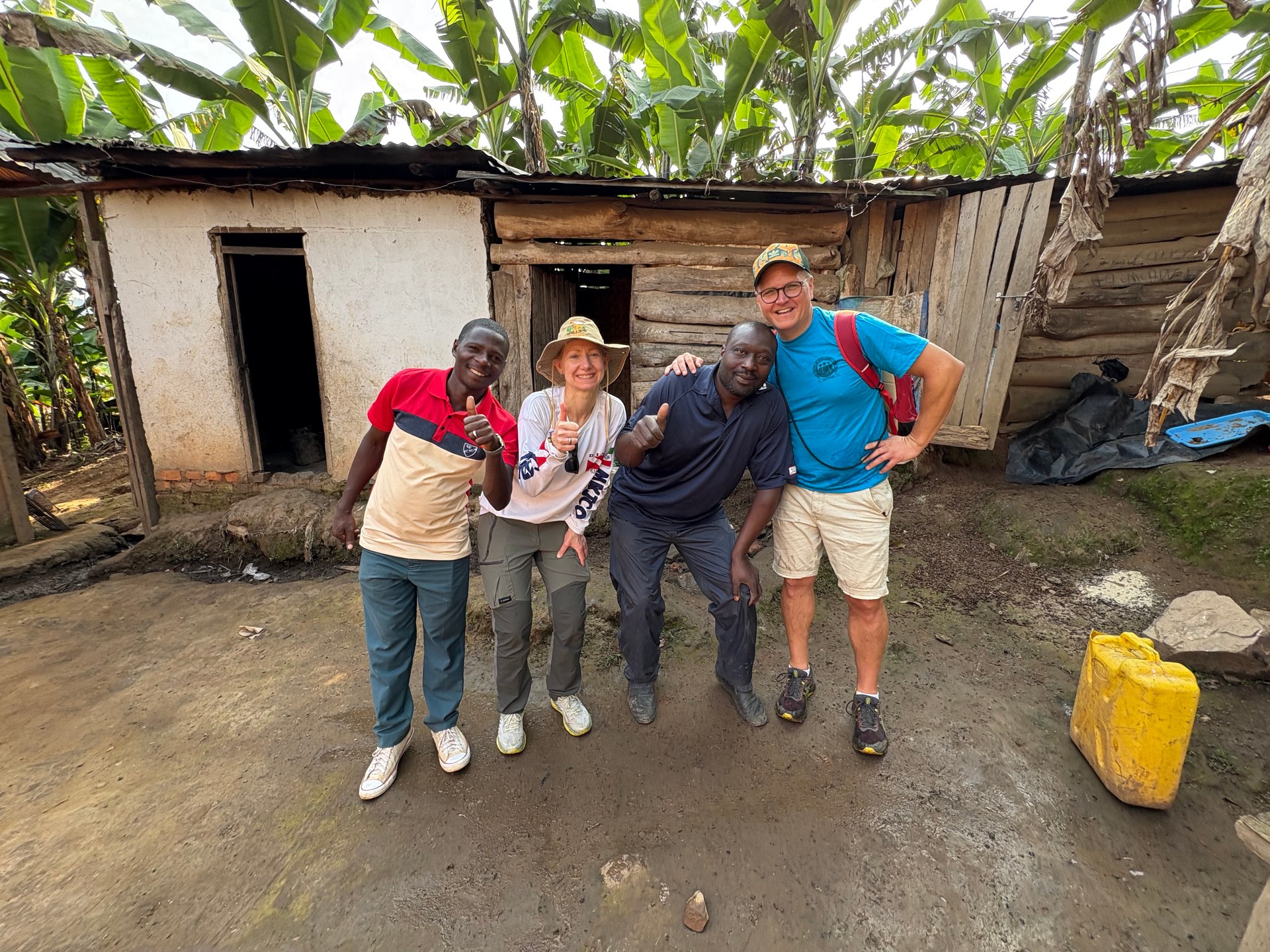
During my visit to Buhoma in June 2026, I spent a morning with a local chicken farmer who supplies eggs and poultry to the nearby orphanage. He showed us how he raises his chicks with genuine care — we had purchased birds from him on multiple trips, and each time his operation had grown. Standing in his small yard, watching chickens scratch the red earth while children gathered around, it struck me how deeply lodges in Uganda are woven into the communities that surround them. The lodges bring the visitors, the visitors bring the economy, and people like this farmer are the ones who feed it all.
Over 14 visits to Uganda totalling 59 days on the ground — from October 2024 through June 2026 — I have stayed in properties ranging from $30-a-night guesthouses in Karamoja to $800-a-night luxury tented camps overlooking Bwindi's canopy. This article compares lodges and hotels across Uganda's four main regions based on both official government data and what I have personally observed at each destination.
Uganda's accommodation landscape is split between urban hotels concentrated in Kampala and the Central region, and safari lodges clustered around the national parks of the West, North, and — to a lesser extent — the East. Understanding these regional differences helps travellers make better booking decisions and avoid overpaying for the wrong type of property.
Hotels vs Lodges in Uganda — Two Different Accommodation Cultures
The distinction between hotels and lodges in Uganda goes far beyond naming conventions. Hotels, concentrated in urban centres like Kampala, Entebbe, Jinja, and Gulu, serve primarily business travellers, conference delegates, and transit passengers. They follow a conventional hospitality model: reception desks, elevators, room service, and proximity to commercial districts.
Lodges, by contrast, are defined by their relationship to the natural environment. A lodge near Bwindi Impenetrable National Park is designed around gorilla trekking schedules. A lodge in Queen Elizabeth National Park arranges game drives and boat safaris on the Kazinga Channel. The staff are often recruited from surrounding communities, the food reflects regional agriculture, and the architecture uses local materials — bamboo, eucalyptus, stone, and thatch.
According to government data, lodges consistently achieve the highest occupancy rates among all accommodation types in Uganda. This reflects their strategic positioning near the country's most sought-after wildlife experiences. Hotels, while more numerous in absolute terms, show moderate occupancy rates that fluctuate with business cycles and conference schedules.
The contribution of hotels and restaurants to Uganda's GDP rose from 2,768 billion Ugandan Shillings in 2012 to 3,110 billion Shillings in 2013 — a 12.4 percent increase, according to the Statistical Abstract 2014. This growth was driven largely by the expansion of safari tourism in the Western region and a boom in Kampala's conference tourism sector.
Western Uganda — The Heart of Safari Lodge Country
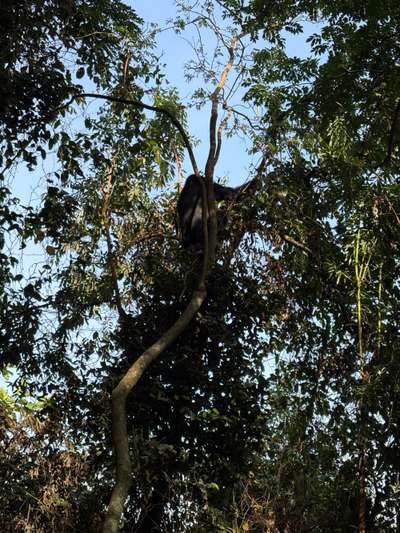
Western Uganda dominates the lodge landscape. This region contains the country's three most visited national parks — Bwindi Impenetrable National Park, Queen Elizabeth National Park, and Kibale Forest National Park — plus the dramatic Rwenzori Mountains and the crater lakes of the Ndali-Kasenda region around Fort Portal.
The Bwindi area alone hosts dozens of lodges across four trekking sectors: Buhoma, Rushaga, Ruhija, and Nkuringo. Buhoma is the most frequently visited sector, partly because of its relatively straightforward access from Kampala (approximately 8-10 hours by road) and its range of accommodation from budget community lodges to ultra-luxury tented camps. During my stays in Buhoma across multiple visits, I have observed first-hand how the lodge economy sustains the surrounding villages — from the chicken farmer who supplies local guesthouses to the guides who lead forest walks.
In the Queen Elizabeth National Park area, lodges cluster around two main zones: the Mweya Peninsula, where properties overlook the Kazinga Channel, and the Ishasha sector in the south, famous for its tree-climbing lions. Fort Portal serves as a hub for visiting Kibale Forest (chimpanzee tracking) and the Semliki National Park with its hot springs and butterfly populations.
Price ranges in Western Uganda are the widest in the country. Budget community lodges near Bwindi start from around $40-80 per person per night. Mid-range options — solid cottages with hot water, meals included, and guided activities — run $120-250. Luxury lodges with private verandas, gourmet dining, and dedicated tracking guides command $400-800 or more per night.
The Western region also hosts emerging accommodation around the Rwenzori Mountains, where trekking lodges cater to multi-day hikes. The Equator Snow Lodge and similar properties near Kasese offer a base for mountain expeditions at $130-250 per night including full board.
Central Region and Kampala — Urban Hotels and Transit Stays
Kampala and the Central region account for the bulk of Uganda's hotel room inventory, but most of these properties serve a different market entirely. The capital's 1.7 million residents and its role as East Africa's conference destination drive demand for business hotels, serviced apartments, and airport transit accommodation in Entebbe.
For safari travellers, Kampala functions primarily as a gateway. Most visitors spend one or two nights — typically on arrival or before departure — before heading to the national parks. Entebbe, just 40 kilometres from Kampala and home to the international airport, offers a quieter alternative with lakeside hotels along the shores of Lake Victoria.
The accommodation survey data from the Statistical Abstract 2014 covers 20 districts across Uganda, with Kampala unsurprisingly contributing the largest share of total room supply. However, the Central region's occupancy rates are middling compared to safari regions — the high supply of business hotels means many rooms sit empty outside peak conference periods.
Budget accommodation in Kampala starts from $20-40 per night for basic guesthouses. International hotel chains operate in the $80-200 range. For travellers who need a Kampala stopover, I recommend focusing on Entebbe rather than central Kampala: shorter airport transfer, calmer atmosphere, and better access to the Botanical Gardens and Ngamba Island Chimpanzee Sanctuary.
Northern Uganda — High Occupancy, Fewer Options
The Northern region presents an interesting paradox in Uganda's accommodation statistics. According to the Statistical Abstract 2015, the Northern region recorded the highest room occupancy rate at 54.5 percent and the highest bed occupancy rate at 54.4 percent — outperforming even Kampala and the Western region. This high demand relative to supply reflects the limited number of quality lodges serving Murchison Falls National Park and Kidepo Valley National Park.
Murchison Falls, Uganda's largest national park, is the primary draw in the North. Lodge options range from the UWA bandas at Paraa (budget) to established safari lodges along the Nile. The town of Gulu, with roughly 150,000 inhabitants, serves as Northern Uganda's economic centre and a stopover for travellers heading to Kidepo.
Kidepo Valley National Park in the far northeast is one of East Africa's most remote and spectacular parks, but its distance from Kampala (10-12 hours by road, or a chartered flight) limits visitor numbers. The few lodges operating near Kidepo command premium rates precisely because alternatives are scarce. The Karamoja region surrounding Kidepo is sparsely populated and largely dependent on pastoralism and subsistence farming — accommodation development here has been minimal.
For travellers willing to make the journey, the Northern region offers some of Uganda's best value: fewer crowds, authentic wilderness, and lodge rates that are often 20-30% lower than equivalent properties in the Western region.
Eastern Uganda — The Emerging Frontier
Eastern Uganda recorded the lowest occupancy rates in the government's accommodation surveys, reflecting both lower tourist demand and a less developed lodge infrastructure. However, this region holds significant untapped potential.
Mount Elgon National Park, straddling the Kenyan border, offers multi-day trekking routes with overnight shelters and a handful of lodges near the park headquarters in Mbale. The town of Jinja, at the source of the Nile, has developed a robust adventure tourism scene — white-water rafting, bungee jumping, kayaking — with corresponding accommodation along the riverbanks.
The Sipi Falls area near Kapchorwa provides some of Eastern Uganda's most scenic lodge settings, with properties perched on hillsides overlooking the waterfalls. Prices are among the lowest in the country: $30-80 per night for comfortable rooms with stunning views.
Eastern Uganda is also where 64 percent of all tourist arrivals enter the country, according to the Statistical Abstract 2014 — most from neighbouring Kenya and Rwanda travelling overland. This creates a natural demand corridor, though many of these visitors transit through quickly rather than staying in the region.
Regional Comparison Table
| Region | Top Parks/Attractions | Budget Range | Luxury Range | Occupancy |
|---|---|---|---|---|
| Western | Bwindi, Queen Elizabeth, Kibale, Rwenzori | $40-120 | $400-800+ | High |
| Central/Kampala | Kampala city, Entebbe, Ngamba Island | $20-60 | $100-200 | Medium |
| Northern | Murchison Falls, Kidepo Valley | $40-100 | $250-500 | Highest (54.5%) |
| Eastern | Mount Elgon, Jinja/Source of the Nile, Sipi Falls | $30-80 | $120-250 | Lowest |
How the Grading System Shapes What You Find
One of the most striking gaps in Uganda's accommodation sector is the low rate of official grading. By the end of 2025, only 117 facilities had been graded and classified by the Uganda Tourism Board, according to the Tourism Satellite Account Report 2025. Of these, 77 were classified as town hotels, 23 as safari lodges, and the remainder as tented camps, apartments, and motels.
This means the vast majority of Uganda's 350,550 rooms operate without any official quality classification. For travellers comparing lodges across regions, this creates an information gap that personal research and first-hand reviews must fill. It also explains why occupancy rates vary so dramatically: graded properties with an online presence capture a disproportionate share of international bookings, while ungraded guesthouses depend on walk-in domestic travellers.
The last comprehensive accommodation facilities census was conducted in 2011, with the next update originally scheduled for the 2014 housing census. The decade-plus gap between censuses means that published statistics undercount the true number of properties, particularly small community lodges and homestays that have proliferated around Bwindi and other popular parks in recent years.
Frequently Asked Questions
Which region in Uganda has the most lodges?
The Western region has the highest concentration of lodges, driven by demand from Bwindi Impenetrable National Park (gorilla trekking) and Queen Elizabeth National Park. The Central region and Kampala lead in total hotel room capacity due to business and conference travel.
What is the difference between a lodge and a hotel in Uganda?
Hotels are typically urban properties catering to business travellers, while lodges are positioned near national parks and wildlife areas, offering safari-oriented experiences. Lodges consistently achieve higher occupancy rates than hotels according to government statistics.
How much do lodges cost in different regions of Uganda?
In Western Uganda (Bwindi, Queen Elizabeth), mid-range lodges cost $80-150 and luxury options run $300-800+. Northern Uganda (Murchison Falls, Kidepo) averages $60-120 for mid-range. Eastern Uganda offers the most affordable lodges, with properties near Mount Elgon from $40 per night.
Which region has the highest hotel occupancy rate?
According to the Statistical Abstract 2015, the Northern region recorded the highest room occupancy at 54.5%, followed by Central region and Kampala. The Eastern region had the lowest rates.
Is it better to stay in Kampala or near the national parks?
For safari travellers, staying near the parks is almost always better. Kampala serves as a transit stop. Most visitors spend one night in Entebbe on arrival before heading west for gorilla trekking or game drives.