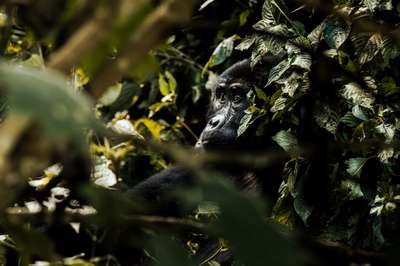
Three hours into the forest, our guide stopped and raised his hand. Through a wall of dripping leaves, barely four metres away, a mountain gorilla stared straight at us. The face was calm, the eyes curious but unbothered. Nobody spoke. In that suspended moment, the lodge where you left your daypack that morning — the terrace where you drank your coffee, the trail the ranger cut through the undergrowth — all of it suddenly mattered in a very concrete way. Your lodge is not just accommodation. It is the starting point of a day you will never forget, and whether you slept well, ate well, and were briefed well shapes everything that follows.
During my five documented visits to Bwindi Impenetrable National Park between January and June 2026, I stayed in lodges across multiple sectors, photographed 37 GPS-tagged images at coordinates like −0.9705°N, 29.6195°E, and walked through every terrain type that separates these properties from the gorilla families. The observations below are not assembled from booking engines or press releases. They come from mornings on wooden terraces, afternoons on muddy trails, and conversations with rangers, guides, and lodge staff who make the Bwindi hospitality ecosystem work.
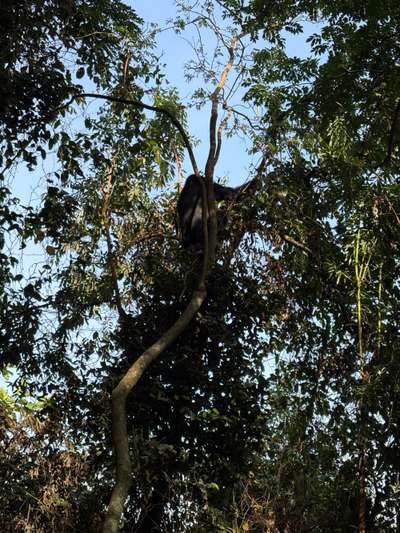
Our gorilla trekking began at the Buhoma park gate. We were accompanied by a guide and two armed rangers — the firearms felt unusual at first, but their presence is standard UWA protocol and the rangers themselves were warm, encouraging, and genuinely helpful on the steep ascents. After about an hour of walking, we encountered the first gorilla family: a large silverback seated high in a tree, calmly stripping leaves from the branches. Later, on a different trek, we reached a second family after three hours of harder hiking. They were peaceful, undisturbed by our proximity. You could hear them chewing. That closeness — sanctioned by a $800 permit and decades of habituation work — is why the lodge you choose matters so much. You need to be rested, properly equipped, and close to the right sector gate.
Understanding Bwindi's Four Sectors — Why Your Lodge Location Is Non-Negotiable
Bwindi Impenetrable National Park is not one destination — it is four distinct sectors separated by hours of driving on unpaved roads. A gorilla trekking permit is sector-specific: if your permit says Buhoma, you trek from Buhoma. If you booked a lodge in Nkuringo, you cannot switch to a Rushaga trek on arrival. This is the single most important decision in your Bwindi trip planning, and it must be made before you book either your permit or your lodge.
Buhoma is the original sector, home to the park headquarters and the widest range of lodges. It sits in the northern part of the park at roughly 1,500 metres elevation and offers the most developed tourism infrastructure. Most first-time visitors to Bwindi stay here. The village of Buhoma has grown around the park gate, with a small local economy of guides, craft sellers, and young entrepreneurs — we met Clinton, a 17-year-old who paints and sells artwork on the road opposite Gorilla Bluff Lodge. He supports his mother, two brothers, and a younger disabled sister with his earnings. His dream is to become a tour guide. Stories like his are woven into the fabric of every lodge stay in Buhoma.
Ruhija occupies the northeastern corner, sitting at the park's highest elevation. Lodges here include Ruhija Gorilla Safari Lodge, a rustic property with wooden cottages near the tracking start point, operated as part of the Asyanut Safari enterprise. Ruhija draws fewer visitors than Buhoma, which means shorter trekking queues and a quieter forest experience. The higher altitude also makes it one of the best birding locations in East Africa. If solitude matters more to you than nightlife (there is no nightlife anywhere in Bwindi, for the record), Ruhija is a strong choice.
Rushaga in the south has the most habituated gorilla groups of any sector and is the only location currently offering gorilla habituation experiences — four-hour sessions with groups still in the process of becoming accustomed to human presence. The Batwa indigenous communities near Rushaga run cultural programmes that form part of the Community Revenue Management (CRM) framework overseen by UWA and partnering organisations including the African Wildlife Foundation. Lodges in Rushaga tend to be newer and slightly more affordable than their Buhoma counterparts.
Nkuringo, in the park's southwestern buffer zone, is the most remote sector. Nkuringo Bwindi Gorilla Lodge sits at 2,090 metres elevation with 18 rooms and works with the Uganda Carbon Bureau on carbon offset programmes — an unusual sustainability initiative for the region. The terrain here is steep, the views are dramatic, and the hike to the gorillas often begins with a descent into the valley before the climb through the forest. Nkuringo is also the sector where a medicinal plant demonstration site is being established, linking traditional Batwa knowledge with conservation goals. It is not for the faint-hearted, and that is precisely its appeal.
The Top 10 — Ranked, Compared, and Honestly Assessed
The following ranking weighs five factors equally: proximity to the trekking start point, value for money, quality of food and service, environmental responsibility, and community impact. Lodges are categorised according to the Uganda Tourism Board classification system, which assessed and classified 18 hotels in Kampala alone in 2024 (according to the KCCA Ministerial Policy Statement 2024–25). A similar effort in rural tourism regions is ongoing but not yet complete for all Bwindi properties — so where official classification is absent, I rely on personal inspection and publicly documented standards.
| # | Lodge | Sector | Category | Price / Night | Best For |
|---|---|---|---|---|---|
| 1 | Sanctuary Gorilla Forest Camp | Buhoma | Luxury | $900–1,500 | Inside-park immersion |
| 2 | Gorilla Bluff Lodge | Buhoma | Mid-range | $120–200 | Authenticity & character |
| 3 | Nkuringo Bwindi Gorilla Lodge | Nkuringo | Luxury | $400–700 | Carbon-conscious travellers |
| 4 | Chameleon Hill Lodge | Rushaga | Luxury | $350–600 | Design & architecture |
| 5 | Ruhija Gorilla Safari Lodge | Ruhija | Mid-range | $100–180 | Birders & altitude lovers |
| 6 | Mahogany Springs Lodge | Buhoma | Luxury | $400–650 | Comfort without compromise |
| 7 | Rushaga Gorilla Camp | Rushaga | Budget | $50–90 | Habituation experience base |
| 8 | Buhoma Community Rest Camp | Buhoma | Budget | $30–60 | Community-funded, walkable to gate |
| 9 | Clouds Mountain Gorilla Lodge | Nkuringo | Luxury | $700–1,200 | Ridge-top exclusivity |
| 10 | Gorilla Valley Lodge | Ruhija | Mid-range | $90–160 | Quiet retreat, research proximity |
The table above provides the skeleton. What follows is the muscle and nerve — the details that only emerge after sleeping in these beds, eating at these tables, and walking to the park gate in the morning fog.
1. Sanctuary Gorilla Forest Camp — The Only Lodge Inside the Park
Sanctuary Gorilla Forest Camp is the sole accommodation actually located within Bwindi Impenetrable National Park boundaries. This distinction is not marketing; it is geography. Guests wake to the sounds of the forest without any intervening village or road. Gorillas have been known to wander through the camp itself. The tented suites are large, well-insulated against the mountain chill, and staffed by a team that operates with quiet professionalism. The price reflects the exclusivity — expect to pay between $900 and $1,500 per night for a double — but the proximity to the trekking start is unmatched. For visitors who have the budget and want the most immersive Bwindi experience possible, this camp is the benchmark against which all others are measured.
Pros: Inside the park, gorilla visits to the camp, exceptional staff-to-guest ratio, full board included.
Cons: Price excludes most budgets, limited availability, no pool or spa (the forest is the spa).
2. Gorilla Bluff Lodge — Where Character Meets Affordability
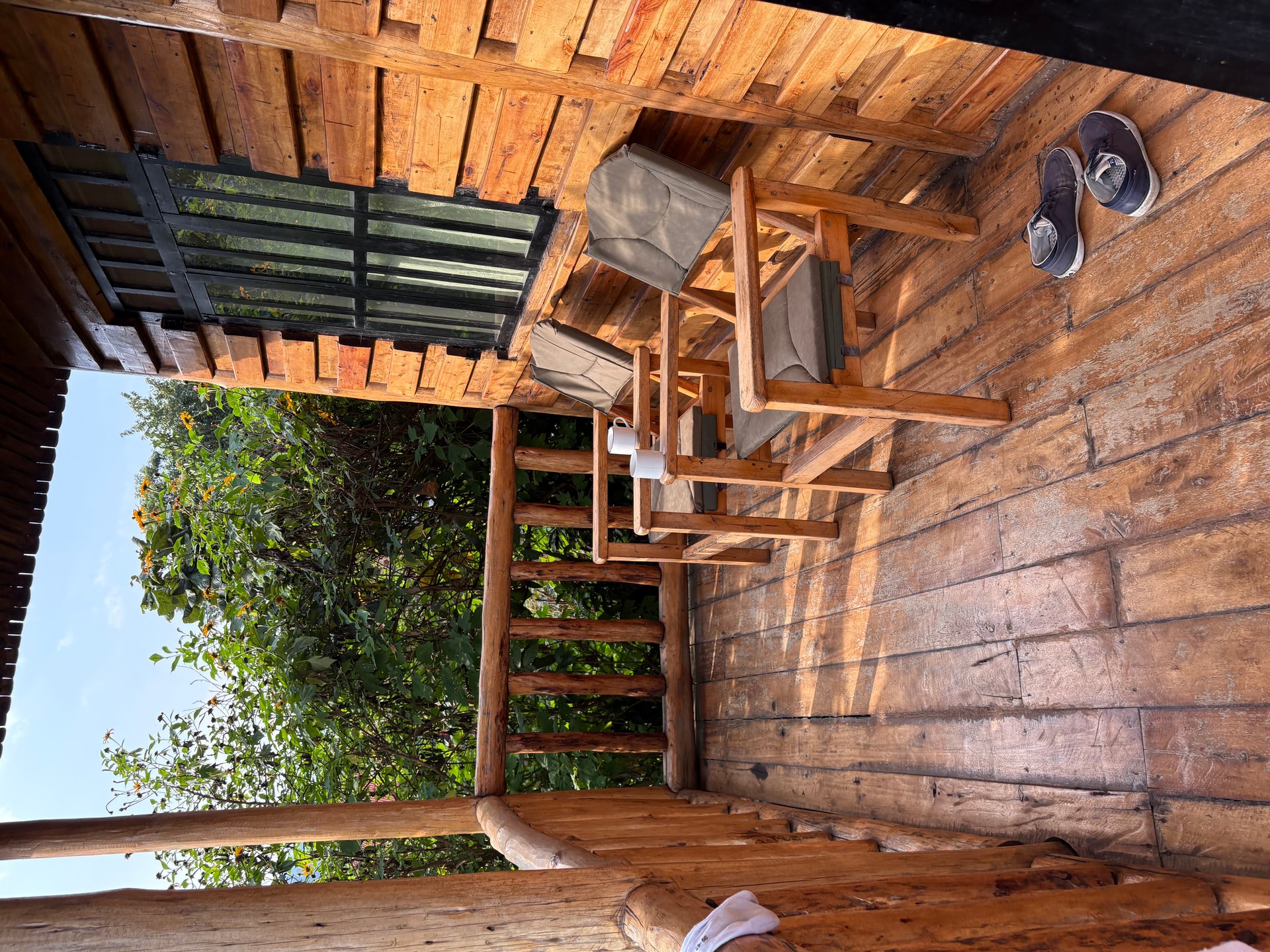
I spent several nights at Gorilla Bluff Lodge in January 2026, and it left a strong impression. The lodge is built into a steep hillside in Buhoma, and the wooden staircases connecting the rooms to the main building are themselves an experience — hand-cut timber steps on mountain terrain that remind you at every turn where you are. The private terrace of our room overlooked the canopy, and every morning began with freshly brewed coffee and African tea delivered to the door. That quiet ritual — sitting on the wooden deck as mist drifted through the valley below — set the tone for each day in the forest.
The architecture is rustic but thoughtful. The wooden railings, the natural-finish decking, the handcrafted details throughout — all of it speaks to an approach that prioritises local materials and local labour over imported luxury. GPS coordinates of our room terrace: −0.9794°N, 29.6168°E, photographed on 12 January 2026. Across the road, Clinton and other young artists sell their paintings to passing visitors. The lodge exists within a living community, not sealed off from it, and that integration is one of its strongest assets.
Pros: Excellent value, authentic mountain architecture, morning coffee ritual, walkable to Buhoma gate, integrated into local community.
Cons: Steep stairs can challenge mobility-limited guests, hot water is generator-dependent, no air conditioning (rarely needed at altitude).
3. Nkuringo Bwindi Gorilla Lodge — Community Ownership at Altitude
Nkuringo Bwindi Gorilla Lodge stands at 2,090 metres on a ridge overlooking the Virunga Volcanoes to the south. Its 18 rooms are spread across the hillside, each with views that stretch into the Democratic Republic of Congo. What sets this lodge apart from every other luxury property in Bwindi is its ownership model: it operates as a community lodge, channelling a portion of revenue directly to Nkuringo parish. The lodge also partners with the Uganda Carbon Bureau on carbon compensation programmes, an initiative that is rare in East African safari tourism and speaks to a level of environmental responsibility that goes beyond the usual marketing claims.
The Nkuringo sector itself is the most physically demanding for trekking — trails often descend steeply into the rift valley before climbing through the forest. Fit travellers will find this exhilarating. Those with knee problems should opt for Buhoma or Rushaga instead. The lodge compensates for the challenging terrain with attentive service and meals that draw on local ingredients: matoke, groundnut sauce, and fresh-caught tilapia.
Pros: Community ownership, carbon offset partnership, volcano views, strong food programme.
Cons: Remote access road, most physically demanding sector for trekking, limited mobile connectivity.
4. Chameleon Hill Lodge — Bold Design in the Southern Sector
Chameleon Hill sits above Lake Mutanda in the Rushaga area and takes an architectural approach that surprises first-time visitors: individually coloured cottages scattered across a landscaped hillside, each named and painted in a different bold hue. The visual effect is striking against the green backdrop, and the interiors maintain the same commitment to colour and craft. The lodge serves as a base for both gorilla trekking in Rushaga and excursions to the Batwa cultural programmes in Kisoro District.
Rushaga sector has the most habituated gorilla groups, which means permit availability tends to be slightly better here than in Buhoma. The sector also offers gorilla habituation experiences — longer, four-hour encounters with semi-habituated groups that are still in training. For travellers who want more than the standard one-hour trekking window, Rushaga combined with a lodge like Chameleon Hill is a compelling alternative.
Pros: Unique design, Lake Mutanda views, Rushaga permit availability, habituation option nearby.
Cons: Further from Buhoma and Ruhija, design style is not for traditionalists, limited room count restricts availability.
5. Ruhija Gorilla Safari Lodge — Altitude, Quiet, and the Research Edge
Part of the Asyanut Safari enterprise, Ruhija Gorilla Safari Lodge offers rustic wooden cottages and double rooms near the Ruhija tracking start point. The northeast sector of Bwindi sits higher than the others, and the temperature drops accordingly — expect cool evenings and mornings that warrant a fleece. The lodge is deliberately simple: no infinity pool, no spa treatment menu, no cocktail hour with a DJ. What it offers instead is proximity to gorillas, altitude forest birding (Ruhija is one of the best Albertine Rift endemic birding sites in Uganda), and a pace of life that allows you to decompress before and after the trekking day.
Pros: Nearest lodge to Ruhija tracking point, excellent birding, lower visitor density, honest mid-range pricing.
Cons: Rustic facilities, cold evenings without reliable heating, limited dining options outside the lodge.
6. Mahogany Springs Lodge — Buhoma Luxury Without Inside-Park Prices
For travellers who want luxury in Buhoma but cannot justify Sanctuary's rates, Mahogany Springs fills that gap precisely. The lodge sits along the Munyaga River, a short walk from the park gate, and offers spacious suites with en-suite bathrooms, hot showers that work reliably, and a dining room that serves three-course meals drawing on both Ugandan and international cuisines. The grounds are well-maintained and include a small spa — unusual for Bwindi properties. At $400 to $650 per night, Mahogany Springs delivers a polished experience that will satisfy guests accustomed to four-star standards elsewhere in Africa.
Pros: River-side location, reliable hot water and power, spa, walkable to Buhoma gate.
Cons: Less character than smaller lodges, higher-end pricing, occasional generator noise.
7. Rushaga Gorilla Camp — Budget Base for the Southern Groups
Budget lodges in Bwindi are not luxurious, and Rushaga Gorilla Camp makes no pretence otherwise. Accommodation is basic but clean: simple rooms with mosquito nets, shared or private bathrooms depending on the rate, and meals served in a communal dining area. At $50 to $90 per night, it is one of the most affordable bases for gorilla trekking in any Bwindi sector. The camp is positioned for easy access to the Rushaga tracking start point, and its staff can arrange Batwa cultural visits and community walks as supplementary activities. For travellers who allocate the majority of their budget to the $800 gorilla permit and prefer to save on accommodation, this camp is a responsible choice.
Pros: Lowest price in Rushaga, honest facilities, Batwa programme access, no hidden fees.
Cons: Basic construction, intermittent electricity, limited hot water availability.
8. Buhoma Community Rest Camp — The Lodge That Funds the Village
Buhoma Community Rest Camp operates as a community-owned enterprise, meaning the revenue from your stay feeds directly into local projects: school fees, health clinics, road maintenance. At $30 to $60 per night, it is the most affordable option in Buhoma sector and sits within walking distance of the park gate. The rooms are basic — expect a bed, a mosquito net, and a clean bathroom — but the communal areas are welcoming, the staff take genuine pride in the property, and the food is hearty Ugandan home cooking. The camp attracts backpackers, solo travellers, and researchers who spend extended periods in the field. Leonard Sharp, the Scottish missionary who established a leprosy hospital on Bwama Island in Lake Bunyonyi in 1921, would recognise the ethos: serve the community first, comfort second.
Pros: Community-owned, cheapest in Buhoma, walkable to gate, genuine local interaction.
Cons: No frills, shared facilities in the lowest rate band, early-morning rooster alarm clock.
9. Clouds Mountain Gorilla Lodge — The Ridge-Top Splurge
Clouds occupies a ridge above Nkuringo at approximately 2,300 metres, making it the highest-altitude lodge in the Bwindi ecosystem. The stone-and-thatch bandas offer panoramic views of the Virunga Volcanoes, and on clear mornings, you can see into three countries: Uganda, Rwanda, and the DRC. The Volcanoes National Park in Rwanda — the other major gorilla trekking destination with its headquarters in Kinigi — is visible from the terrace. Clouds targets high-end travellers willing to pay $700 to $1,200 per night for exclusivity, dramatic scenery, and a butler-style service model. It is operated by the same group that manages community conservation partnerships in the region, ensuring that luxury tourism and local benefit are not mutually exclusive.
Pros: Highest views in Bwindi, volcano panorama, exceptional service, community partnerships.
Cons: Expensive, remote access (the drive from Buhoma takes several hours), Nkuringo sector's steep terrain.
10. Gorilla Valley Lodge — Ruhija's Understated Alternative
Gorilla Valley Lodge provides a comfortable mid-range alternative in the Ruhija sector for travellers who want a step above the rustic lodges without paying luxury rates. The rooms are simple but well-maintained, with en-suite bathrooms and enough heating to manage Ruhija's cool nights. The lodge sits near the research trails used by the Institute of Tropical Forest Conservation, which means guests occasionally encounter primatologists and conservation biologists in the dining room — an unexpected bonus for those interested in the science behind gorilla protection. The 459 mountain gorillas documented in the 2018–2020 census (according to the Bwindi-Sarambwe population survey) owe their survival in part to the research infrastructure concentrated in this sector.
Pros: Proximity to research infrastructure, honest pricing, cooler climate, good birding from the grounds.
Cons: Less polished than Buhoma options, limited dining variety, Ruhija's access road deteriorates in heavy rain.
Hotels vs. Lodges in Uganda — Understanding the Accommodation Landscape
The distinction between hotels and lodges in Uganda is not merely semantic. According to the Uganda Tourism Board (UTB), lodges consistently record the highest occupancy rates among all accommodation categories in the country, driven by the demand for properties positioned near national parks and wildlife areas. Hotels, by contrast, see moderate occupancy rates distributed across urban and peri-urban locations. The UTB, as the tourism promotion organisation affiliated with the Ministry of Tourism, Wildlife, and Antiquities, maintains a classification and registration system. In 2017, a joint exercise between KCCA and UTB registered 243 new hotel facilities in Kampala alone (according to the KCCA Ministerial Policy Statement 2017–18). A nationwide effort covering safari lodge regions has expanded since, though full classification of every Bwindi property remains incomplete.
In the financial year 2016/17, Kampala recorded 15 hotel taxes as part of a broader expansion of the tax base that included 2,443 trading licences and 66 ground rent entries (KCCA Ministerial Policy Statement 2017–18). Local hotel tax revenue reached a performance rate of 124 percent against target in 2024 (KCCA MPS 2024–25), signalling that the formal accommodation sector is growing and contributing measurably to Uganda's revenue base. For travellers, this means the lodges on this list operate within an increasingly formalised regulatory environment — a trend that improves standards, accountability, and guest protection over time.
The practical distinction for Bwindi visitors is straightforward: a lodge places you near the park, usually in a natural setting with integrated meals and guided activities. A hotel in Kampala or a transit town like Kabale provides a stopover on the way to or from the park. Most Bwindi itineraries involve one night in Kampala or Entebbe upon arrival, a transfer day, two or three nights at a Bwindi lodge, and potentially a night in Kabale or Kisoro on the return journey. Lodges in the Bwindi ecosystem run on a full-board or half-board model because there are no restaurants within walking distance. Budget properties sometimes offer bed-and-breakfast only, with lunch and dinner available at extra cost.
Gorilla Trekking from Your Lodge — What Actually Happens on the Day
Your gorilla trekking day begins early. Most lodges serve breakfast between 6:00 and 7:00 a.m., and you are expected at the sector briefing point by 7:30 or 8:00. The briefing is mandatory — UWA rangers explain the rules (no flash photography, maintain a seven-metre distance, no trekking if you have flu symptoms), assign you to a gorilla group, and introduce the trackers who left at dawn to locate the family.
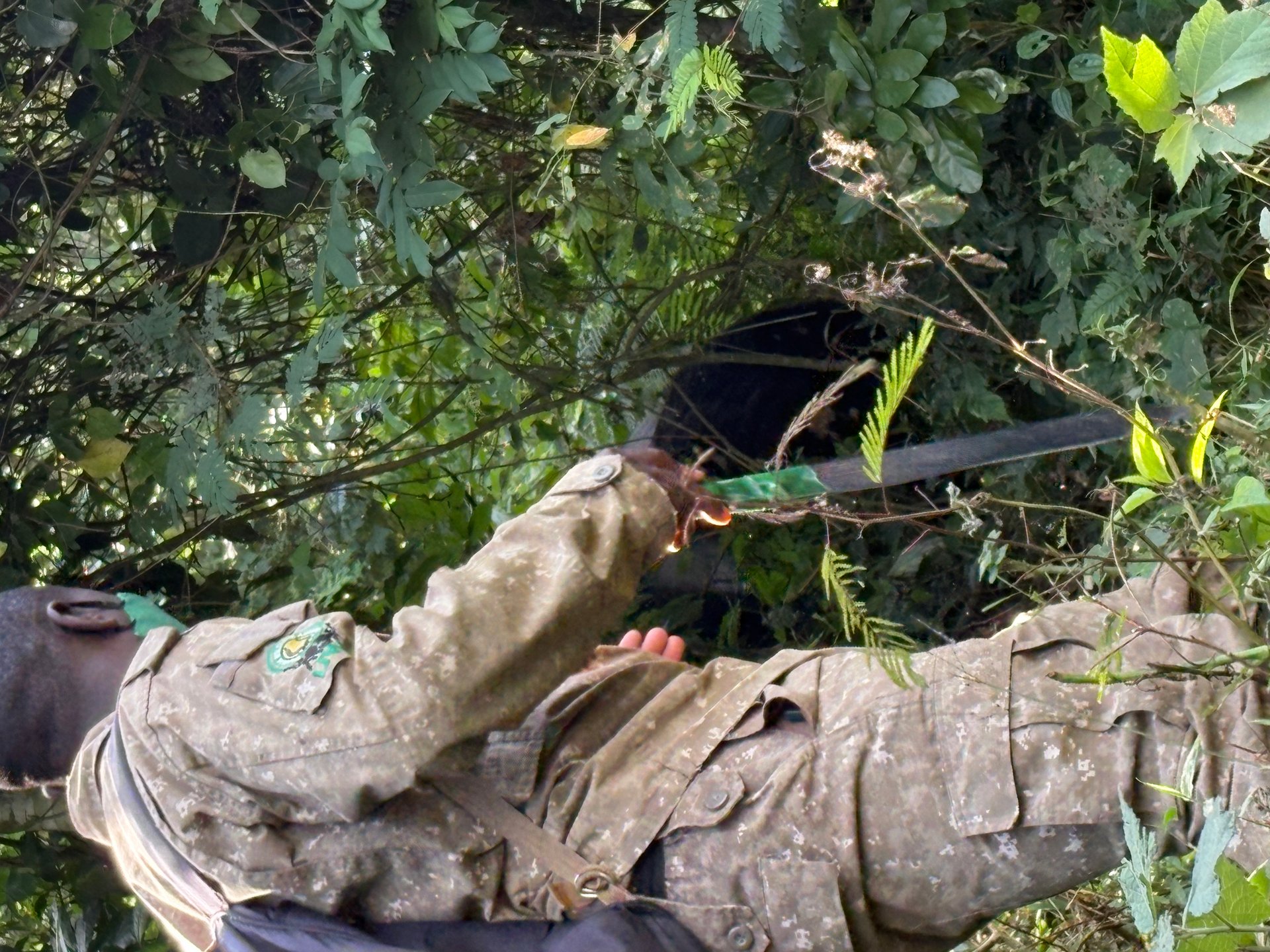
From personal experience, the trek duration varies enormously. During our January 2026 visits, we encountered one gorilla family after approximately one hour of walking and another after three hours. The difference depends on where the gorillas moved overnight — they build fresh nests each evening and may travel several kilometres between days. Our rangers were equipped with machetes to cut through dense vegetation, and their skill at reading the forest was impressive. The terrain ranged from gentle slopes to near-vertical scrambles through mud and root systems. Good hiking boots with ankle support are essential, not optional. A walking stick (available for hire at every gate for a small fee) is genuinely useful.
[QUOTE: local guide on what makes a good trekking morning]
The one hour you spend with the gorilla family is regulated strictly. Eight trekkers per group per day, no exceptions. When our group reached the family, the silverback was high in a tree, feeding calmly on leaves while younger gorillas played below. The proximity was remarkable — at times, individual gorillas moved within two metres of where we stood. The rangers managed the situation with quiet authority, repositioning us when a gorilla's path brought it too close. It was at once profoundly moving and thoroughly professional. Photographing at GPS coordinates −0.9762°N, 29.6282°E, I captured a ranger clearing the trail ahead of us — a candid image that conveys the physical reality of the experience better than any posed shot.
How to Choose — A Decision Framework for Bwindi Lodge Bookings
With ten lodges across four sectors and a price spread of $30 to $1,500 per night, the selection process can feel overwhelming. Here is a structured approach:
Step 1: Secure your gorilla permit first. The permit determines your sector, and the sector determines your lodge. UWA allocates permits by sector and specific gorilla group. Do not book a lodge before your permit is confirmed — if your permit is for Rushaga and your lodge is in Buhoma, you face a four-hour drive on unpaved roads before your 7:30 a.m. briefing.
Step 2: Set your budget honestly. The $800 permit is the fixed cost. Transport from Kampala or Entebbe (typically $150–300 each way by private vehicle) is the next large expense. Whatever remains is your lodge budget. If that number is below $100 per night, focus on Buhoma Community Rest Camp or Rushaga Gorilla Camp. Between $100 and $300, Gorilla Bluff Lodge and Ruhija Gorilla Safari Lodge offer strong value. Above $300, the luxury properties compete on views, service, and exclusivity.
Step 3: Consider your physical fitness. Nkuringo and Ruhija involve steeper terrain both at the lodge and on the trek. Buhoma offers the gentlest overall experience. Rushaga sits between the two extremes.
Step 4: Book early. Peak season runs from June to September and December to February. When I visited in January 2026, several properties were fully booked. Luxury lodges with fewer than 20 rooms (Nkuringo Bwindi Gorilla Lodge has 18, Clouds has even fewer) sell out three to six months in advance during high season. Budget camps have more last-minute flexibility, but counting on availability is a gamble. The Uganda tourism sector is growing rapidly — the USA alone sent 49,414 visitors to Uganda in 2016, according to Bank of Uganda tourism data, and arrivals have increased substantially since then.
The Verdict — Which Lodge Wins?
There is no single winner because the question is sector-dependent. But if forced to recommend one lodge for a first-time Bwindi visitor on a mid-range budget, I would choose Gorilla Bluff Lodge in Buhoma. It offers the best combination of character, community integration, proximity to the park gate, and honest pricing. The morning coffee on the terrace, the hand-built timber architecture, the warm staff, and the village life unfolding around you — these are the details that turn a gorilla trekking trip into a remembered experience.
For luxury travellers, Sanctuary Gorilla Forest Camp is unmatched in location. For the environmentally conscious, Nkuringo Bwindi Gorilla Lodge sets the standard. For budget travellers who want their money to directly benefit local people, Buhoma Community Rest Camp is the right answer.
Frequently Asked Questions
What is the best lodge in Bwindi for gorilla trekking?
The best lodge depends on your sector and budget. For luxury in Buhoma, Sanctuary Gorilla Forest Camp sits inside the park boundary. For mid-range with character, Gorilla Bluff Lodge in Buhoma offers wooden cottages on a hillside with morning coffee rituals and direct views into the canopy. For Rushaga sector, Chameleon Hill Lodge combines bold design with proximity to the southern gorilla groups. Budget travellers do well at Buhoma Community Rest Camp, which funds local projects directly.
How much do lodges near Bwindi cost per night?
Prices range from $30–60 per night for budget rest camps and community guesthouses, $100–250 for comfortable mid-range lodges, and $400–1,500 for luxury properties. Rates vary by season — June to September and December to February are peak months with higher prices. Most lodges include breakfast and dinner in their rates.
Which Bwindi sector should I choose for gorilla trekking?
Buhoma (north) has the widest lodge selection, the park headquarters, and the longest trekking history. Ruhija (northeast) sits at the highest altitude with fewer crowds and excellent birding. Rushaga (south) has the most habituated gorilla groups and offers gorilla habituation experiences. Nkuringo (southwest) is the most remote with dramatic ridge-top views. Your sector determines which gorilla families you can trek to — permits are sector-specific and cannot be swapped on arrival.
Do I need to book Bwindi lodges in advance?
Yes. Peak season months (June–September, December–February) require booking 3–6 months ahead, especially for luxury lodges with fewer than 20 rooms. Your lodge booking should match your gorilla permit sector — there is no practical way to trek in Buhoma while staying in Rushaga, as the sectors are hours apart by road. Budget rest camps sometimes have last-minute availability, but relying on this during high season is risky.
Are Bwindi lodges safe and well-maintained?
Safety standards have improved significantly. The Uganda Wildlife Authority maintains the park infrastructure, and lodges in all four sectors are regularly inspected. During our visits in January and June 2026, every lodge we encountered had functioning generators for backup power, clean water systems, and trained staff. Armed rangers patrol the park perimeter and accompany all trekking groups.