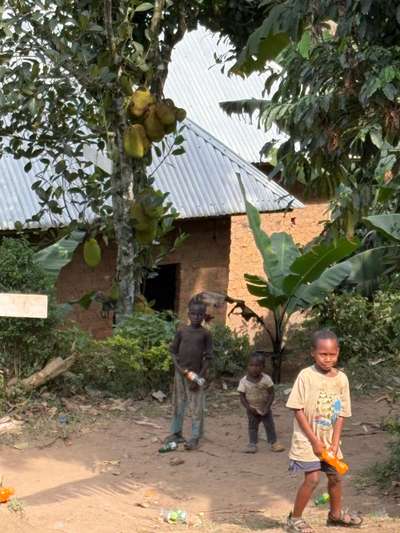
During my visit to Buhoma in June 2026, three children from the neighbourhood near the local orphanage appeared outside the building where we were preparing food. They were shy, their clothing visibly worn, their body language suggesting they were unsure whether they belonged. We invited them to eat with us without hesitation. That scene — captured at GPS coordinates −0.9617°N, 29.6109°E on 21 June 2026 — encapsulates why the question of where to stay in Uganda is never just a logistical one. Kampala lodges, Bwindi bush camps, Murchison Falls safari properties, and every accommodation in between exist within an economic web that either reaches these communities or passes them by. The lodge you choose determines which community benefits from your visit.
Uganda’s lodge landscape stretches from the four-star transit hotels of Kampala to remote tented camps in Kidepo Valley that require a chartered flight or a twelve-hour drive from the capital. In between lie more than two hundred registered properties — lakeside retreats on Bunyonyi, crater-edge eco-lodges near Fort Portal, gorilla trekking bases in four distinct sectors of Bwindi, riverfront camps on the Nile at Murchison Falls, and community-owned guesthouses where every dollar spent flows directly into the surrounding village. Over the course of fourteen documented visits between October 2024 and June 2026, totalling fifty-nine days on the ground, I have stayed at, inspected, or received operational briefings from lodges across every major tourism region in the country. This guide maps that experience region by region.
Kampala Lodges — Transit Accommodation and the Gateway to Uganda’s Parks
Every Uganda safari begins with a night in a Kampala lodge. International flights arrive at Entebbe International Airport, forty kilometres south of the city centre, and the overland journey to any national park — whether Bwindi in the southwest, Murchison Falls in the north, or Kidepo Valley in the far northeast — requires an early-morning departure from the capital. The Kampala lodges that serve this transit function range from international-chain hotels with airport transfer services to family-run guesthouses in residential neighbourhoods where the room rate includes a home-cooked breakfast and a conversation with the owner about tomorrow’s route.
The private sector in Kampala drives the accommodation market with a mix of international franchises and locally owned properties. Le Petit Village on Ggaba Road in Nsambya offers boutique safari-style accommodation with custom-made furniture crafted from eucalyptus and eruku wood, an attached Belgian restaurant, and rooms from approximately $145 per night. Cassia Lodge in the Buziga hills provides views across the city from a residential setting that feels removed from Kampala’s central congestion. These Kampala lodges cater specifically to safari travellers — they understand the early departures, the luggage requirements, and the need for a reliable packed breakfast when the vehicle arrives at 6 AM.
Uganda Railways, the national rail operator that collaborates with KCCA on expanding commuter routes, provides context for Kampala’s evolving transport infrastructure. While rail service does not yet connect the capital to safari destinations, the railway network’s expansion reflects the broader infrastructure investment that is gradually improving overland access to tourism regions. For now, the road network remains the primary connection between Kampala lodges and the parks — and the quality of that connection varies dramatically depending on the route. The Kampala-Masaka highway toward Bwindi is generally well maintained; the northern route to Murchison Falls passes through construction zones and truck-heavy corridors; the eastern road to Sipi Falls and Mount Elgon is scenic but slow.
Domestic flights operated by carriers including Fly Uganda connect Kampala’s Kajjansi airfield and Entebbe Airport to airstrips near Bwindi, Murchison Falls, Queen Elizabeth, and Kidepo Valley. These flights reduce a ten-hour drive to a ninety-minute flight, and for travellers with limited time or low tolerance for Uganda’s road conditions, they transform the logistics of a multi-park itinerary. The trade-off is cost — a one-way charter runs $200–600 per person depending on the route — and the loss of the overland experience that, for many visitors, is part of the journey’s value.
[QUOTE: Kampala lodge owner on what safari-bound guests most commonly ask about at check-in]
Southwestern Uganda — Bwindi, Mgahinga, and the Lake Lodges
The southwestern corner of Uganda holds the densest concentration of safari lodges in the country, driven by a single species: the mountain gorilla. Bwindi Impenetrable National Park, divided into four trekking sectors — Buhoma, Nkuringo, Ruhija, and Rushaga — supports dozens of properties ranging from backpacker hostels to lodges that charge upward of $800 per night. Each sector has its own micro-economy of accommodation, guides, porters, and community enterprises, and the lodge you select determines which sector you experience and which community receives your economic contribution.
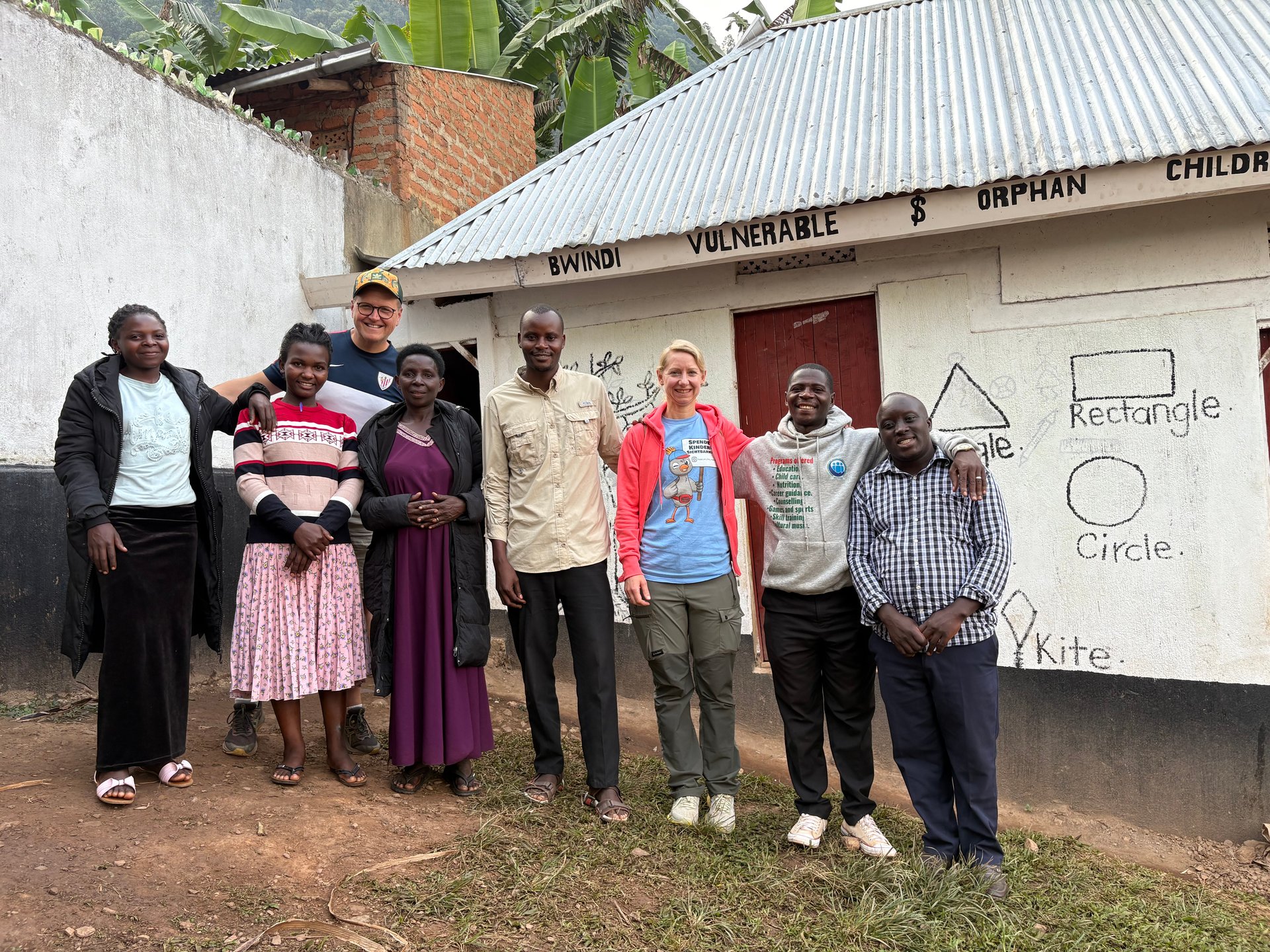
In Buhoma, the most established sector, Buhoma Lodge operates within the national park boundary itself. Run by Uganda Exclusive Camps, an operator specialising in ecologically oriented accommodation, the property consists of eight cottages built from local materials — stone, timber, and thatch — positioned a short walk from the gorilla trekking briefing point. The neighbouring Sanctuary Gorilla Forest Camp occupies the only other site within the park boundary at Buhoma, offering luxury safari tents from approximately $400 per night on a full-board basis. Both properties benefit from an unmatched location advantage: guests walk to the morning briefing rather than driving, and the forest surrounds the accommodation on all sides. Volcanoes Bwindi Lodge, renovated in 2018, adds eight bandas in the luxury segment. The Y.E.S. Uganda Hostel, operated by the NGO Youth Encouragement Services since 2006, offers a budget option whose revenue supports orphaned children — a direct link between accommodation spend and community welfare.
The Nkuringo sector, on Bwindi’s western edge roughly forty-five minutes’ drive from Buhoma, hosts two properties of particular note. Clouds Mountain Gorilla Lodge, developed by Wildplaces Africa in partnership with the African Wildlife Foundation and surrounding communities, sits above 2,000 metres altitude, making it Uganda’s highest-elevation lodge. Its design — high ceilings, massive timber beams, panoramic glass frontages overlooking treetops and volcanic peaks — represents the ambition of a community-ownership model at the luxury end of the market. Nkuringo Bwindi Gorilla Lodge, at 2,090 metres with eighteen rooms, offers a more moderate price point while maintaining proximity to the Nkuringo gorilla habituation site. Further down the price scale, Bwindi Backpackers Lodge, approximately five kilometres before the Nkuringo park gate, provides budget accommodation with a daily shuttle from Kabale. The lodge works with the Uganda Carbon Bureau on carbon offset initiatives, connecting budget accommodation with environmental responsibility.
In the Ruhija sector, the northeastern corner of Bwindi, Ruhija Gorilla Safari Lodge offers rustic double rooms and timber cottages near the gorilla tracking departure point. The lodge is part of the Asyanut Safari enterprise, a Ugandan-owned operation. Fifteen kilometres northeast of Ruhija, Cuckooland Tented Lodge occupies a deliberately remote position with four safari tents on wooden platforms, a natural swimming pool, and an open-air fitness area — a property designed for visitors who want seclusion between trekking days. Rain Forest Lodge provides another option in this sector.
Beyond Bwindi, the southwestern region extends to Mgahinga Gorilla National Park, where Mount Gahinga Lodge — eight bandas with views across the Virunga volcanoes, operated by Volcanoes Safaris — is the nearest property to the park headquarters. The lake lodges round out the region. At Lake Bunyonyi, Arcadia Lodge holds the highest point on the hill above the lake, with twenty-five cottages, a restaurant with sun deck, and activities including jet-skiing and quad-biking. Sharp Island Gorilla Lodge, situated on Njuyeera Island, occupies the historic main house of Scottish missionary Leonard Sharp, with rustic cottages whose flexible walls open directly onto the lake. At Lake Mutanda, Chameleon Hill Lodge on the northern shore pairs individual cottages with views of the Virunga volcanoes reflected in the water. Papaya Lake Lodge, on Lake Lyantonde near Bunyonyi, opened in 2015 under Polish ownership with a restaurant and swimming pool.
Western Uganda — Fort Portal, Queen Elizabeth, Semliki, and the Crater Lakes
Fort Portal, a town of approximately 50,000 people that serves as the western gateway to multiple national parks, anchors a lodge cluster that extends from the Ndali-Kasenda crater lakes to the Rwenzori Mountains and south to Queen Elizabeth National Park. The town’s atmosphere is notably relaxed compared to Kampala, and its elevation produces a mild climate that makes multi-day stays comfortable. Kyaninga Lodge, six kilometres north of Fort Portal, occupies a hilltop position above Kyaninga Crater Lake with eight cottages and views across to the Rwenzori massif. The property represents the upper tier of Fort Portal accommodation — purpose-built luxury in a setting that combines geological drama with forest tranquillity.
The crater lakes surrounding Fort Portal host several properties that combine proximity to Kibale Forest National Park’s chimpanzee tracking with a landscape unlike anything else in Uganda. Crater Safari Lodge, opened in 2013 by Crystal Lodges on the shore of Lake Nyinabulitwa, offers nine deluxe cottages in an eco-lodge format. Ndali Lodge, on a hilltop above the crater lakes, and Isunga Lodge — Scottish-owned, positioned on a hilltop south of Lake Nyabikere with seven cottages since 2016 — both serve visitors who want to combine Kibale chimpanzee tracking with rest days in the crater lake landscape. Kibale Primate Lodge, operated within the park boundary, minimises the morning drive to the chimpanzee tracking briefing point. Turaco Treetops Lodge provides another mid-range option in the Kibale corridor.
South of Fort Portal, Queen Elizabeth National Park — known for its tree-climbing lions in the Ishasha sector and the boat safaris on the Kazinga Channel — supports a range of properties. Mweya Safari Lodge, positioned on the Mweya Peninsula between the Kazinga Channel and Lake Edward, is the park’s flagship property. Kyambura Gorge Lodge overlooks the gorge where a small habituated chimpanzee community can be tracked. Ishasha Jungle Lodge serves the remote southern sector where the lions climb fig trees — a phenomenon observed regularly in only two locations worldwide, the other being Lake Manyara in Tanzania. The Haven Eco River Lodge and Ihamba Lakeside Safari Lodge add mid-range options in different parts of the park.
The Semliki Wildlife Reserve, a lowland forest ecosystem in the western rift, hosts Semliki Safari Lodge — eight safari tents on fixed timber platforms, operated by Wildplaces Africa since 1996. The reserve’s hot springs and butterfly populations make it a distinctive complement to the big-game parks, and its remoteness means that visitor numbers remain low. The Uganda-Moorantilope (Kobus kob thomasi), a subspecies whose population in the Semliki reserve was severely depleted by poaching, has recovered to several thousand individuals — a conservation success story that the lodge’s location within the reserve helped support through tourism-generated monitoring and protection.
The Rwenzori Mountains National Park, whose glaciated peaks reach above 5,000 metres, sits at the extreme end of Uganda’s lodge spectrum: Equator Snow Lodge, near the park boundary, offers full-board rooms from approximately $130 per person and serves as the staging point for multi-day mountain treks. Hoima Cultural Lodge, further north in the Bunyoro region, and Ntoroko Game Lodge near the Semliki reserve provide accommodation in the less-visited western corridor that connects Fort Portal to the northern circuit.
Northern and Eastern Uganda — Murchison Falls, Kidepo, Jinja, and the Sipi Falls
Murchison Falls National Park, Uganda’s largest protected area, anchors the northern safari circuit with a concentration of big game — elephant, giraffe, buffalo, hippo, lion — that rivals the southwestern parks in diversity if not in primate encounters. The park’s lodge infrastructure reflects its size and visitor volume. Paraa Safari Lodge, on the south bank of the Nile near the Paraa ferry crossing, is the park’s most established property, with a history dating to the colonial era and a location that provides direct access to both the northern game-drive circuit and the boat trip to the base of Murchison Falls. Chobe Safari Lodge, downstream from Paraa, combines river-facing rooms with a swimming pool — a rarity in Uganda’s park lodges. Pakuba Safari Lodge, on the northern bank, offers proximity to the delta area where the Nile enters Lake Albert. Bakers Lodge, named for the explorer Samuel Baker, operates as a luxury tented camp with views across the river. Mamre Oak Lodge and Lake Albert Lodge serve the western access corridor of the park.
En route to Murchison Falls from Kampala, Ziwa Rhino Sanctuary hosts Ziwa Lodge & Backpackers, the only location in Uganda where visitors can track white rhinoceros on foot. The sanctuary is supported by the Rhino Fund Uganda, and a stop here adds the fifth member of the Big Five to an itinerary that otherwise lacks rhinoceros sightings anywhere in the country.
Kidepo Valley National Park, in Uganda’s far northeastern corner bordering South Sudan, is the most remote major park in the country and, by many accounts, its most rewarding. The savannah landscape, framed by the Morungole and Napak mountains, supports species found nowhere else in Uganda — ostrich, cheetah, and greater kudu among them. Apoka Safari Lodge, the park’s premium property, provides luxury accommodation in a setting that feels closer to northern Kenya than to the rest of Uganda. Kidepo Savannah Lodge offers a more moderate alternative. The park’s isolation — a minimum two-day drive from Kampala, or a charter flight to the Lomej airstrip — keeps visitor numbers low, which is both its greatest asset and the reason its lodge infrastructure remains limited. The Arra Fishing Lodge in the broader northeastern region serves visitors combining Kidepo with the Karamoja cultural experience.
Eastern Uganda’s lodge landscape is anchored by the Nile at Jinja and the volcanic landscapes around Mount Elgon. Lemala Wildwaters Lodge, on a private island in the Nile rapids upstream of Jinja, offers an experience unlike any other property in Uganda — white water visible from the dining table, forest walks on the island, and proximity to Jinja’s adventure sports scene. The Nile Porch Lodge provides a calmer riverside alternative. At Sipi Falls, where three waterfalls cascade down the slopes of Mount Elgon, Sipi Falls Lodge and Sipi River Lodge serve as bases for hiking, coffee plantation visits, and the multi-day ascent of Mount Elgon itself. The Kipling Lodge and Rafiki Lodge add options for visitors exploring the eastern highlands. Rafiki Lodge, in particular, positions itself around adventure tourism — mountain biking, kayaking, and a high-ropes course — designed to complement rather than compete with the region’s natural attractions.
Uganda’s Lodge Industry — Institutions, Standards, and Community Ownership
Uganda’s lodge sector operates within an institutional framework that has matured significantly over the past decade. The Uganda Hotels and Lodges Association and the Hotel Owners and General Managers’ Association Uganda serve as the primary industry bodies, representing property owners in policy discussions, setting service standards, and advocating for infrastructure investment in tourism corridors. The Tourism Sector Skills Council of Uganda addresses workforce development — training programmes for lodge staff in hospitality, food safety, guiding, and guest management that determine the service quality visitors experience on the ground. The Uganda Safari Guides Association, whose members include guides and volunteers trained across Uganda and Rwanda, maintains professional standards for the individuals who shape the safari experience most directly.
The Association of Uganda Tour Operators and the Uganda Travel Agents Association regulate the companies that book and arrange lodge stays as part of safari packages. The Private Sector Foundation Uganda, the umbrella organisation for the country’s business community, provides a broader institutional context within which the tourism sector operates. These bodies, together with the Tour Guides Forum for Uganda and the Cross Cultural Foundation Uganda, shape the standards and practices that determine whether a lodge stay meets international expectations.
Community ownership models represent the most significant development in Uganda’s lodge sector. Properties like Clouds Mountain Gorilla Lodge in Nkuringo and the community-partnered lodges around Bwindi demonstrate that luxury accommodation and local ownership are not mutually exclusive. The NGO Together for Uganda, supported by the Coffee Pot Café in Kisoro, works to raise living standards in the communities surrounding Mgahinga and Bwindi — communities whose cooperation with conservation restrictions is the foundation on which the entire gorilla trekking industry rests. The Uganda Wildlife Conservation Education Center in Entebbe, often the first wildlife encounter for visitors arriving in the country, provides educational context that enriches the lodge and safari experience that follows.
The lodge industry also intersects with Uganda’s broader regulatory landscape. The Uganda Investment Authority processes the investment licences that underpin new lodge construction and expansion. The Uganda Registration Services Bureau handles company registration. The Uganda Civil Aviation Authority regulates the domestic flight network that connects Kampala to park airstrips. The Uganda National Meteorological Authority provides the weather data that informs seasonal pricing and trekking feasibility. Even the Uganda Property Holdings Limited and the Uganda Housing and Construction Corporation play indirect roles, shaping the construction standards and property markets within which lodges are built and maintained.
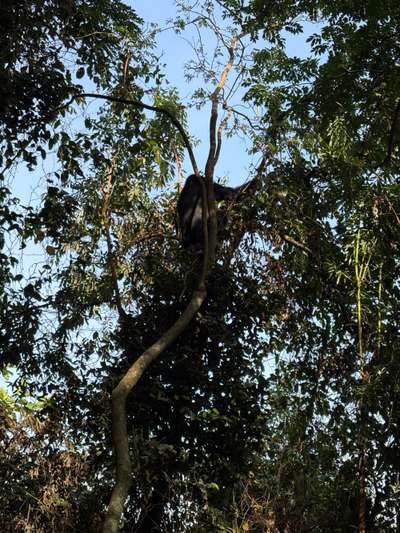
During our gorilla trekking in January 2026, after an hour of walking through the forest near Buhoma, we encountered the first gorilla family. A silverback sat high in a tree, stripping and eating leaves while the rest of the group foraged below. That encounter — the reason most visitors come to Uganda in the first place — was made possible not only by decades of gorilla habituation and ranger protection but by the lodge infrastructure that allows visitors to reach the forest, sleep within walking distance of the trailhead, and contribute economically to the communities that coexist with the gorillas. The lodge is not incidental to the experience. It is structural to the conservation model. From Kampala lodges to the eight cottages of Buhoma Lodge to the tented camps of Kidepo, every property on the map is a node in the network that keeps Uganda’s wildlife protected and its communities engaged.
Frequently Asked Questions — Uganda Lodges
How many lodges are there across Uganda?
Uganda has over 200 registered lodges, camps, and safari properties. The highest concentration is in southwestern Uganda around Bwindi, where gorilla trekking demand supports dozens of properties from backpacker hostels to luxury camps above $800 per night. The Uganda Hotels and Lodges Association and the Hotel Owners and General Managers’ Association serve as industry bodies.
Do I need to stay in a Kampala lodge before a safari?
Most international visitors spend at least one night in Kampala before departing for the parks. Late-arriving flights and the fatigue of international travel make an overnight stop practical. Kampala lodges near Entebbe Airport or in Kololo, Bugolobi, and Nakasero offer convenient transit accommodation. Some travellers skip Kampala by flying directly to park airstrips via domestic carriers.
Which Uganda lodges are best for gorilla trekking?
The optimal lodge depends on your assigned trekking sector. In Buhoma: Buhoma Lodge and Sanctuary Gorilla Forest Camp sit within the park. In Nkuringo: Clouds Mountain Gorilla Lodge and Nkuringo Bwindi Gorilla Lodge. In Ruhija: Ruhija Gorilla Safari Lodge and Cuckooland Tented Lodge. For Mgahinga, Mount Gahinga Lodge is closest to the park headquarters. Proximity to the briefing point is the primary selection criterion.
What is the price range for Uganda lodges?
Budget hostels like Y.E.S. Uganda Hostel or Bwindi Backpackers start at $10–30 per night. Mid-range properties like Crater Safari Lodge or Arcadia Lodge run $80–250. Premium lodges — Kyaninga Lodge, Semliki Safari Lodge, Clouds Mountain Gorilla Lodge — cost $300–800+ per night on full board. Location relative to park gates is the primary price driver.
Are Uganda lodges safe for solo travellers?
Uganda’s established safari lodges maintain security standards comparable to East African tourism properties. Lodges within national parks are monitored by UWA rangers. The Uganda Safari Guides Association trains guides in safety protocols, and operators registered with the Association of Uganda Tour Operators adhere to industry requirements. Solo travellers are common across all lodge categories.