Gorilla Trekking from Buhoma — What Nturo Safaris Arranges
Buhoma, in the Kanungu District of southwestern Uganda, is the main gateway to the northern sector of Bwindi Impenetrable National Park. It is the most popular trekking sector in Uganda, and the one that operators like Nturo Safaris and Deks Safaris most frequently include in their standard itineraries. The village sits at the park boundary, and the gorilla trekking briefing point is a short walk from most lodges in the area.
The Uganda Wildlife Authority (UWA, established 1996) manages all gorilla trekking in Bwindi. Permits are sector-specific: a Buhoma permit allows you to trek only in the Buhoma sector, not in Ruhija, Rushaga, or Nkuringo. This is a critical detail because it determines which lodge you should book. A competent operator secures the permit first, confirms the sector, and then matches you with a lodge within walking or short driving distance of that sector’s briefing point. An operator that books a lodge in Buhoma before confirming the sector risks stranding you three hours from your actual trekking start.
Uganda’s mountain gorilla population stood at 459 individuals in the most recent census conducted between 2018 and 2020. Bwindi Impenetrable National Park, together with the smaller Mgahinga Gorilla National Park, protects Uganda’s entire population. The Buhoma sector has several habituated gorilla families — groups that have undergone years of gradual habituation to human presence by UWA rangers, a process that typically takes two to three years per family.
Our gorilla trekking in January 2026 began with a briefing at the Buhoma headquarters, followed by roughly an hour of walking through the forest before we encountered the first gorilla family. A guide led the group, accompanied by two armed rangers. The presence of armed rangers felt unfamiliar at first, but it is standard practice — the weapons are for protection against forest buffalo and elephants, not against the gorillas. The rangers were skilled, helpful on the steep ascents, and clearly at ease in terrain that had most of us gripping roots and branches for balance.
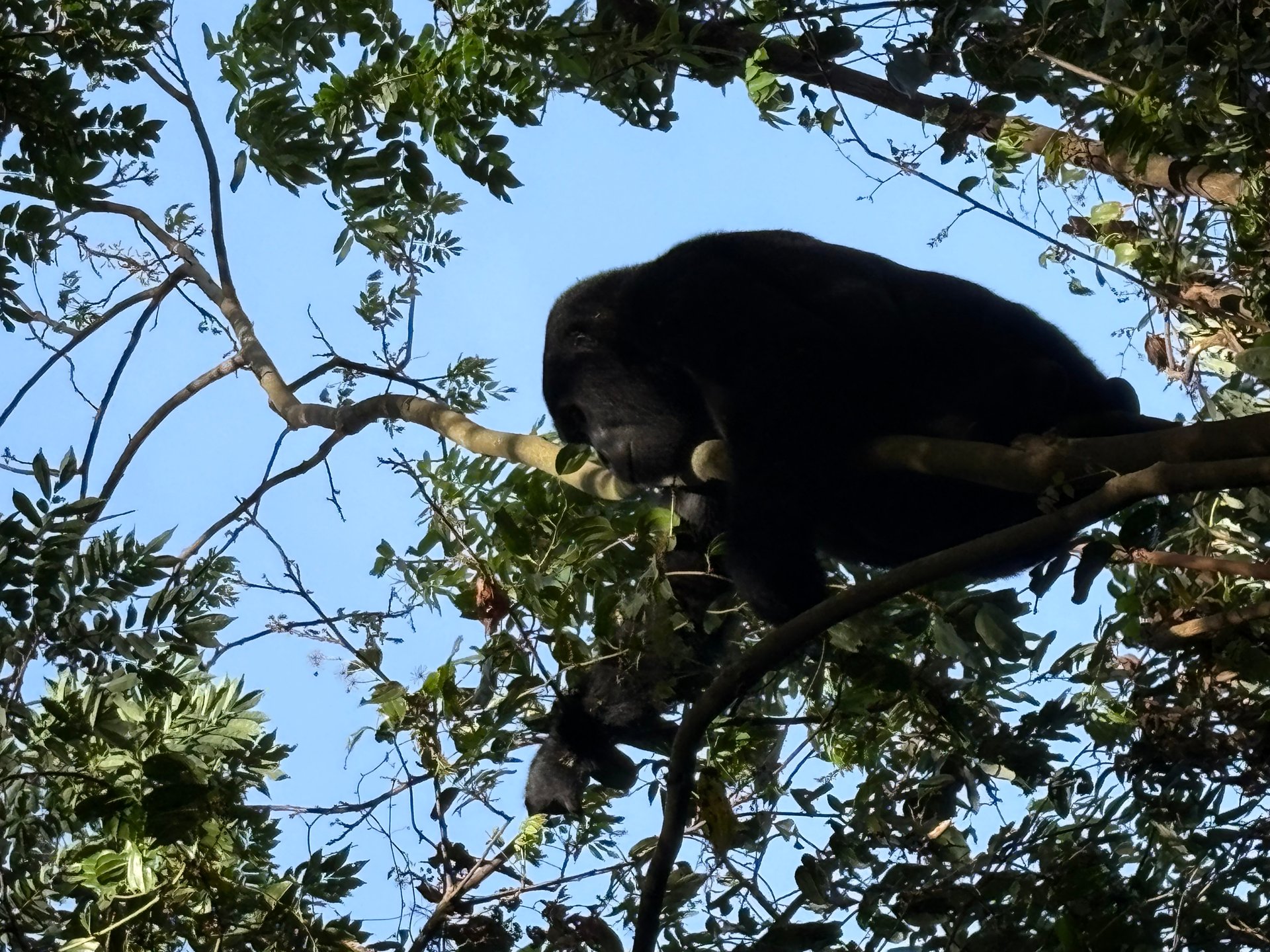
The gorilla we encountered sat high in a tree, feeding on leaves, entirely absorbed in its meal. It was a large individual, and the proximity was remarkable — close enough to make out the texture of its hands, the slow deliberateness of its movements. There was no alarm, no tension. The gorilla ate, glanced at us briefly, and returned to its leaves. That hour with the family — UWA allows exactly 60 minutes — remains the most vivid single-hour experience I have had in eight visits to Uganda.
Conservation work at Bwindi involves several international and local organisations. The African Wildlife Foundation has been involved in projects within the park for decades, supporting community conservation programmes and anti-poaching efforts. Wildplaces Africa, the company behind Semliki Safari Lodge (operating since 1996), has contributed to the broader conversation about sustainable tourism in Uganda’s protected areas. At Nkuringo, the Nkuringo Bwindi Gorilla Lodge — a community lodge at 2,090 metres elevation with 18 rooms — partners with the Uganda Carbon Bureau on carbon offset programmes, an approach that links tourism accommodation directly to climate mitigation.
Lodges in Buhoma — Where Nturo Safaris Guests Stay
The lodge landscape around Buhoma is the most developed of any sector in Bwindi, which is one of the reasons operators like Nturo Safaris route most of their gorilla trekking clients through here. Lodges in Uganda are the accommodation type with the highest occupancy rates among tourists, and Buhoma’s properties consistently fill during the peak dry seasons (June to September and December to February).
Buhoma Lodge, operated by Uganda Exclusive Camps, is one of only two lodges located inside the national park boundary near Buhoma. It offers eight comfortable cottages with full-board pricing starting at approximately 500 USD per night (Stand 2026). The lodge is ecologically oriented, with a restaurant that serves a mix of international and local dishes prepared from regional ingredients. The dining area and lounge have a fireplace — a practical feature at Bwindi’s altitude, where evenings can be cool even near the equator. The walk from Buhoma Lodge to the gorilla trekking briefing point takes just a few minutes.
Sanctuary Gorilla Forest Camp, the other in-park property, sits in a clearing in the forest. Eight luxury tents with en-suite bathrooms, solar-heated water, and wooden decks. Gorillas have been known to wander through the camp itself — a possibility that is genuine, not a marketing invention. This is the premium address in Buhoma.
Just outside the park gate, the options expand. Gorilla Mist Camp and Haven Lodge Buhoma are the two most commonly compared mid-range properties. Both are within a short drive of the briefing point, and both offer comfortable rooms at a lower price than the in-park lodges. Gorilla Bluff Lodge, directly across the road from the park entrance, caters to budget-conscious travellers. This is where we met Clinton.
Buhoma Community Rest Camp, managed by the local community association rather than a private investor, offers the most affordable beds near the trekking point. Revenue from the camp stays within the village — a model that is simple but effective. For operators building budget itineraries, this is a property that reduces costs without sacrificing proximity.
[QUOTE: Buhoma lodge manager on how operators like Nturo Safaris coordinate peak-season bookings — collect on next visit]
Beyond Buhoma: Ruhija and the Southern Sectors
If permits in Buhoma are unavailable, operators redirect clients to other sectors. Ruhija Gorilla Safari Lodge, part of the Asyanut Safari group, sits at 2,340 metres in the eastern sector of Bwindi. The lodge has double rooms and wooden cottages near the Ruhija briefing point. The trekking experience at Ruhija is distinct from Buhoma — higher altitude, cooler temperatures, different vegetation, and generally fewer tourists on the trails. Ruhija is 36 kilometres from Kabale, accessible via a mountain road that requires a capable vehicle.
In the south, the Rushaga sector has properties like Nshongi Gorilla Resort (cottages from approximately 160 USD, full board) and Nshongi Camp (bandas from 75 USD, full board), both at the northern edge of Rubuguri village. These are simpler than the Buhoma lodges but adequate, and the Rushaga sector has more habituated gorilla families than any other sector in Bwindi.
Under the National Environment (Audit) Regulations, Statutory Instrument No. 47 of 2020, luxury tented camps, lodges, hotels and resorts in or near wildlife reserves, forest reserves, or wetlands must undergo environmental compliance audits. Audit reports must be submitted every three years, accompanied by an updated environmental management system and monitoring plan. The lead agency must file an Environmental Enforcement Audit Report with the Uganda Wildlife Authority within 30 days of completing each audit. For travellers choosing between lodges, this regulatory framework means that established, compliant properties have documented environmental records — a point worth raising with any operator arranging your stay.
The Buhoma Community — What Safari Tourism Supports
Buhoma is a village before it is a tourism destination. It sits at the entrance to the national park, and its economy has been shaped by gorilla trekking since Bwindi was gazetted as a national park in 1991. But the village has its own rhythms, its own institutions, and its own people whose lives are only tangentially connected to the tourists who pass through on their way to the forest.
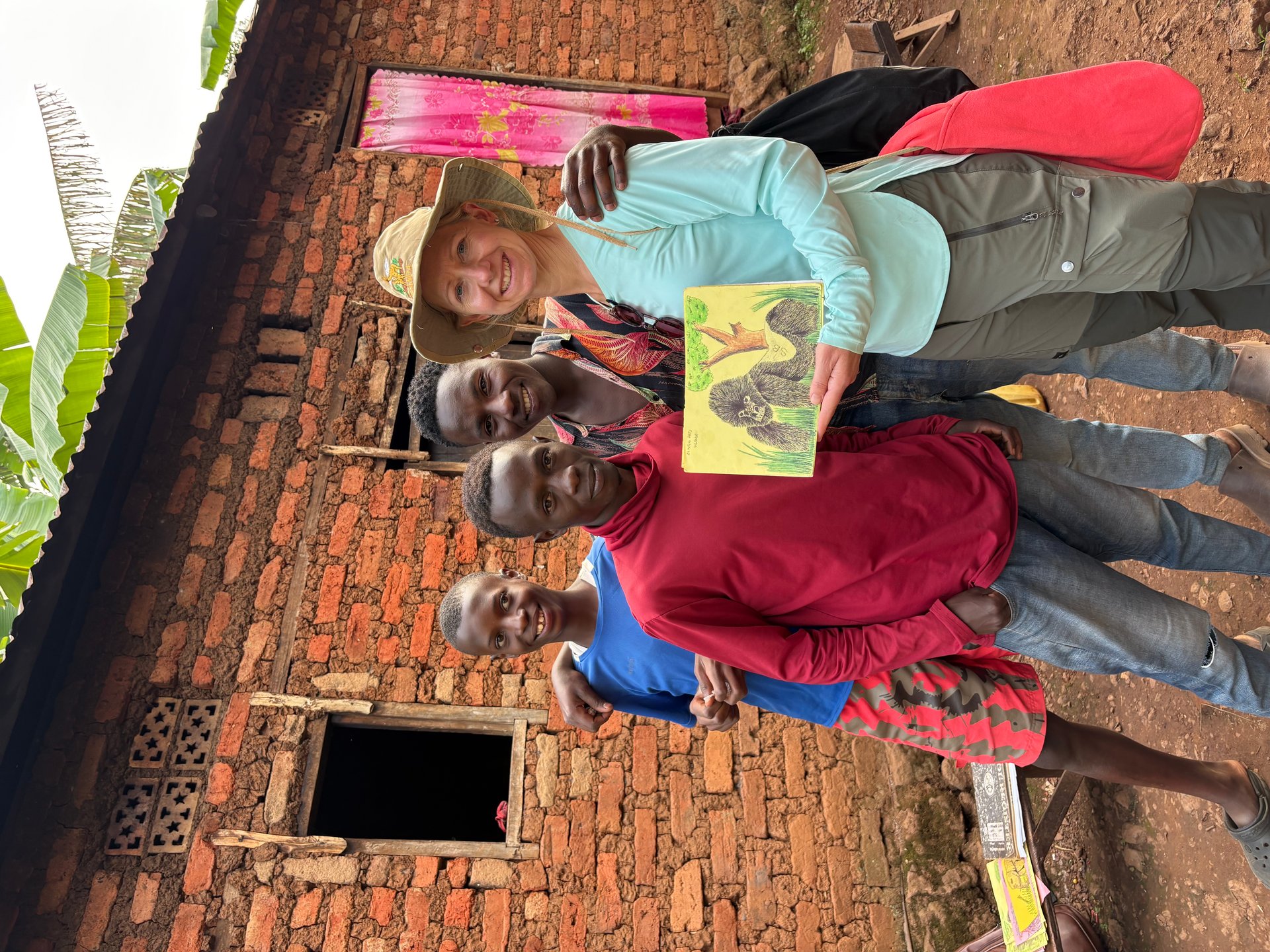
Clinton is one of many young people in Buhoma who sell paintings and crafts to passing tourists. Like other children and teenagers along the main road, he has learned to present his work to visitors with confidence and a ready smile. What set Clinton apart was his clarity about the future. At 17, he had a plan: become a tour guide. He knew the industry, he knew the lodges, and he knew that the guides who lead gorilla treks earn a reliable income. In a village where formal employment is scarce, that ambition was neither naive nor unrealistic — it was strategic.
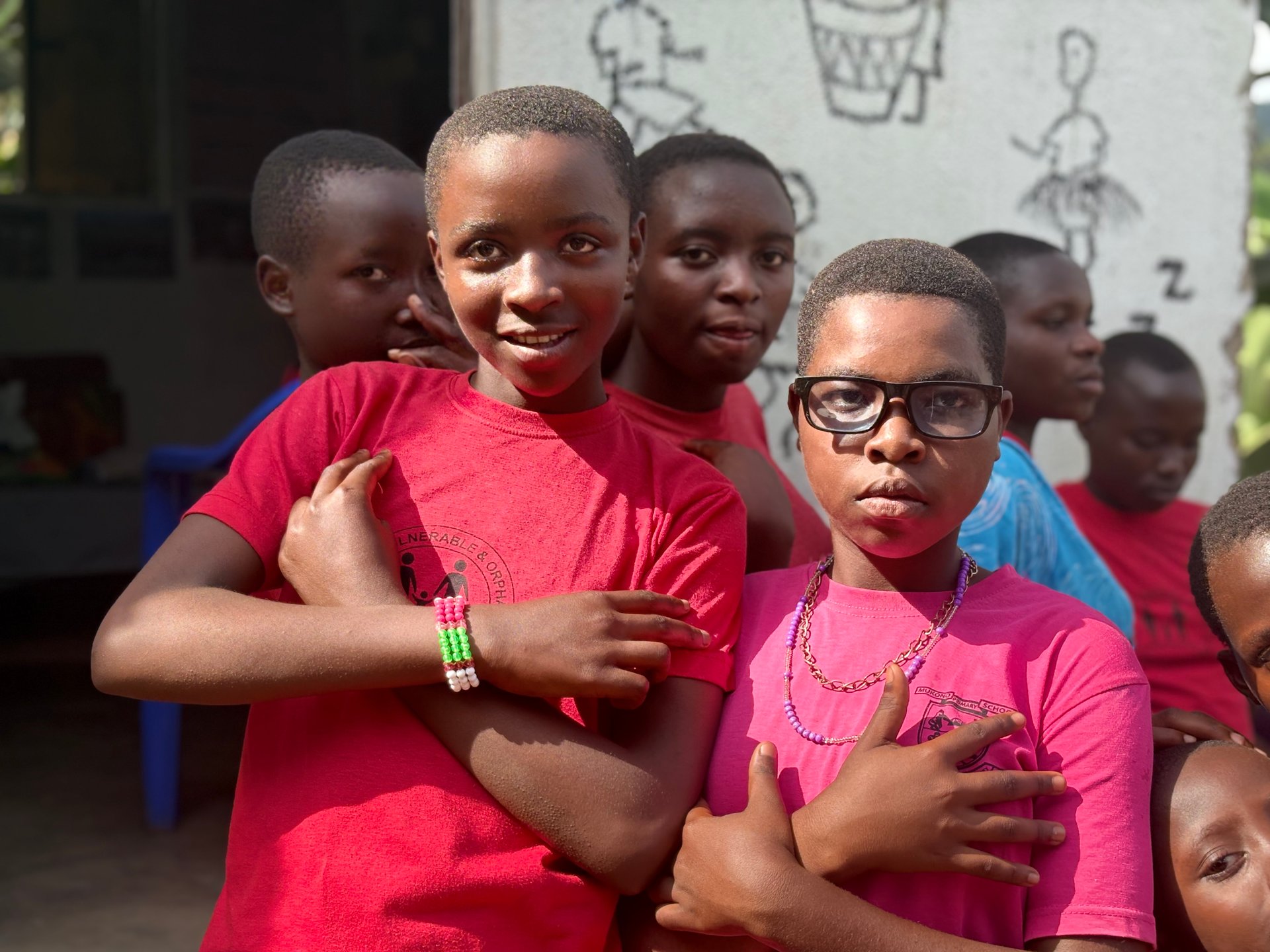
Nicholas, a pastor in Buhoma, runs an orphanage directly in the village. The building is simple — a structure with a corrugated metal roof, a sandy courtyard, and no mirrors. When we visited in January 2026, we spent time with the children on the courtyard, taking photographs and playing. The children’s enthusiasm for being photographed was striking. In a community where smartphones are rare and among young people practically non-existent, a camera is the closest thing to a mirror many of these children encounter. We took a group photograph, and the joy was immediate and unguarded.
Nicholas works alongside his wife Media, combining pastoral duties with the practical demands of running a care facility. The orphanage relies on a mix of community support and occasional visitor contributions. It is not a tourist attraction — there is no entry fee, no souvenir shop, no performance. It is a working institution in a small village, and the interaction between visitors and residents happens naturally when travellers choose to walk through Buhoma rather than driving directly from lodge to trekking point and back.
This is where the choice of operator matters beyond logistics. Some operators build village walks or community visits into their itineraries. Others keep the schedule tight: arrive, trek, depart. The operators that allow time for Buhoma itself — the roadside shops, the orphanage, the conversations with people like Clinton — give their clients a more complete experience of what gorilla tourism actually means for the people who live beside the forest.
Historical Context: Leonard Sharp and Lake Bunyonyi
The connection between tourism, conservation, and community in southwestern Uganda has roots that predate gorilla trekking by decades. Leonard Sharp, a Scottish missionary and physician, founded a hospital for leprosy patients on Bwama Island in Lake Bunyonyi in 1921. Sharp’s hospital served patients who had been excluded from their communities, and the island became a place of treatment and rehabilitation in a region where medical infrastructure was virtually absent. The hospital no longer operates, but the island remains a stop on Lake Bunyonyi boat tours, and Sharp’s legacy illustrates a pattern that continues today: outsiders coming to southwestern Uganda not just to witness its natural beauty, but to contribute to the welfare of its people. The best safari operators understand this context. A gorilla trekking itinerary that includes Lake Bunyonyi — many do, since the lake is a common overnight stop between Bwindi and Kampala — passes through a landscape where conservation and community welfare have been intertwined for more than a century.
Choosing a Safari Operator — Nturo Safaris, Deks Safaris, and What to Look For
Uganda has over 495 registered tour operators in the Lodges of Uganda directory. The range is vast: from one-person operations with a single vehicle to established companies with fleets of 4x4s and permanent offices. Nturo Safaris falls into the category of local operators who arrange multi-day safaris including gorilla trekking. Deks Safaris offers a similar profile — lodge-based itineraries, permit procurement, and vehicle transport.
When evaluating any operator, the questions that matter most are practical:
- Sector confirmation before lodge booking: Does the operator secure your gorilla permit and confirm the sector before booking your accommodation? This is the single most important logistics question. A mismatch means hours of unnecessary driving on trekking morning.
- Vehicle condition: The roads to Bwindi from Kampala are long (approximately 8–10 hours via the northern route through Kabale, or 10–12 hours through Ishasha). The last stretch to Buhoma is unpaved and steep. A reliable 4x4 in good condition is not a luxury; it is a necessity.
- Named lodges: An operator who tells you which specific lodge you will stay in — Buhoma Lodge, Haven Lodge, Gorilla Mist Camp — is more trustworthy than one who promises “luxury accommodation” without specifying where.
- Guide knowledge: The best operator guides know the Bwindi sectors intimately. They know which trails are muddiest in the rainy season, which gorilla families are currently ranging close to the trailhead (shorter treks), and which community projects are worth visiting.
- Transparent pricing: The gorilla permit at 800 USD is a fixed, non-negotiable cost set by UWA. Everything above that — transport, accommodation, meals, park entry fees — should be itemised. Be cautious of packages where the permit cost is bundled into a single price without breakdown.
Uganda is a country of approximately 46 million people (UBOS estimate, 2024) spread across 111 districts. Tourism is concentrated in a handful of parks and towns, but the logistical challenge of covering long distances on variable roads means that an operator’s local knowledge and vehicle reliability matter as much as their marketing. The full operator directory lists contact details, specialisation, and regional coverage for 495+ companies — use it to cross-reference any operator’s claims.