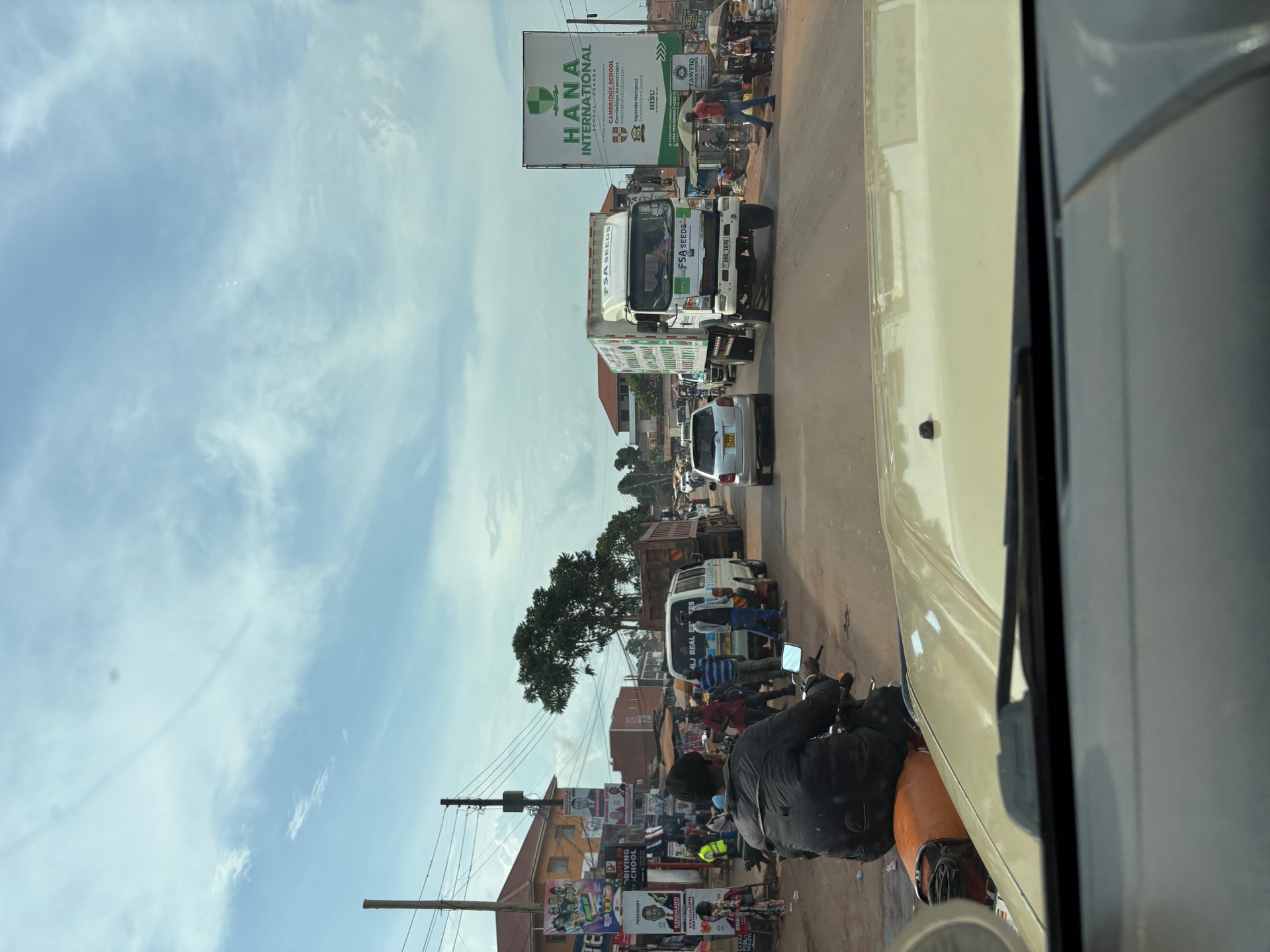
After we were collected at Entebbe Airport, the driver from Nturo Safaris headed straight through Kampala. The capital was overwhelming — vehicles crossed the road in every direction, boda-boda motorcycles weaved between trucks and minibuses, and the roadside was a continuous strip of small stands and shops selling everything from roasted maize to mobile phone credit. Photographed from inside the vehicle at GPS coordinates 0.2833°N, 32.4561°E on 11 January 2026, the scene captured the authentic chaos of a city that generates at least 60 percent of Uganda’s GDP, according to the KCCA Strategic Plan 2025. It was our introduction to the country, and nothing you read online prepares you for the sheer density of movement.
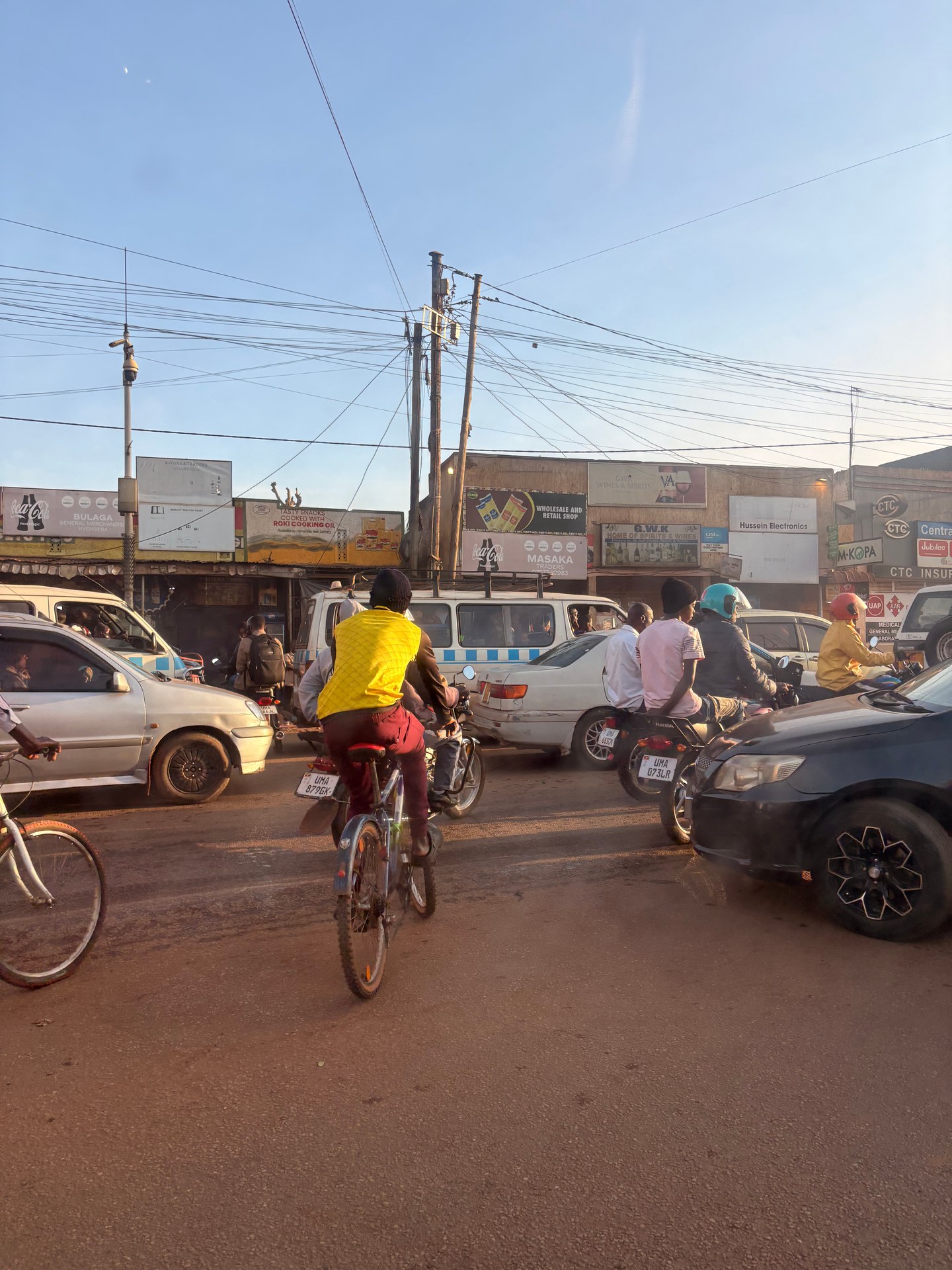
During my four visits between October 2024 and June 2026, I drove through Kampala multiple times — always with a safari operator, always at different hours, and every time the experience was both exhausting and fascinating. In May 2026, photographing at GPS 0.2917°N, 32.4996°E, the traffic was even denser: red laterite dust mixing with exhaust fumes, boda-boda riders in yellow jackets clustering at junctions, cyclists carrying improbable loads. On another pass through the city, we watched in astonishment as a boda-boda driver transported a stack of water jerrycans on his motorcycle — no helmet, sandals on his feet, navigating the same road as eighteen-wheelers. In Europe, this would be unthinkable. In Uganda, it is unremarkable daily logistics.
Every safari to Bwindi Impenetrable National Park, Queen Elizabeth, or Murchison Falls begins with this drive. The operator you choose — whether Nturo Safaris, Afoyo African Safaris, Deks Safaris, or another — determines how smoothly you navigate Kampala, where you sleep before the long drive west, what you eat along the way, and how well the vehicle handles nine hours of increasingly rough road. This guide covers the full journey from arrival at Entebbe to the lodge gates of Bwindi, with particular attention to the questions that first-time visitors rarely think to ask: where to stop, what to eat, and whether the lodges can feed you well when you arrive.
Nturo Safaris — Who They Are and What They Handle
Nturo Safaris is a locally owned Ugandan safari operator with roots in the Buhoma area near Bwindi Impenetrable National Park. Unlike international tour companies that subcontract ground operations, Nturo Safaris manages its logistics directly: airport pickup, vehicle fleet, driver-guides, lodge bookings, and UWA gorilla permit procurement. This direct-operations model means fewer intermediaries between you and the person driving the Land Cruiser, which matters when the road from Kampala to Bwindi throws surprises — a washed-out bridge, a fuel stop that has run dry, or a gorilla group that has moved to a different sector overnight.
The Nturo Safaris approach is typical of a growing class of locally owned operators in Uganda. Where the previous generation of safari tourism was dominated by international companies flying clients into East Africa from Nairobi or Arusha, Uganda’s tourism sector has matured enough to support operators who live in the communities they serve. Nturo Safaris knows the Buhoma road not from a map but from driving it weekly. Their guides have personal relationships with UWA rangers, lodge managers, and the community leaders in Buhoma village. When Nicholas, the local pastor, organises a community event or when Clinton, the 17-year-old artist selling paintings on the roadside opposite Gorilla Bluff Lodge, needs a connection to visiting tourists, it is operators like Nturo Safaris who make the introduction.
[QUOTE: Nturo Safaris driver-guide on what makes the Buhoma route challenging]
For travellers comparing operators, the key differentiator between Nturo Safaris and competitors like Afoyo African Safaris or Deks Safaris is not the price of the gorilla permit — that is fixed at $800 per person by the Uganda Wildlife Authority, regardless of who books it. The differentiator is local knowledge. Nturo Safaris can tell you which Bwindi sector has the best trekking conditions this week, which lodge had a plumbing issue last month, and which stretch of road was regraded and which was not. Deks Safaris, by contrast, has particular strength along the Murchison Falls route in the north. Afoyo African Safaris serves a broader East African itinerary. Each operator has a geographic sweet spot, and for Bwindi gorilla trekking, Nturo Safaris sits squarely in the centre of that ecosystem.
Kampala Lodges — Where to Sleep Before the Long Drive West
Most international flights arrive at Entebbe in the evening. The drive from Entebbe to central Kampala is roughly 40 kilometres, but depending on traffic can take anywhere from 45 minutes to well over two hours. On our January 2026 arrival, we hit the tail end of the evening rush and spent nearly 90 minutes inching through the Kampala metropolitan area — a region encompassing Kampala, Wakiso, and Mukono districts that concentrates over 32 percent of Uganda’s manufacturing activity. That first night is almost always spent in a Kampala hotel before the early-morning departure toward Bwindi.
The Kampala lodges landscape spans every budget tier. For backpackers and budget-conscious travellers, Kampala Backpackers Hostel and Campsite offers dormitory beds and camping pitches from approximately $8 per person. Red Chilli Hideaway Hostel operates at similar rates with a garden setting that feels removed from the city noise. Both properties are well-known among overlanders and independent travellers, and operators like Nturo Safaris are familiar with them. In the mid-range bracket, hotels in the Kololo, Nakasero, and Bugolobi neighbourhoods provide comfortable rooms with reliable Wi-Fi, hot water, and breakfast included — essentials for recovering from a long flight before a nine-hour drive.
Luxury travellers gravitate toward Kampala Serena Hotel and Sheraton Kampala Hotel, both located centrally and equipped to international four- and five-star standards. The Kampala Capital City Authority (KCCA) assessed and classified 18 hotels in Kampala in 2024, according to the Ministerial Policy Statement 2024–25, and a joint exercise between KCCA and the Uganda Tourism Board registered 243 new hotel facilities in 2017 alone (KCCA MPS 2017–18). This formalisation effort has improved the reliability of the accommodation landscape — travellers booking through Nturo Safaris or any reputable operator can expect their Kampala transit hotel to meet documented standards.
The practical advice is simple: tell your operator which budget range you prefer, and let them book it. They know which hotels have functioning generators (Kampala’s power grid is reliable but not perfect), which ones have secure parking for the safari vehicle, and which neighbourhoods are safest for evening walks. If you arrive late and depart at 5 a.m., the hotel barely matters. If you have a full day in Kampala before departure, choose a property in Kololo or Nakasero for walkable access to restaurants, craft markets, and the Kampala nightlife strip along Ggaba Road in Kabalagala, where bars and restaurants blend into each other and Ethiopian restaurants serve excellent injera with vegetarian wat sauces for around 18,000 UGX.
Food at Safari Lodges — What to Expect When Nturo Safaris Books Your Stay
One of the most common questions from first-time visitors to Uganda is deceptively simple: what will I eat? The answer matters because once you leave Kampala heading west toward Bwindi, restaurant options vanish. Roadside stops offer chapati, rolex (a chapati wrapped around an omelette with vegetables), roasted plantain, and fresh fruit. But for proper meals, you are dependent on your lodge kitchen from the moment you arrive until the moment you leave.
Safari lodges in Uganda typically operate on full-board or half-board plans. Breakfast is served between 6:00 and 7:30 a.m. — timed for the pre-trekking briefing — and usually includes eggs (prepared to order), toast, fresh tropical fruit (pineapple, mango, papaya, passion fruit in season), Ugandan coffee from the Mount Elgon or Rwenzori regions, and African tea with milk. Lunch is either a packed meal for trekkers in the field or a buffet at the lodge for those on rest days. Dinner is the centrepiece: a three-course meal combining Ugandan staples with international influences. Expect matoke (steamed green banana, the country’s most ubiquitous carbohydrate), posho (maize flour), groundnut sauce, grilled tilapia from Lake Victoria or Lake Bunyonyi, roasted chicken, and a rotating selection of vegetable dishes.
When we stayed at Gorilla Bluff Lodge in Buhoma in January 2026, the morning routine began with coffee and African tea delivered to our private terrace — a quiet ritual that set the tone for each day. The food was honest, flavourful, and generous in portion. No Michelin-star ambitions, but the groundnut sauce and fresh chapati were better than many things I have eaten in European restaurants charging five times the price. Luxury properties like Buhoma Lodge (operated by Uganda Exclusive Camps, from $500 per night including full board) raise the culinary bar further, with dedicated chefs trained in both Ugandan and continental cuisines.
The quality of lodge food varies significantly across price categories. Budget rest camps like Buhoma Community Rest Camp serve hearty, simple Ugandan home cooking: beans, rice, matoke, seasonal vegetables. Mid-range lodges add variety with salads, soups, and grilled proteins. Luxury lodges offer multi-course dinners with wine pairings and dietary accommodation as standard. What unites all categories is the reliance on local ingredients — Uganda’s agricultural sector produces an extraordinary diversity of fruits, vegetables, and grains, and lodges in the Bwindi area source much of their produce from surrounding farms. This is not a marketing claim; it is a logistical necessity, given that the nearest supermarket to Buhoma is several hours away.
Vegetarian Travel in Uganda — Can the Lodges Feed You Without Meat?
Uganda is sometimes called the vegetable garden of East Africa, and the description is earned. Traditional Ugandan cuisine is built on a foundation of plant-based staples: matoke, sweet potatoes, cassava, a vast variety of beans, groundnuts, millet, sorghum, and leafy greens. Meat is valued but not omnipresent in daily cooking — for many Ugandan families, a meat dish is a weekend or celebration item, not an everyday standard. This means the raw materials for excellent vegetarian eating exist throughout the country, even if the concept of a “vegetarian diet” as a deliberate lifestyle choice is less common in rural Uganda than in Kampala’s international restaurants.
For travellers booking through Nturo Safaris or any other operator, the key is communication. When your operator confirms your lodge booking, they should inform the kitchen of any dietary requirements. Most safari lodges can accommodate vegetarian guests comfortably — a breakfast of eggs, fresh fruit, toast, and coffee requires no adjustment; lunch and dinner menus can substitute meat courses with additional vegetable dishes, bean stews, groundnut preparations, or fresh salads. In our experience across multiple lodges in January and June 2026, every property we visited responded positively to dietary requests when given at least 24 hours’ notice.
Vegan travellers face a slightly harder challenge, particularly around dairy (Ugandan cooking uses butter and cream in some preparations) and eggs. But with advance planning, it is manageable. Kampala itself offers international dining options that cater to plant-based diets — the Kabalagala neighbourhood has Ethiopian restaurants serving injera with a selection of vegetable-based wat sauces (around 18,000 UGX), and cafes in the Kololo area serve fresh juices and plant-forward menus. Along the Ggaba Road strip, wraps, pizzas, and fresh juices are available at prices between 10,000 and 20,000 UGX. The coffee culture is strong, too: Ugandan-grown and locally processed coffee from the Mount Elgon region is served at specialty cafes like Coffee at Last on Mobutu Road in Makindye, where the proceeds support local farming communities.
The Kampala Capital City Authority supports urban agriculture and food supply through initiatives including the KCCA Agricultural Resource Centre, which provides seed distribution and training services. Kampala also promotes the Uganda Women Entrepreneurship Programme, fostering women-led food businesses across the metropolitan area (according to the Kampala Capital City Strategic Plan 2020–25). These structural efforts feed into the wider food ecosystem that visitors experience in hotels and restaurants. For travellers, the practical takeaway is that vegetarian and plant-based eating in Uganda is not a hardship — it requires planning, not sacrifice.
The Road from Kampala to Bwindi — What Nturo Safaris Navigates for You
The drive from Kampala to Bwindi Impenetrable National Park covers approximately 450 kilometres and takes between eight and ten hours under normal conditions. “Normal” is a generous word for Ugandan road conditions. The first section — the Masaka Highway heading southwest — is paved and reasonably fast. Beyond Mbarara, the tarmac deteriorates. Beyond Kabale, you enter mountain terrain where unpaved roads wind through tea plantations, terraced hillsides, and villages that appear at every turn. The final approach to Buhoma drops into a valley and climbs again through dense forest. In the dry season (June–September, December–February), the dust is thick but the road is firm. In the wet season, mud becomes a serious concern, and four-wheel drive shifts from optional to mandatory.
What an operator like Nturo Safaris handles is not just the driving but the decision-making. When is the best time to depart Kampala? (Between 5:00 and 6:00 a.m., before the city wakes up.) Where should you stop for lunch? (Roadside restaurants in Mbarara or Kabale — or a packed lunch from your Kampala hotel.) Should you break the journey with an overnight in Kabale or push through in one day? (This depends on your flight arrival time and physical endurance. Most operators, including Nturo Safaris, recommend a single long day rather than two shorter drives, because arriving in Buhoma a day early gives you time to acclimatise before the gorilla trek.) These are small decisions that collectively determine whether your safari begins with stress or composure.
Road infrastructure in the Kampala metropolitan area itself has been a major investment focus. KCCA’s Urban Road Network Development programme had a budget of UGX 349 billion in the fiscal year 2016/17, according to the KCCA Ministerial Policy Statement 2017–18. Street lighting maintenance alone was allocated UGX 1.7 billion in the same period. A City Road Safety Steering Committee coordinates between KCCA, the Ministry of Works and Transport, Uganda National Roads Authority, Uganda Police Force Traffic, and other agencies (as documented in the Kampala Road Safety Strategy 2021–2030). These investments have improved Kampala’s exit corridors, but the roads beyond the metropolitan area remain a mixed bag of tarmac, gravel, and mud depending on district maintenance budgets and seasonal rainfall.
From the car window, the journey is its own form of sightseeing. We photographed boda-boda riders carrying improbable cargo — stacks of water jerrycans, bundles of bananas, even furniture — on motorcycles navigating the same roads as safari vehicles. On rural stretches in October 2024, we saw the pragmatic resourcefulness of Ugandan transport: a rider without a helmet, wearing sandals, balancing several large water containers on his motorcycle. It would be illegal in Europe. Here, it is the informal logistics network that keeps villages supplied. These images, taken through the vehicle window at locations along the route, are part of the safari story that most operators’ brochures omit but that defines the real Uganda.
Beyond the Safari — What Nturo Safaris Connects You To
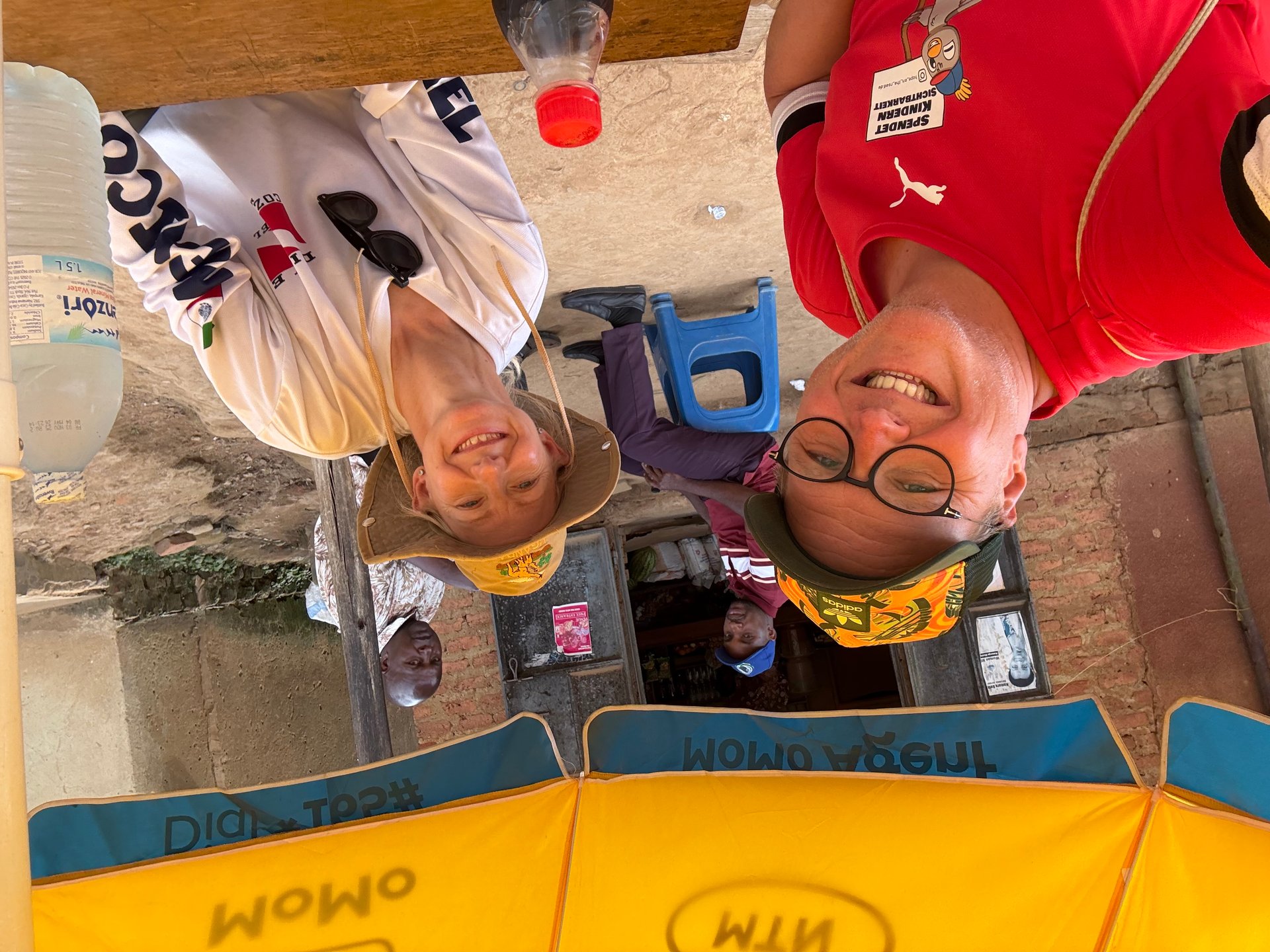
The difference between a safari company and a community-connected operator is what happens after the gorilla trek. Nturo Safaris, rooted in the Buhoma area, facilitates connections that a Kampala-based international operator cannot replicate. When we visited Buhoma in January 2026, we sat on a bench outside a small shop on the main road, drinking water under a makeshift parasol, watching village life unfold. That spontaneous moment — photographed at GPS −0.9673°N, 29.6145°E in June 2026 — was not scheduled by any itinerary. It happened because the driver knew where to stop, and the shopkeeper knew who we were travelling with.
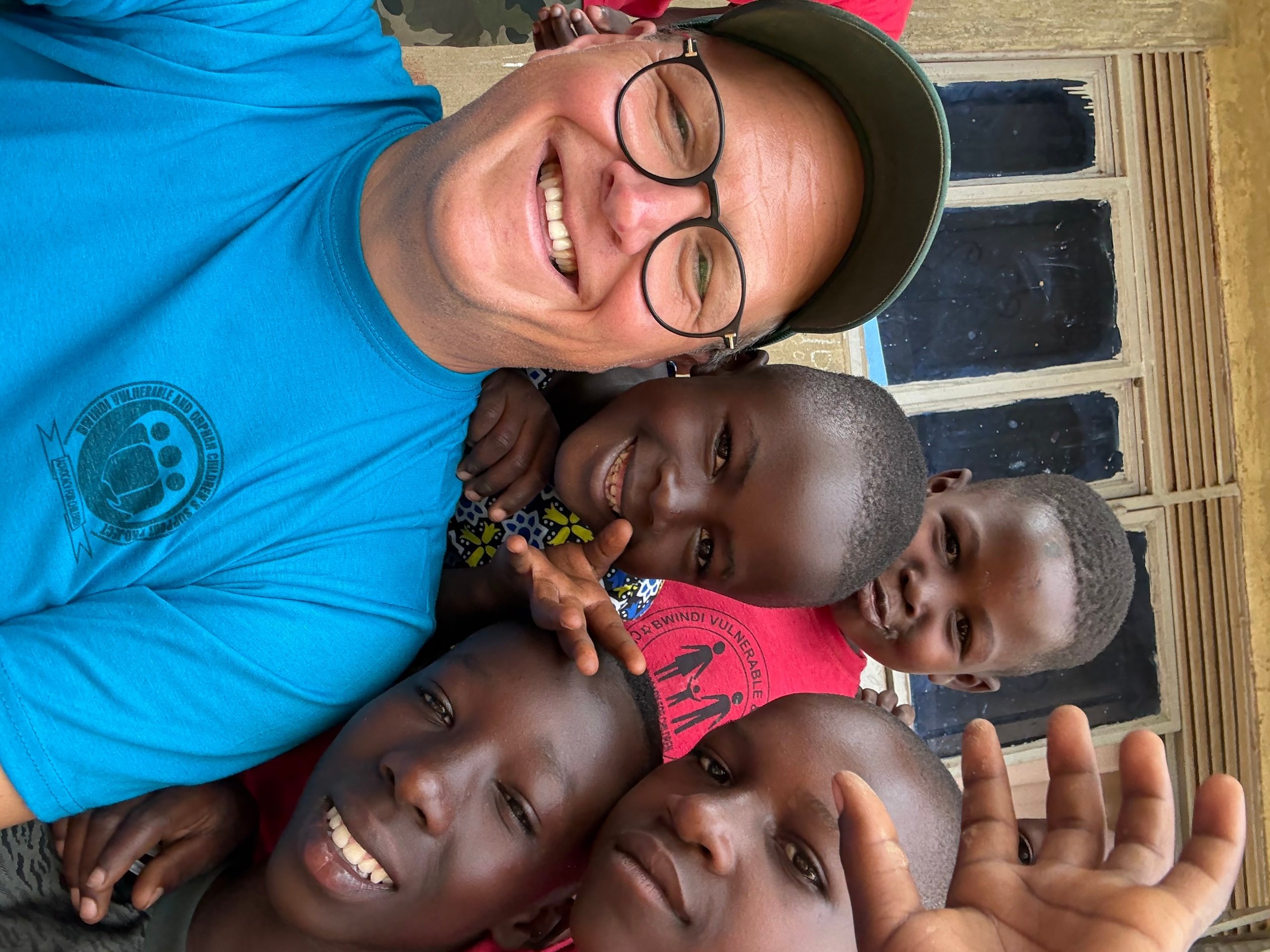
In the Buhoma community, we met Nicholas, a local pastor who works with orphaned and vulnerable children. A photo montage shows him in his white cassock with his wife Media, surrounded by young people from the community projects he supports. We also visited the local orphanage, where I took a group photograph with the children in January 2026 (GPS: 0.9617°S, 29.6109°E). The children were overjoyed to see themselves in the camera display — there are no mirrors in the orphanage, and a photograph is a rare opportunity for them to see their own faces. These are not tourist attractions. They are the social infrastructure of a village where tourism revenue — channelled through operators like Nturo Safaris, lodge bookings, and the UWA revenue-sharing programme — makes a measurable difference to daily life.
The KCCA operates six public health centres in Kampala to provide primary healthcare services, funded through national and municipal budgets. In the fiscal year 2017/18, water supply for these health centres was allocated UGX 99.6 million (KCCA MPS 2017–18). In rural Bwindi, no such public infrastructure exists. Lodge tourism fills the gap — paying for clean water, school fees, and basic medical care through community revenue schemes. When a traveller books through Nturo Safaris and stays at a community-connected lodge, that spending enters an economy where every dollar has visible, tangible impact. Lodges in Uganda maintain the highest occupancy rates of any accommodation category in the country, driven by demand for properties near national parks — and that demand translates directly into community livelihoods.
Frequently Asked Questions
Does Nturo Safaris pick you up from Entebbe Airport?
Yes. Nturo Safaris arranges airport pickup from Entebbe International Airport as part of their safari packages. A driver meets you at arrivals and drives you to your Kampala hotel or directly toward your safari destination. The drive from Entebbe to central Kampala takes 45 minutes to over two hours depending on traffic. Most operators, including Nturo Safaris and Afoyo African Safaris, include this transfer in their package pricing.
Which Kampala lodges do safari operators use as transit stops?
Kampala lodges range from budget to luxury. Budget travellers stay at Kampala Backpackers Hostel and Campsite (from $8 per person for camping) or Red Chilli Hideaway Hostel. Mid-range options include hotels in the Kololo and Nakasero neighbourhoods. Luxury travellers use Kampala Serena Hotel or Sheraton Kampala. Operators like Nturo Safaris can book these on your behalf or recommend based on your budget and departure schedule.
What food can I expect at Uganda safari lodges?
Safari lodges serve three-course meals combining Ugandan staples with international dishes. Expect matoke, posho, groundnut sauce, fresh tilapia, and seasonal vegetables. Breakfast includes eggs, fresh fruit, and Ugandan coffee. Most lodges operate on full-board plans because there are no restaurants nearby. Lodges near Bwindi can accommodate vegetarian guests with advance notice.
Can I eat vegetarian on a Uganda safari?
Yes. Traditional Ugandan cuisine includes many plant-based dishes: matoke, sweet potatoes, cassava, beans, groundnut sauce, and chapati. Safari lodges can prepare vegetarian menus when notified in advance. In Kampala, Ethiopian restaurants serve injera with vegetarian wat sauces, and cafes in Kololo and Kabalagala offer plant-forward menus. The key is telling your operator about dietary needs at booking time.
How does Nturo Safaris compare to other Uganda safari operators?
Nturo Safaris is locally owned and based near Buhoma, giving them direct knowledge of the Bwindi area. Afoyo African Safaris serves broader East African itineraries. Deks Safaris specialises in Murchison Falls routes. The gorilla permit is $800 regardless of operator — the real differentiator is local knowledge, vehicle condition, guide experience, and how well logistics are managed on unpredictable roads.