Fort Portal and Kibale — Kabarole Tours and the Crater Lakes
Fort Portal, the administrative centre of the Kabarole District in western Uganda, sits at the gateway to three distinct safari experiences: chimpanzee tracking in Kibale Forest National Park, crater lake exploration in the rolling hills between Kibale and Queen Elizabeth, and the hot springs of Semliki National Park. The town itself is compact and walkable, with a market, a growing number of restaurants, and a handful of hotels catering to overnight visitors.
Kabarole Tours is a locally owned operator based in Fort Portal that organises day tours, multi-day packages, and chimpanzee tracking permits in Kibale Forest. Their guides have deep knowledge of the Kabarole District — not just the national parks, but the surrounding community areas, waterfalls, and tea plantations that most travellers pass through without stopping. For visitors who arrive in Fort Portal without a fixed itinerary, Kabarole Tours is the kind of operator who can build a programme from scratch in a single conversation. They arrange transport, lodge bookings, and park entry in a region where doing it yourself means navigating unpaved roads and UWA permit offices without local contacts.
The lodges around Fort Portal fall into three tiers. At the upper end, the Orchids Safari Club in Fort Portal town offers 30 rooms with a swimming pool and conference facilities — a conventional hotel rather than a bush camp, but well-positioned for early departures to Kibale. At the mid-range level, Crater Safari Lodge, opened in 2013 by Crystal Lodges on the rim of Lake Nyinabulitwa, has nine deluxe cottages overlooking one of the most photogenic crater lakes in the region. At the community end of the spectrum sits Lake Nkuruba Community Cottages & Campsite, a locally run property on the shores of Lake Nkuruba that has been operating since 1991. The cottages range from basic to comfortable, the campsite is simple, and the entire operation is managed by the surrounding community rather than an outside investor.
Nkuruba Community Tours, the tour arm of the Lake Nkuruba property, organises guided walks, birding trips, and community visits in the area. The model is straightforward: the lodge, the tours, and the community are a single economic unit. Revenue from guests stays within the village. For travellers interested in community-based tourism rather than luxury bush camps, this is one of the most established examples in Uganda — 35 years of continuous operation is not a marketing claim, it is a track record.
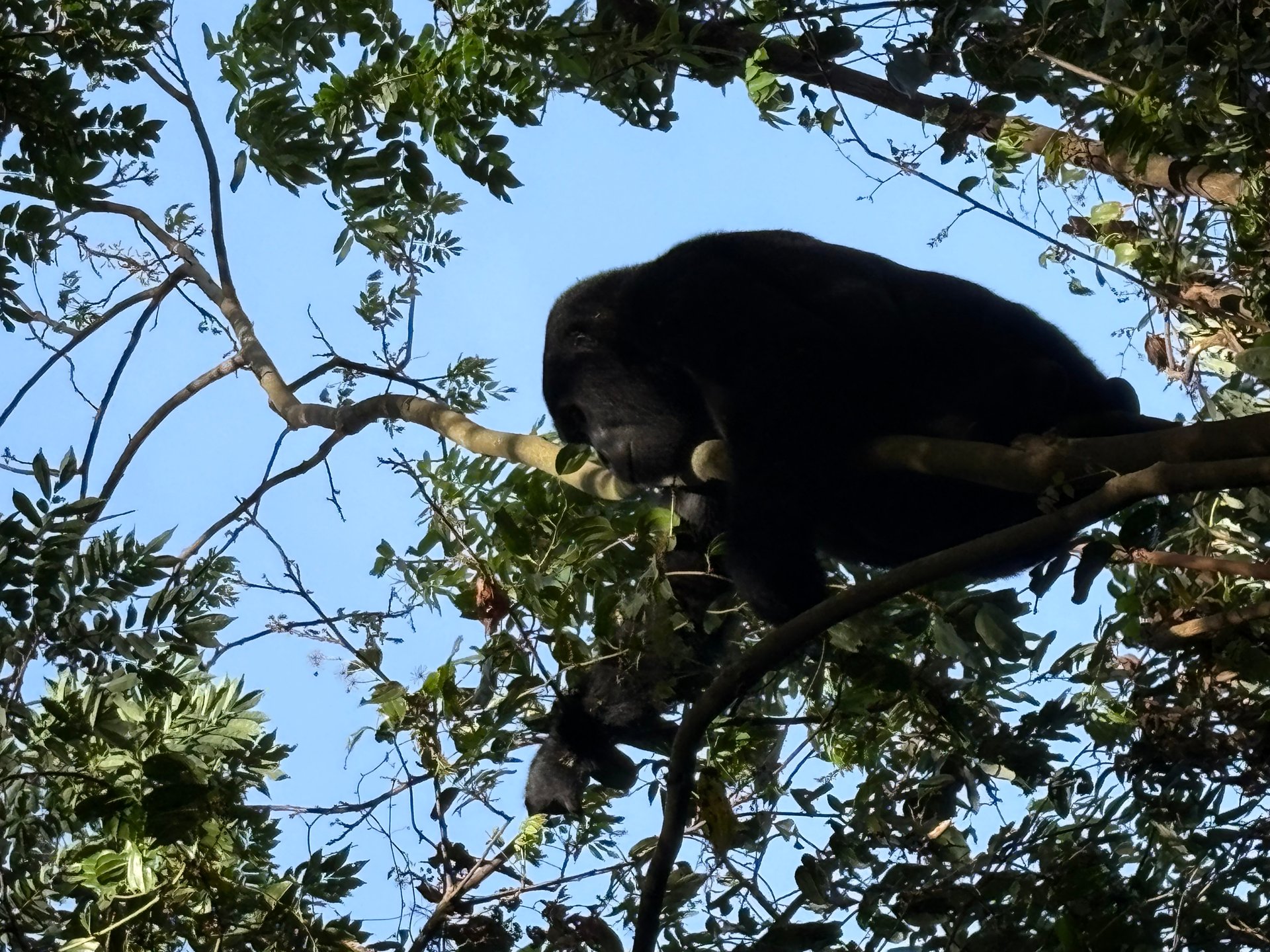
Kibale Forest itself protects the highest density of primates in East Africa. Chimpanzee tracking permits cost $200 per person (Stand 2026, UWA rates). The forest also supports red colobus monkeys, L’Hoest’s monkeys, and over 375 bird species. Lodges nearest to the Kanyanchu tracking station — the main entry point for chimpanzee trekking — include Primate Lodge Kibale, Turaco Treetops, and Kibale Forest Camp, all within a short drive of the trailhead.
Kisoro and the Virunga Foothills — Virunga Adventure Tours
Kisoro, in Uganda’s far southwestern corner, is the staging point for Mgahinga Gorilla National Park and a common crossing point for travellers heading to or from Rwanda and the Democratic Republic of Congo. The town is small, dusty, and surrounded by the three volcanic peaks of the Virunga range — Muhabura (4,127 m), Gahinga (3,474 m), and Sabinyo (3,645 m). On a clear day, which is less common than the guidebooks suggest, all three are visible from the main road.
Virunga Adventure Tours is a local operator based at the Golden Monkey Guesthouse in Kisoro. They specialise in gorilla tracking, golden monkey trekking, and volcano hikes in the Virunga region. The company is small — a handful of guides, a few vehicles — but their location in Kisoro gives them ground-level knowledge that Kampala-based operators lack. They can arrange same-week permits for Mgahinga when availability opens up, and they know which lodges have rooms when the larger booking platforms show full.
Uganda lodges around Kisoro tend to be simpler than those near Bwindi. The Golden Monkey Guesthouse itself is a budget property with basic rooms. Mount Gahinga Lodge, operated by Volcanoes Safaris, sits at the upper end — a restored farmhouse with a bandas-style layout, hot-water showers, and views of the volcanoes. Between the two extremes, Travellers Rest Hotel has been hosting visitors since the 1950s, when Dian Fossey and George Schaller used it as a base for gorilla research. The building has been renovated, but the historical connection is genuine — photographs and letters from the era are displayed in the common areas.
The Kisoro area also serves as a base for the southern sectors of Bwindi Impenetrable National Park. The Nkuringo and Rushaga sectors are reachable from Kisoro, though the road to Nkuringo involves a steep, winding descent that tests both vehicle and driver. The Nkuringo Gorilla Safari Lodge, perched on a ridgeline overlooking the Bwindi forest canopy, is one of the most dramatically positioned lodges Uganda has to offer.
Masindi and Murchison Falls — Yebo Tours and the Nile
Masindi is the nearest town of significant size to Murchison Falls National Park, Uganda’s largest protected area at 3,893 square kilometres. The town is a two-hour drive from the park’s southern entrance at Kichumbanyobo Gate, and most travellers pass through it on the way north from Kampala.
Yebo Tours is a Ugandan-led travel agency based in Masindi that organises safaris to Murchison Falls, Budongo Forest Reserve, and the surrounding area. What distinguishes Yebo Tours from operators based in Kampala or Entebbe is that they also operate their own accommodation: Yebo Safari Camp, located inside Murchison Falls National Park. Running both the tour operation and the camp gives them an unusual degree of control over the guest experience — the guide who drives you on the game drive is from the same team that prepares your meals and maintains the tents.
Budongo Forest Reserve, adjacent to Murchison Falls to the southwest, protects one of Uganda’s largest populations of chimpanzees. The Kaniyo Pabidi sector offers chimpanzee tracking at a lower cost than Kibale ($50 per person, Stand 2026), and the forest is also home to over 360 bird species including the rare Puvel’s illadopsis. Yebo Tours arranges combined itineraries that cover Budongo in the morning and Murchison Falls game drives in the afternoon — the two sites are close enough for a single-day double programme.
The lodge landscape around Murchison Falls is well developed. Paraa Safari Lodge, at the ferry crossing on the Victoria Nile, has been welcoming visitors since the 1950s and remains the park’s most established property. Bakers Lodge, a luxury tented camp on the south bank, is the premium option. Pakuba Safari Lodge sits on the north bank in an isolated position surrounded by game-viewing country. Bwana Tembo Safari Camp, near Pakwach at the park’s western edge, is an unexpected find — an Italian-influenced camp with surprisingly good food in a remote location. Budget travellers use Red Chilli Rest Camp at the park headquarters near Paraa, which offers dormitory beds, bandas, and a campsite.
Karamoja and the Northeast — Kara Tunga Tours and the Remote Frontier
Karamoja, in Uganda’s far northeast, is the least-visited safari region in the country — and arguably the most rewarding for travellers willing to make the effort. The region centres on Moroto, a small town beneath the 3,083-metre bulk of Mount Moroto. The landscape is semi-arid, culturally distinct from the rest of Uganda, and home to the Karamojong pastoralist communities whose traditions and cattle culture remain largely intact.
Kara Tunga Tours is a local operator in Moroto with a mission that goes beyond tourism logistics. The company focuses on community empowerment, conservation, and cultural heritage — organising visits to Karamojong communities, warrior walks, and excursions to rock art sites in the surrounding hills. They also manage their own accommodation: Kara Tunga Camp, a quiet property in Moroto with safari tents and double rooms, and they work closely with the Moroto Hotel, a 40-room property with four cottages below Mount Moroto that was formerly state-run and has since been privatised.
From Moroto, Kara Tunga arranges trips to Kidepo Valley National Park, widely regarded as Uganda’s wildest and most remote park. Kidepo protects 77 mammal species and 475 bird species, including several — cheetah, ostrich, striped hyena — found nowhere else in Uganda. The park is a ten-hour drive from Kampala, or a chartered flight to Kidepo’s airstrip. Inside the park, Apoka Safari Lodge, operated by Wildplaces Africa, is the only luxury option — ten cottages overlooking the Narus Valley from the Apoka headquarters area.
The Uganda lodges in Karamoja are fewer and simpler than in the western parks, but the trade-off is solitude. During peak season in Queen Elizabeth or Bwindi, you share game drives and trekking trails with dozens of other visitors. In Kidepo, you may spend an entire morning on the savanna without seeing another vehicle.
Mbarara and Western Uganda — Moses Uganda Tours & Travel
Mbarara, the largest city in western Uganda, sits on the Kampala–Kabale highway that most travellers take to reach Bwindi and Lake Bunyonyi. The city is a logical overnight stop on long drives, and it serves as a base for visiting Lake Mburo National Park, the closest savanna park to Kampala at roughly four hours by road.
Moses Uganda Tours & Travel, led by Moses M. Kyomukama, is a tour operator based in Mbarara that offers safari itineraries and vehicle rental. For travellers who prefer to self-drive but want the security of a local contact, Kyomukama’s vehicle rental service provides 4x4s with optional driver-guides — a practical middle ground between full-service operators and complete independence. The company’s Mbarara base means they are particularly knowledgeable about the western corridor: Lake Mburo, Bwindi, Queen Elizabeth, and the connecting roads.
Lake Mburo National Park is compact (370 square kilometres) and unusually accessible. It is the only park in southern Uganda where walking safaris and horseback riding are available alongside conventional game drives. The park protects zebra, impala, eland, and buffaloes, along with leopards that are occasionally spotted on night drives. Lodges inside and around the park include Mihingo Lodge (luxury, known for horseback safaris), Rwakobo Rock (a mid-range lodge built around granite kopjes), and Leopard Rest Camp (budget, UWA-managed).
Soroti and Teso — Homestead Tours and an Ex-Ranger’s Perspective
Eastern Uganda is the part of the country that most safari itineraries skip entirely. Soroti, the commercial centre of the Teso subregion, is rarely mentioned in travel guides, and yet it is home to one of the more compelling operator stories in the country.
Ben Ejadu, founder of Homestead Tours and Safaris, spent 15 years as a ranger with the Uganda Wildlife Authority before launching his own tour company in Soroti. That background gives him an unusual combination of wildlife management expertise and commercial tourism experience. Ejadu’s company offers flexible tour packages that cover the eastern circuit — Sipi Falls, Mount Elgon National Park, Pian Upe Wildlife Reserve — alongside more conventional western Uganda itineraries. His UWA connections mean he understands the permit system from the inside, which translates into practical benefits for clients navigating last-minute availability.
[QUOTE: Ben Ejadu on what rangers know about lodges that tourists do not — collect on next visit]
The lodges in eastern Uganda are modest but functional. Soroti itself has several business hotels. Sipi Falls, at the western edge of Mount Elgon, has a cluster of properties ranging from the Sipi Falls Resort (mid-range, with views of the three waterfalls) to backpacker-oriented hostels. Mount Elgon National Park, which straddles the Uganda–Kenya border, has basic UWA bandas at the Budadiri trailhead and simple camps along the hiking routes. The park is less developed than the western parks, but its 4,321-metre summit and the Sipi Falls landscape are worth the detour for travellers with time.
Buhoma and the Gorilla Lodge Belt — Where Lodges and Operators Converge
The densest concentration of Uganda lodges sits in and around Bwindi Impenetrable National Park, spread across four sectors: Buhoma, Ruhija, Rushaga, and Nkuringo. Each sector has its own cluster of lodges, its own habituated gorilla families, and its own UWA trekking starting point. The choice of sector determines not only which gorilla family you might encounter but also which lodges are available to you — and operators like Turigye Tours, Virunga Adventure Tours, and Kabarole Tours each have their preferred properties.
Buhoma, the most popular sector, has the longest-established tourism infrastructure. Sanctuary Gorilla Forest Camp, inside the national park boundary, is the most prestigious address — eight canvas-and-wood tents with en-suite bathrooms, set in a clearing where gorillas occasionally wander through the camp itself. Buhoma Lodge, just outside the park gate, is a well-run mid-range option with comfortable rooms and a dining area that overlooks the forest edge. Buhoma Community Rest Camp, managed by the local community association, offers the most affordable accommodation within walking distance of the trekking point.
The Ruhija sector, at higher elevation on the eastern side of Bwindi, has fewer lodges but equally rewarding gorilla encounters. Ruhija Gorilla Safari Lodge, part of the Asyanut Safari group, provides double rooms and wooden cottages within a short distance of the Ruhija briefing point. Gorilla Mist Camp, a budget tented camp nearby, caters to travellers who want proximity to the trekking without the mid-range price point.
What distinguishes a good operator from a mediocre one is how they handle the sector assignment. Gorilla permits are sector-specific: a Buhoma permit does not work in Rushaga, and vice versa. A knowledgeable operator books the permit first, then matches the lodge to the sector — not the other way around. An operator who books a lodge in Buhoma and then discovers that the only available permit is in Nkuringo has created a problem that costs the traveller an extra three hours of driving on trekking morning.
Cross-Border Connections — Uganda and Rwanda Operators
Several operators listed in the Lodges of Uganda directory work across the Uganda–Rwanda border. Amahoro Tours, based in Rwanda, specialises in ecologically sustainable travel and community-based tourism in Rwanda and the DRC, but also arranges cross-border itineraries that combine Rwandan gorilla trekking (at Volcanoes National Park) with Uganda’s Queen Elizabeth and Bwindi circuits. Green Hills Eco Tours, operating from Rubavu on Lake Kivu, offers similar cross-border packages.
For travellers arriving through Kigali International Airport — sometimes a cheaper entry point than Entebbe, depending on the airline — Rwanda’s capital offers a range of accommodation. Heaven Boutique Hotel, an American-run property in the Kiyovu neighbourhood with a saltwater swimming pool and a restaurant ranked among Kigali’s best, serves as a comfortable first-night stop. The Retreat, next door to Heaven, runs entirely on solar power. At the luxury end, The Manor Hotel in Nyarutarama offers five-star facilities with three restaurants, a fitness centre, and a pool. Budget travellers use properties like Iris Guest House (Kiyovu, operating since 2001) or Hotel Baobab in Nyakabanda. From any of these, the drive to the Cyanika border post and onward to Kisoro takes roughly three hours — making Kigali a viable gateway to Uganda’s southwestern parks.
Go Kigali City Tour, a Kigali-based operation founded by an American couple, offers guided day and half-day city tours for travellers with a layover. The Kigali Genocide Memorial, Kigali Cultural Village, and the city’s central market are standard stops — a sobering but essential cultural context for any East Africa visit.
How to Verify an Operator — Industry Bodies and Environmental Standards
Uganda’s tourism sector is loosely regulated, which makes independent verification important. Two organisations provide a starting point: the Association of Uganda Tour Operators represents licensed tour and travel companies at the national level, and the Tour Guides Forum for Uganda trains and certifies individual guides. Membership in either body is voluntary but signals a baseline commitment to professional standards.
For lodges, the regulatory framework has more teeth. Under the National Environment (Audit) Regulations, Statutory Instrument No. 47 of 2020, all luxury tented camps, lodges, and resorts operating in or near wildlife reserves, forest reserves, or wetlands must undergo regular environmental compliance audits. The lead agency must submit an Environmental Enforcement Audit Report to the Uganda Wildlife Authority within 30 days of completing each audit. This means that established, compliant lodges have a documented environmental record — and that travellers can, in principle, ask whether a property has passed its most recent audit.
In practice, the question to ask any operator is straightforward: which specific lodges do you use, and can you confirm their current operating status? An operator who names properties — Mweya Safari Lodge, Paraa Safari Lodge, Buhoma Lodge — and can describe them from experience is more trustworthy than one who offers vague promises of “luxury accommodation” without specifying where.
The Lodges of Uganda operator directory lists 495+ individually verified operators with contact details, specialisation profiles, and regional coverage. The lodge directory covers 215+ properties with pricing, GPS locations, and activity information. Between the two, independent travellers have the tools to cross-reference any operator’s claims against verified data.
Kampala — The Starting Point Most Travellers Underestimate
Most safari itineraries treat Kampala as a transit point — land at Entebbe, drive through the capital, head west. That is a missed opportunity. Kampala generates 65 per cent of Uganda’s national GDP (according to the Multi-Hazard Risk and Vulnerability Profile, 2018), and its cultural density rewards even a single day of exploration.
The Kasubi Tombs, a UNESCO World Heritage Site and the burial place of four Buganda kings, sit on a hilltop in the northern part of the city. The site was severely damaged by fire in 2010 and has been undergoing restoration, but it remains an important cultural landmark and is open to visitors. The Uganda National Museum, located three kilometres from the city centre along Kiira Road, covers the country’s archaeology, ethnography, and natural history in a compact but well-curated space. Neither attraction takes more than two hours, and both provide context that enriches everything you see in the national parks.
For lodges in the Entebbe and Kampala area, see our guide to the best lodges near Entebbe Airport — useful for first-night and last-night stays when flights arrive or depart at inconvenient hours.