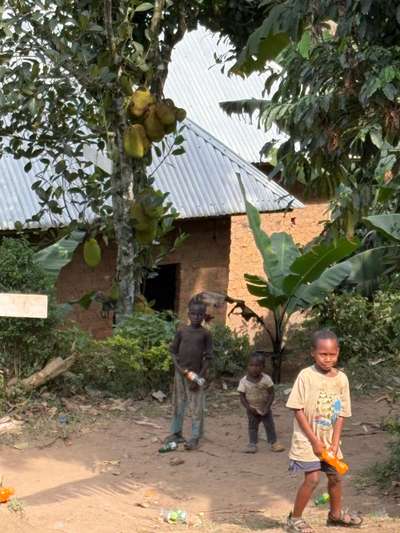
We visited the local chicken farmer to see how the chicks are kept and raised. The farmer lives this very intensely and treats the chicks very well. We have bought chicks there multiple times for the orphanage — they are kept either for eggs or meat. The orphanage raises them carefully: eggs provide daily nutrition and a small income when sold at the village market, and having meat on the table is a genuine celebration, not a routine meal. Each time we returned, the children near the orphanage gathered — shy at first, their clothes worn thin, but curious and warm once invited to eat. That scene, repeated across our six visits to the Bwindi region, is the backdrop against which the luxury lodges described in this article exist. The contrast is not incidental. It is the reality of southwestern Uganda, where world-class hospitality and deep rural poverty occupy the same landscape, sometimes separated by less than a kilometre of unpaved road.
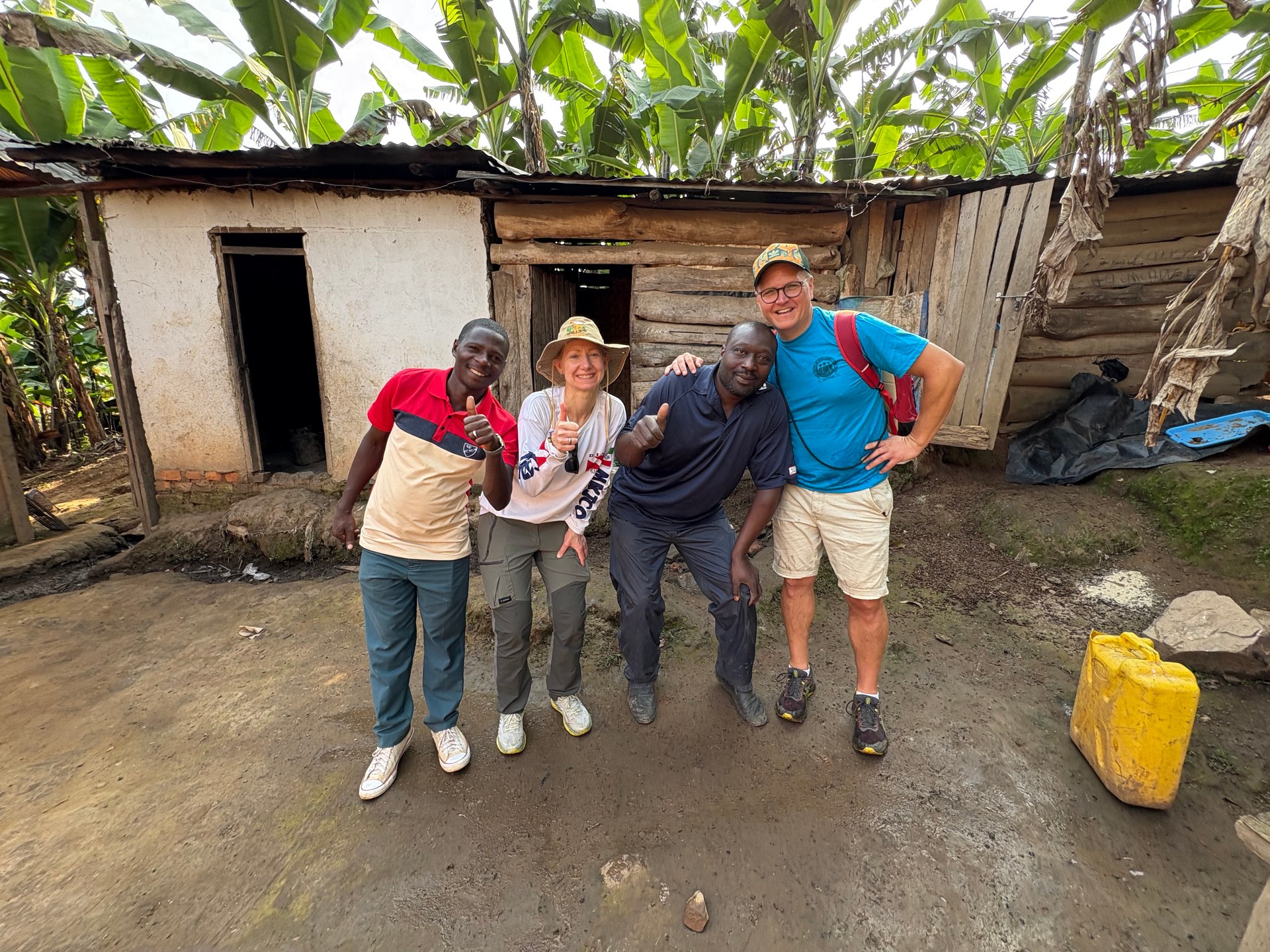
This article examines the luxury end of the accommodation spectrum in and around Bwindi Impenetrable National Park. It covers properties that charge $500 or more per night, offer full-board or value-inclusive plans, and deliver a level of service, design, and environmental commitment that sets them apart from standard safari lodges. The information is drawn from six personal visits totalling fifteen days, conducted in January and June 2026, with photography verified at GPS coordinates including −0.9665°N, 29.6126°E. Where I have not personally stayed at a property, I note this explicitly and rely on published sources, operator information, and conversations with guides and industry contacts who have.
Understanding the luxury lodge landscape requires a broader view of Uganda's accommodation sector. The Uganda Tourism Board has graded 117 facilities nationally, of which 23 are classified as safari lodges. The country offers a total of 350,550 rooms across all categories — a figure that reflects both the established urban hotel sector and the rapidly expanding safari and eco-lodge segment in national park regions. Uganda's biodiversity underpins this growth: over 1,040 bird species, 345 mammals, and 165 reptiles make it one of the most species-rich countries in Africa, and the 459 mountain gorillas documented in the 2018–2020 census represent roughly half of the world's entire population. Luxury lodges position themselves as gateways to this biodiversity, and the best of them integrate conservation, community development, and hospitality into a coherent offering.
What Defines Luxury in the Bwindi Context
Luxury in Bwindi does not mean what it means in Nairobi or Cape Town. There are no infinity pools overlooking the savannah, no air-conditioned lobbies with marble floors, no minibar stocked with imported champagne. Luxury here is measured by different standards: the quality of local materials used in construction, the intimacy of a property with fewer than ten rooms, the skill of a chef working with regional produce, the knowledge of a guide who has tracked gorillas for twenty years, and the commitment of an operator to the communities that surround the park.
All luxury lodges in the Bwindi area include breakfast, and most operate on half-board (HP) or value-inclusive (VP) plans that cover all meals and selected drinks. Generator power is standard, and most properties switch off generators at approximately 22:00. Solar installations are increasing across the sector, and some newer properties maintain partial electrical supply through the night. Expect candlelit evenings and early bedtimes — this is not a limitation but a feature. The forest wakes early, and so will you. A gorilla trekking permit costs $800 per person, purchased separately through the Uganda Wildlife Authority, and trekkers must be at least fifteen years old.
The choice of lodge should be guided by the gorilla group assigned to you. Bwindi is divided into four sectors — Buhoma, Ruhija, Rushaga, and Nkuringo — and your permit is sector-specific. Staying in the same sector as your assigned group minimises the morning drive to the briefing point, which can make the difference between a relaxed start and a stressed, pre-dawn transfer across unpaved roads. The gorilla population of 459 individuals (2018–2020 census) is distributed across these four sectors, with habituated family groups in each. Choose your lodge after securing your permit, not before.
Buhoma Lodge — Forest Canopy Intimacy at $500 per Night
Buhoma Lodge sits at the northern edge of Bwindi Impenetrable National Park in the Buhoma sector, the original and most-visited gateway to gorilla trekking. Operated by Uganda Exclusive Camps, the property consists of eight cottages built from local materials — timber, stone, and thatch sourced from the surrounding region. The architectural philosophy is deliberate: integrate with the forest rather than impose upon it. Each cottage opens to views of the forest canopy, and the elevated lounge with its stone fireplace serves as the social heart of the property, particularly in the evenings when temperatures drop and the generator falls silent.
Rates start at $500 per night on a value-inclusive plan that covers all meals, selected drinks, and laundry. The cuisine draws on regional ingredients — matoke, fresh vegetables from nearby farms, locally sourced proteins — prepared by a kitchen team that balances Ugandan tradition with international technique. Morning tea and coffee are delivered to your cottage before breakfast, a small ritual that defines the pace of a Buhoma Lodge stay. You sit on your private veranda, watch the mist lift from the forest below, and listen to the birds cataloguing themselves across the canopy. There are over 1,040 bird species in Uganda, and a disproportionate number of them seem to live within earshot of this lodge.
The eco-orientation of Buhoma Lodge is not superficial. The property employs staff from surrounding communities, sources materials locally wherever possible, and participates in the broader conservation framework that links tourism revenue to park management. The Uganda Wildlife Authority's community revenue-sharing programme channels a percentage of park fees to parishes bordering Bwindi, and lodges like Buhoma contribute to this ecosystem both directly through employment and indirectly through the tourism traffic they generate. With only eight cottages, the environmental footprint is modest, and the guest-to-staff ratio allows for a level of personal attention that larger properties cannot replicate.
Bisate Lodge (Rwanda) — The $2,598 Benchmark Across the Border
Any serious discussion of luxury gorilla lodges must acknowledge Bisate Lodge, even though it sits on the Rwandan side of the Virunga massif near Volcanoes National Park. Bisate serves as the regional benchmark for what ultra-luxury gorilla tourism looks like at scale, and understanding its offering helps contextualise what Uganda's luxury properties deliver at a fraction of the price.
Bisate Lodge comprises six thatched villas built into a reforested hillside with views of the Virunga volcanoes. The architecture uses local materials throughout — lava stone, sustainably harvested wood, hand-stitched leather, and woven straw — creating interiors that feel both luxurious and grounded in their landscape. The property has won multiple international awards for design and sustainability, and its reforestation programme has planted tens of thousands of indigenous trees on formerly degraded land surrounding the lodge. Community development projects run in parallel, employing local residents in construction, hospitality, and conservation roles.
Rates start at $2,598 per night on a value-inclusive plan. The produce served at meals is partly grown on site, reducing transport emissions and ensuring freshness. The volcano views from the villa terraces are genuinely extraordinary — on clear mornings, the peaks of Karisimbi and Bisoke fill the horizon. For travellers with the budget, Bisate represents the current ceiling of gorilla lodge luxury in East Africa. For those comparing options, it also illustrates why Uganda's luxury lodges — offering comparable wildlife experiences at one-third to one-fifth the nightly rate — represent exceptional value in the broader regional context.
Sabyinyo Silverback Lodge — Community Trust Ownership at $1,000 per Night
Sabyinyo Silverback Lodge occupies a unique position in the East African luxury lodge landscape. Built by Governor's Camp Collection, the Kenyan safari operator with decades of experience in the Masai Mara, the lodge is owned by SACOLA — the Sabyinyo Community Livelihood Association, a community trust that channels lodge profits directly to local development projects. This ownership model means that every dollar spent at Sabyinyo benefits the communities surrounding Volcanoes National Park in a structural, ongoing way, not through ad hoc donations or corporate social responsibility programmes, but through actual ownership of the asset.
Rates begin at $1,000 per night on a value-inclusive plan. The lodge offers comfortable stone-and-timber cottages with fireplaces, en-suite bathrooms with hot water, and a dining room that serves multi-course meals drawing on both local and international cuisine. The property sits at the base of the Virunga volcanoes, and its gardens are meticulously maintained. The Governor's Camp pedigree shows in the service standards — staff are trained to a level that reflects the operator's decades of experience in high-end safari hospitality. For travellers who want luxury with a clear conscience, Sabyinyo's community trust model is arguably the most compelling ownership structure in the region.
Wildwaters Lodge — Island Luxury on the Nile at $600 per Night
Wildwaters Lodge breaks the pattern of this article in the best possible way. It is not in Bwindi, not in the Virunga region, and not focused on gorilla trekking. Instead, it sits on a private island in the River Nile near Kalagala Falls, accessed from the western bank at Kangulumira, roughly two hours east of Kampala. I include it here because any traveller planning a luxury itinerary in Uganda will likely combine gorilla trekking with other experiences, and Wildwaters is the finest standalone luxury property in the country outside the gorilla trekking zones.
The lodge consists of ten luxury cottages linked to each other and to the main building by suspended wooden bridges that cross above the rushing river. The sound of the Nile is constant — not as background noise, but as the defining sensory feature of the property. A natural swimming pool carved from pink granite sits at the water's edge, filled and refreshed by the river itself. The five-course dinner service is the most ambitious culinary offering I have encountered at any lodge in Uganda, with courses that balance local ingredients with international technique and presentation.
Rates start at $600 per night on a value-inclusive plan. The island setting provides a level of seclusion that no mainland property can match — there are no passing vehicles, no neighbouring buildings, no sounds beyond the river and the forest. For travellers arriving after several days of gorilla trekking in Bwindi's demanding terrain, Wildwaters offers a physical and psychological counterpoint: luxury as recovery, with the Nile doing the therapeutic work. The Kalagala Falls themselves are visible from several cottages, and kayaking and white-water rafting excursions can be arranged through the lodge.
Luxury Tented Camps — Canvas and Comfort Across Uganda's Parks
The luxury tented camp is a distinct accommodation category that deserves separate treatment. These are not tents in the backpacking sense. They are permanent structures with canvas walls stretched over timber or steel frames, housing proper beds with quality mattresses, en-suite bathrooms with flush toilets and hot showers, writing desks, and often a private veranda overlooking the surrounding landscape. The canvas construction means you hear the forest, the savannah, or the river in a way that solid walls would muffle. For many guests, this immersive quality makes tented camps the preferred luxury option.
Luxury tented camps are available across Uganda's major national parks: around Bwindi Impenetrable National Park for gorilla trekking, in Queen Elizabeth National Park (QENP) for tree-climbing lions in Ishasha and boat safaris on the Kazinga Channel, at Murchison Falls National Park (MFNP) for the dramatic waterfall and Nile wildlife cruises, near Kibale Forest for chimpanzee tracking, and at Lake Mburo for a gentler safari experience closer to Kampala. The amenities are lodge-standard: full meal service, guided activities, and attentive staff. Most operate on half-board or full-board plans, with breakfast included as standard.
The practical advantages of tented camps include lower construction impact on the environment, the ability to relocate or remove structures with minimal trace, and a guest experience that feels closer to the landscape. The practical disadvantages are limited soundproofing (a benefit for most, a drawback for light sleepers), vulnerability to extreme weather events, and in some cases, the proximity of wildlife to the tent itself. During our visits, we encountered lodges where monkeys routinely investigated the tent exteriors and where hippos grazed within metres of the canvas walls overnight. These encounters are managed by trained staff and are part of the experience, not a safety concern.
Practical Considerations for Luxury Lodge Stays
Several practical realities apply to all luxury lodges in the Bwindi region and should be understood before booking. Generator power is the norm, not the exception. Most properties run generators during morning and evening hours and switch them off at approximately 22:00. Solar power is increasingly supplementing generator capacity, but no lodge in the Bwindi area offers 24-hour grid-connected electricity. Charge your devices during generator hours, carry a headlamp for nighttime navigation, and accept that the evening silence after the generator stops is one of the great pleasures of a forest lodge stay.
Gorilla trekking permits at $800 per person are purchased through the Uganda Wildlife Authority and are not included in any lodge rate. Permits are sector-specific: a Buhoma permit cannot be used for trekking in Rushaga, and the sectors are separated by hours of driving on unpaved roads. The most important piece of logistics in a Bwindi trip is matching your lodge location to your permit sector. A luxury lodge in the wrong sector means a 3:00 a.m. wake-up call and a bumpy transfer that will exhaust you before the trek begins. Trekkers must be at least fifteen years old, and anyone showing symptoms of respiratory illness will be turned away at the briefing point to protect the gorillas from human pathogens.
The mountain gorilla population of 459 individuals documented in the 2018–2020 Bwindi-Sarambwe census is distributed across the park's four sectors. Habituated groups — families accustomed to human presence through years of careful daily contact by UWA rangers — are the only groups available for trekking. The number of habituated groups varies by sector, with Rushaga currently hosting the largest number. Each group receives a maximum of eight trekkers per day, ensuring that tourism pressure remains within scientifically determined limits. This cap is non-negotiable and is the reason permit availability constrains the entire planning process.
Luxury Lodge Comparison Table
| Lodge | Sector / Location | Price From | Rooms | Special Features |
|---|---|---|---|---|
| Buhoma Lodge | Buhoma | $500+ VP | 8 cottages | Local materials, forest canopy views, elevated lounge with fireplace, morning tea/coffee to cottage |
| Bisate Lodge | Volcanoes NP (Rwanda) | $2,598+ VP | 6 villas | Award-winning design, reforestation programme, lava stone/wood/leather interior, Virunga volcano views |
| Sabyinyo Silverback Lodge | Volcanoes NP (Rwanda) | $1,000+ VP | 9 cottages | Community trust (SACOLA) ownership, Governor's Camp pedigree, stone-and-timber cottages with fireplaces |
| Wildwaters Lodge | Nile River, Kangulumira | $600+ VP | 10 cottages | Private island, suspended wooden bridges, pink granite swimming pool, 5-course dinner, Kalagala Falls views |
| Luxury Tented Camps | Bwindi, QENP, MFNP, Kibale, Lake Mburo | $400–1,200 | Varies (6–20) | Canvas construction, immersive forest/savannah sounds, lodge-standard amenities, lower environmental footprint |
The Community Context — Where Luxury Meets Daily Life
The chicken farmer we visited lives less than three kilometres from Buhoma Lodge. His operation is small — a few dozen chicks at a time, raised with a care and attentiveness that would satisfy any animal welfare inspector but is motivated not by regulation but by livelihood. When we bought chicks for the orphanage, the transaction was straightforward: cash paid, chicks counted, advice given on feeding and housing. The orphanage raises them with equal diligence. Eggs provide daily protein and a modest income stream when surplus is sold. Meat is reserved for occasions that warrant celebration — a visitor, a holiday, a child's achievement. In a community where the average daily income hovers near the poverty line, a chicken is not a commodity. It is an investment.
The children near the orphanage reflected this reality with a directness that no tourism brochure captures. Their clothes were worn, their shoes often absent, their initial shyness dissolving into warmth once invited to share a meal. These are the communities that luxury lodges claim to support, and to their credit, the best lodges make good on that claim. Buhoma Lodge employs local staff, Sabyinyo Silverback Lodge is owned by a community trust, and Bisate Lodge runs parallel reforestation and employment programmes. But the gap between a $500-per-night cottage and a chicken farmer's daily income is not bridged by employment alone. It requires the kind of structural investment — schools, health clinics, roads, agricultural training — that tourism revenue can catalyse but cannot single-handedly deliver.
Choosing a luxury lodge with genuine community engagement is not just an ethical preference. It is a practical one. Properties that invest in their surrounding communities operate in a more stable environment, retain experienced staff, and benefit from the goodwill of neighbours who see tourism as an ally rather than an intruder. The Uganda Wildlife Authority's revenue-sharing framework channels a percentage of park entry fees to parishes bordering national parks, and lodges that supplement this with their own community programmes create a double benefit. As a guest, ask your lodge what specific community projects they support, and how. The answer will tell you more about the property's values than any design award or TripAdvisor ranking.
Building a Luxury Uganda Itinerary — Combining Bwindi with Other Destinations
A luxury Bwindi trip rarely stands alone. Most high-end itineraries combine two or three nights of gorilla trekking with additional wildlife experiences elsewhere in Uganda. A common circuit includes Bwindi for gorillas, Queen Elizabeth National Park for savannah game drives and the tree-climbing lions of Ishasha, and either Kibale Forest for chimpanzee tracking or Murchison Falls National Park for the Nile and its concentrated wildlife populations. Wildwaters Lodge on the Nile fits naturally into this circuit as a final stop before the return to Entebbe or Kampala.
Domestic flights between Entebbe/Kampala and the Kihihi or Kisoro airstrips near Bwindi reduce transfer times from eight to ten hours by road to approximately ninety minutes by air. Several luxury-focused tour operators include charter flights in their packages, and the time savings are substantial. Road transfers, however, offer their own rewards: the drive through the Ugandan countryside passes through terraced hillsides, market towns, and landscapes that no aerial view can replace. The choice between flying and driving is a balance of time, budget, and preference for immersion.
For travellers considering both Uganda and Rwanda, the proximity of Bwindi to the Rwandan border creates an opportunity to combine gorilla trekking in both countries. A permit in Uganda costs $800; in Rwanda, $1,500. The gorillas are the same species, the forests are contiguous, and the experiences are comparable. The lodges differ markedly: Rwanda's luxury offerings (Bisate, Sabyinyo Silverback) set a higher price ceiling, while Uganda's properties (Buhoma Lodge, Sanctuary Gorilla Forest Camp, Clouds Mountain Gorilla Lodge) deliver comparable experiences at significantly lower rates. A cross-border itinerary requires careful logistics but rewards the effort with a broader perspective on gorilla conservation in the Virunga-Bwindi ecosystem.
The Verdict — Choosing Your Luxury Lodge
For gorilla trekking luxury in Uganda, Buhoma Lodge offers the best combination of intimacy, location, and value at $500 per night. Its eight cottages, forest canopy setting, and eco-oriented operations make it the benchmark for luxury in the Buhoma sector. For travellers with larger budgets seeking the ultimate regional experience, Bisate Lodge in Rwanda sets the ceiling at $2,598 with its award-winning design and reforestation programme. For community-conscious luxury, Sabyinyo Silverback Lodge and its SACOLA trust ownership model is unmatched. And for a non-gorilla luxury experience that complements a Bwindi itinerary, Wildwaters Lodge on the Nile is the finest standalone property in Uganda.
Whatever you choose, match your lodge to your permit sector, book early for peak season (June–September, December–February), and remember that the $800 gorilla permit is separate from your accommodation cost. The gorillas are the reason you came. The lodge is where you process what you saw.
Frequently Asked Questions
What is the most exclusive luxury lodge near Bwindi?
Buhoma Lodge, operated by Uganda Exclusive Camps, is one of the most exclusive properties directly bordering Bwindi Impenetrable National Park. With only 8 cottages built from local materials and forest canopy views from an elevated lounge with fireplace, it offers an intimate luxury experience from $500 per night on a full-board basis. For comparison, Bisate Lodge on the Rwanda side near Volcanoes National Park starts at $2,598 per night with only 6 villas.
How much do luxury lodges near Bwindi cost per night?
Luxury lodges around Bwindi range from approximately $500 to $1,500 per night on the Uganda side. Buhoma Lodge starts at $500 (full board), Sabyinyo Silverback Lodge at $1,000 (full board), and Wildwaters Lodge on the Nile at $600. Bisate Lodge in neighbouring Rwanda starts at $2,598. Most luxury properties include all meals (half-board or full-board), and some include drinks and laundry. A gorilla trekking permit costs an additional $800 per person.
Do luxury lodges in Bwindi include gorilla trekking permits?
No. Gorilla trekking permits are purchased separately through the Uganda Wildlife Authority at $800 per person. Luxury lodges typically assist with permit procurement and logistics, but the cost is not included in room rates. You must be at least 15 years old to participate. Permits are sector-specific, so your lodge location should match your assigned gorilla group to minimise the morning drive to the briefing point.
What is the difference between luxury lodges and luxury tented camps in Bwindi?
Luxury tented camps offer lodge-standard amenities — proper beds, en-suite bathrooms, hot water, and full meal service — but housed in permanent canvas structures rather than brick or stone buildings. The experience is more immersive, with sounds of the forest filtering through the tent walls. Tented camps are available around Bwindi, Queen Elizabeth National Park, Murchison Falls National Park, Kibale Forest, and Lake Mburo. Both categories typically include breakfast and most operate on half-board or full-board plans.
When do generators switch off at luxury lodges in Bwindi?
Most luxury lodges in the Bwindi area run generators that switch off at approximately 22:00 (10 p.m.). After that, rooms rely on battery power or candles. Solar installations are increasingly common and some newer properties maintain partial power through the night. This is standard across rural Uganda — even luxury properties are off the national grid. Pack a headlamp or small torch for nighttime navigation between your room and the main building.