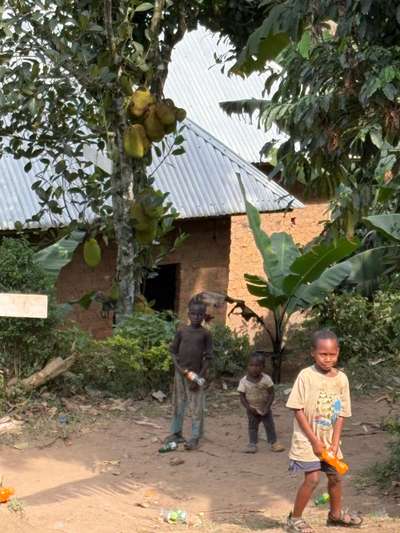
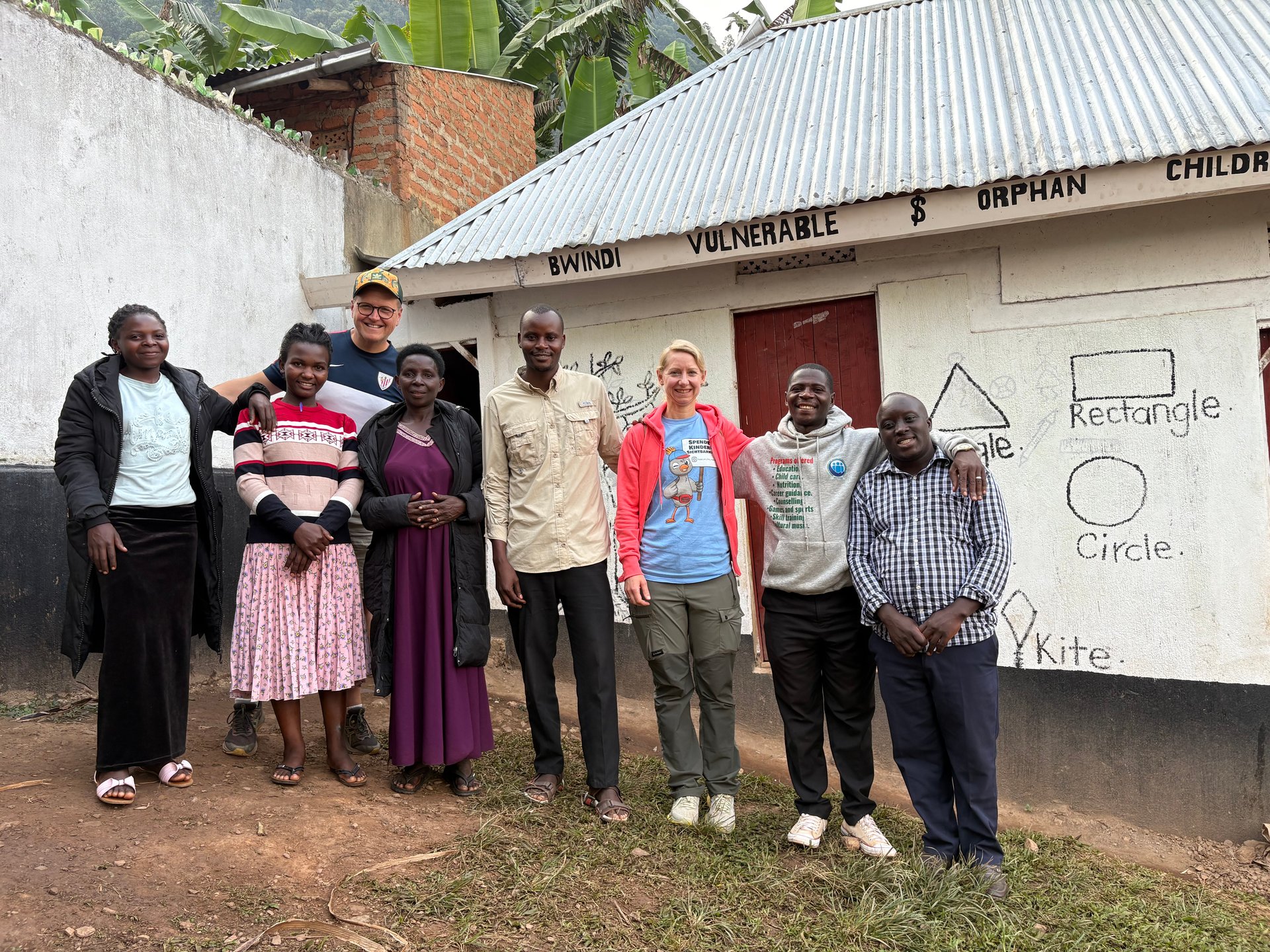
We had brought food for the children at the orphanage near Buhoma during our visit in June 2026 — a simple meal shared under a corrugated-iron roof while the afternoon rain settled into the hills above Bwindi Impenetrable National Park. Three children from the surrounding neighbourhood had been invited to join, and what struck me was not the poverty, which is real, but the ease with which the community absorbed the gesture. The orphanage staff knew us from our January 2026 gorilla trekking trip, when we had first driven through Buhoma and discovered how tightly the local economy depends on the lodges scattered along the forest edge.
That dependency is the reason comparisons between lodges in this corridor matter beyond room rates and thread counts. Bakiga Lodge, positioned within walking distance of the Buhoma gorilla trekking briefing point, serves a different function from Lake Mulehe Safari Lodge, which sits on the shore of Lake Mulehe between the Rushaga and Nkuringo sectors. One is a trekking operations base built into the social fabric of the village; the other is a lakeside retreat that trades proximity for setting. Both are legitimate choices, but they produce different experiences, serve different itinerary shapes, and channel revenue into different community structures. This comparison examines those differences based on what I observed across multiple visits to the region.
| Criterion | Bakiga Lodge (Buhoma) | Lake Mulehe Safari Lodge |
|---|---|---|
| Location | Buhoma village, western edge of Bwindi Impenetrable National Park | Shore of Lake Mulehe, between Rushaga and Nkuringo sectors |
| Altitude | ~1,500 m | ~1,800 m |
| Gorilla trekking access | 5 min walk to Buhoma briefing point | 30–45 min drive to Rushaga briefing point |
| Price (DZ full board) | From ~$80–120 pp/night | From ~$280 pp/night (Bwindi Jungle Lodge) |
| Setting | Village-edge, forest views, community interaction | Lakeside, crater lake panorama, quiet retreat |
| Best for | Trekkers wanting maximum proximity and local immersion | Travellers pairing trekking with a lakeside recovery stop |
| UTB grading region | Western region — 27% of Uganda’s graded accommodation capacity (Uganda Tourism Board 2024) | |
Bakiga Lodge — Buhoma’s Village-Edge Trekking Base
Bakiga Lodge takes its name from the Bakiga people — the dominant ethnic group in the Kigezi highlands of southwestern Uganda, whose terraced hillside agriculture is visible from virtually every viewpoint in the Buhoma corridor. The lodge sits at the western boundary of Bwindi Impenetrable National Park, close enough to the gorilla trekking briefing point that guests walk to the morning assembly rather than being transferred by vehicle. For travellers holding a Buhoma-sector permit from the Uganda Wildlife Authority, this proximity eliminates the pre-dawn alarm calls that lodges further from the park entrance require.
The property operates on a budget-to-mid-range model, with full-board rates that make it accessible to the growing segment of independent travellers who arrange permits directly rather than booking through a packaged safari operator. Uganda’s tourism arrivals show that leisure tourists represent one of three principal visitor segments alongside business travellers and those visiting friends and relatives (VFR) — and it is the leisure segment that benefits most from affordable trekking bases like Bakiga Lodge, where the room rate does not double the cost of an already expensive $800 peak-season gorilla permit.
Buhoma itself is the oldest and most-visited of Bwindi’s four trekking sectors. The village has built a small but functional tourism infrastructure over three decades: a handful of restaurants, craft stalls run by community cooperatives, and a network of nature trails maintained by the Uganda Wildlife Authority. The community tourism revenue share — a percentage of each gorilla permit fee redistributed to local parishes — is visible in small but tangible ways: a health clinic, school improvements, and the kind of micro-enterprises we witnessed during our visits, including the poultry farm that supplies the orphanage.
Pros
- Walking distance to Buhoma gorilla trekking briefing point
- Affordable full-board rates ($80–120 pp) keep total trip costs manageable
- Embedded in a functioning village — genuine community interaction, not a staged experience
- Buhoma sector has the longest track record and most habituated gorilla groups
- Access to Buhoma waterfall trail and Batwa cultural experiences
Cons
- No lakeside setting — the landscape is forest-edge rather than scenic water
- Basic facilities compared to the newer lakeside lodges
- Road access from Kabale involves 2–3 hours on unpaved roads through the highlands
- Limited activities beyond gorilla trekking and community visits
Lake Mulehe Safari Lodge — Crater Lake Retreat Between Rushaga and Nkuringo
Lake Mulehe Safari Lodge — also marketed as Bwindi Jungle Lodge on Lake Mulehe — occupies the northern shore of Lake Mulehe, a crater lake tucked into the hills between the Rushaga and Nkuringo gorilla trekking sectors at approximately 1,800 metres elevation. The property positions itself as a mid-range to upper-mid-range retreat, with double rooms including full board (Vollpension) starting from approximately $280 per person. That price point places it above Bakiga Lodge but below the ultra-premium tier occupied by properties like Sanctuary Gorilla Forest Camp or Clouds Mountain Gorilla Lodge.
The lake setting is the defining feature. Lake Mulehe is one of several crater lakes in the Kigezi highlands — smaller and quieter than Lake Bunyonyi to the east and Lake Mutanda to the southwest, where Chameleon Hill Lodge offers another lakeside option at a similar altitude. The absence of motorised boat traffic on Mulehe produces a stillness that Lake Bunyonyi, with its growing tourism footprint and canoe trekking operations, no longer consistently delivers. For travellers who have just completed a physically demanding gorilla trek — the forest hikes in Rushaga sector can involve steep descents of 400–600 metres — the lakeside decompression is a meaningful part of the experience.
Access from Rushaga sector is approximately 30–45 minutes by vehicle, and the road condition is typical of the region: unpaved, sometimes muddy in the March–May and October–November wet seasons, but passable year-round with a 4x4. From Nkuringo, the drive is similar. Travellers arriving from Kampala via the Kabale–Kisoro road will turn off toward Rushaga; those crossing from Rwanda typically enter via the Katuna border post (also known as Gatuna on the Rwandan side) or the newer Cyanika border crossing near Kisoro, both of which place them within 1–2 hours of the lodge.
The southwestern Uganda lake system — Bunyonyi, Mutanda, Mulehe — forms a natural circuit that many operators build into multi-day itineraries. Arcadia Lodges on Lake Bunyonyi, classified as a four-star property with 25 single rooms and 35 double rooms according to the Uganda Statistical Abstract 2025, represents the upper end of this lakeside cluster. Lake Mulehe Safari Lodge occupies a quieter niche: fewer rooms, less foot traffic, and a setting that rewards visitors who seek solitude over social infrastructure.
Pros
- Crater lake setting with panoramic water views and genuine tranquillity
- Positioned between two trekking sectors (Rushaga and Nkuringo) for itinerary flexibility
- Higher-quality facilities and newer construction than most village-edge lodges
- Ideal recovery stop after physically demanding gorilla treks
- Strategic location for onward travel to Kisoro, Mgahinga Gorilla National Park, or Rwanda border crossings
Cons
- 30–45 minutes from Rushaga trekking start — early departure required on trekking day
- Significantly higher price point ($280+ pp) than budget alternatives
- Lake Mulehe is beautiful but small — limited water-based activities compared to Lake Bunyonyi
- Less community interaction than village-embedded properties
Decision Framework — Four Scenarios, Four Answers
The choice between Bakiga Lodge and Lake Mulehe Safari Lodge depends less on which property is “better” and more on the shape of your itinerary, your permit sector, and what you prioritise after the trek.
Scenario 1: Buhoma permit, budget-conscious
Choose Bakiga Lodge. Walking distance to the briefing point, affordable full board, and the most direct experience of Bwindi community life. Your savings on accommodation can offset the gorilla permit cost — particularly relevant during peak season when permits are $800 through the Uganda Wildlife Authority.
Scenario 2: Rushaga or Nkuringo permit, want a lakeside experience
Choose Lake Mulehe Safari Lodge. You are already in the southern sectors, the transfer to the lake is short, and the setting provides the post-trek recovery that Rushaga’s steep terrain makes welcome. If budget allows, this is the more comfortable option for the southern corridor.
Scenario 3: Multi-day itinerary combining gorilla trekking with onward travel to Rwanda
Start at whichever lodge matches your permit sector, then use Lake Mulehe Safari Lodge or one of the Lake Bunyonyi properties as a transit stop before crossing at Katuna or Cyanika. The border crossings at Katuna (the busiest Uganda–Rwanda crossing, handling both business travellers and tourists), Busia, and Malaba serve different corridors — Katuna is the relevant one for southwestern Uganda itineraries.
Scenario 4: First-time visitor from Germany or Europe
Germany is a significant source market for Uganda tourism, and European visitors often have fixed return flights that compress the itinerary. If you have limited days, Bakiga Lodge’s proximity eliminates a morning of transfer time. If you have a relaxed schedule, the Bakiga-plus-Mulehe combination delivers both the gorilla encounter and the scenic lakeside recovery that photographs well and memories anchor to.
Uganda’s Tourism Infrastructure — What the Numbers Mean for Lodge Choices
Both lodges sit within a tourism ecosystem that the Uganda Tourism Board (UTB) and the Uganda Wildlife Tourism Institute (UWTI) are actively working to professionalise. Understanding the broader context helps explain why lodge quality varies so dramatically across regions and why the southwestern corridor — anchored by Bwindi Impenetrable National Park and Queen Elizabeth National Park — offers a different standard from other parts of the country.
The western region, which includes both Bakiga Lodge and Lake Mulehe Safari Lodge, accounts for approximately 27% of Uganda’s graded accommodation capacity. The central region — dominated by Kampala — holds roughly 65%, reflecting the capital’s role as the commercial and conference hub. Kampala Capital City Authority (KCCA) manages the urban infrastructure that most international visitors encounter first: the road network from Entebbe International Airport, the hotel cluster around Kololo and Nakasero hills, and the transit corridors that funnel safari-bound travellers toward the southwestern highway.
KCCA’s budget allocation reflects priorities that indirectly shape the tourism experience. Road maintenance, drainage, and public sanitation receive the largest infrastructure shares — visible in the gradual improvement of the Kampala–Entebbe expressway and the arterial roads feeding the western highway. For visitors driving to Bwindi, the Kampala section of the journey is now the fastest segment, with the road quality degrading progressively as you pass through Mbarara, Kabale, and into the unpaved highland roads around the national parks.
Uganda’s ten national parks — including Bwindi Impenetrable, Mgahinga Gorilla, Queen Elizabeth, Murchison Falls, Kidepo Valley, Kibale, Lake Mburo, Rwenzori Mountains, Mount Elgon, and Semuliki — anchor the tourism economy outside Kampala. The mountain gorilla population, recorded at 459 individuals in Bwindi during the 2018–2020 census, drives the highest per-visitor revenue of any single wildlife attraction on the continent. The equator, which Uganda crosses twice on the Kampala–Masaka highway (with a well-known photo-stop marker at Kayabwe), adds a geographic novelty that most first-time visitors to East Africa photograph and share — a small but tangible contribution to Uganda’s digital tourism visibility.
For lodge operators like Bakiga Lodge and Lake Mulehe Safari Lodge, the practical implication is that they exist in a grading and inspection system that is still maturing. The UTB grading scheme covers star classification and service standards, but enforcement is uneven outside Kampala. Travellers benefit from reading independent comparisons — like this one — rather than relying solely on star ratings, which may not reflect the on-the-ground experience at properties in remote trekking corridors.
Community Impact — Where Your Lodge Spend Goes
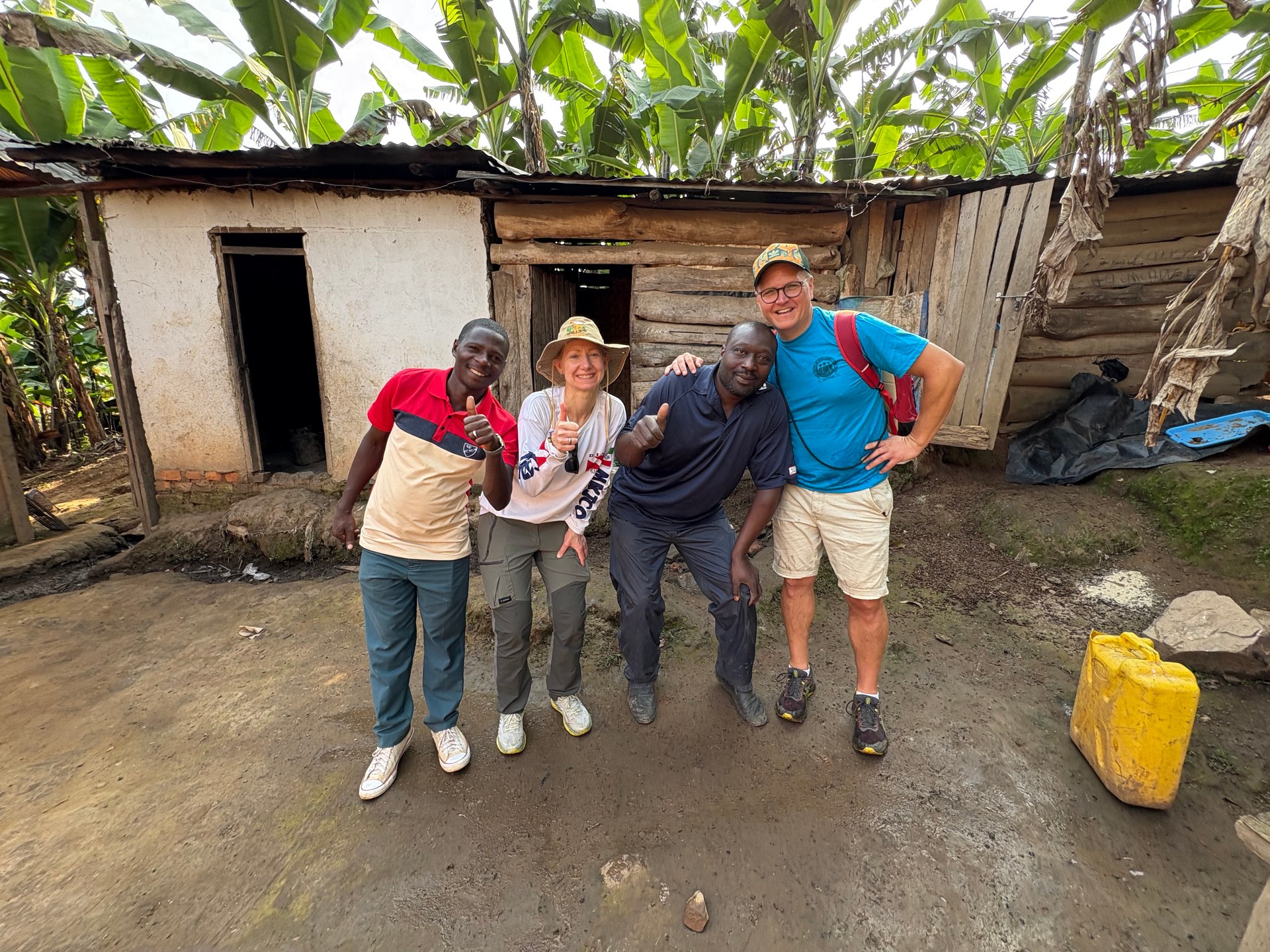
The revenue dynamics differ materially between a village-embedded lodge like Bakiga Lodge and a lakeside property like Lake Mulehe Safari Lodge. At Bakiga Lodge, the employment is hyper-local: kitchen staff, cleaners, guides, and porters are drawn almost entirely from Buhoma and the surrounding parishes. The lodge’s food procurement follows the same pattern — vegetables from hillside gardens, eggs and poultry from farmers like the one we visited, and staples from the Buhoma trading centre. The economic multiplier stays within a tight geographic radius.
Lake Mulehe Safari Lodge, being more remote and operating at a higher price point, draws from a slightly wider labour pool and imports some supplies from Kisoro or Kabale town. This is neither unusual nor problematic — most mid-range and above lodges in southwestern Uganda operate this way — but it means the per-dollar community impact is more dispersed. The lakeside setting also means fewer walk-in community interactions for guests, who experience the landscape more than the village.
Both properties contribute to the broader conservation economy that sustains Bwindi Impenetrable National Park. Every gorilla trekking permit purchased through the Uganda Wildlife Authority includes a community revenue-sharing component. The difference is in the supplementary spend: at Bakiga Lodge, that supplementary spend — meals, tips, craft purchases, porter fees, cultural experiences — stays concentrated in Buhoma. At Lake Mulehe Safari Lodge, it circulates through a less dense community network along the lake shore.
For travellers who weight community impact in their lodge decisions — an increasing proportion of the European leisure market, particularly visitors from Germany and other northern European source markets — Bakiga Lodge offers a more direct and visible connection between your spend and its local effect. Lake Mulehe Safari Lodge offers a more polished experience with broader but less concentrated community benefit.
Bottom Line
Bakiga Lodge is the right choice if gorilla trekking proximity, budget efficiency, and community immersion are your priorities. It is the most direct way to experience Buhoma — Bwindi’s original and most-visited trekking sector — without overspending on accommodation.
Lake Mulehe Safari Lodge is the right choice if you hold a Rushaga or Nkuringo permit, want a lakeside recovery day, and are willing to invest in a more polished setting. The $280+ price point buys tranquillity, views, and a lodge experience that complements rather than competes with the gorilla trek itself.