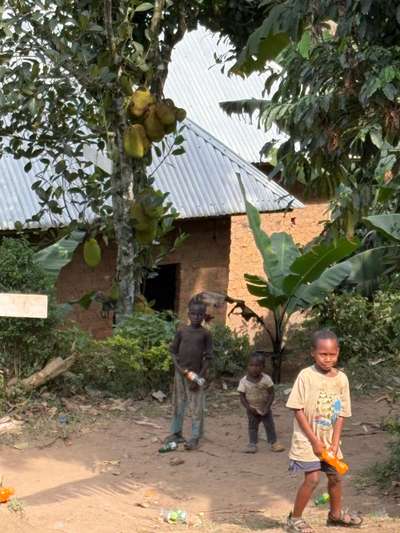
The children from the orphanage neighbourhood were slightly shy, their clothing and behaviour noticeable — we immediately invited them to eat with us. That moment, photographed in the community surrounding Buhoma in southwestern Uganda, stays with me not because it was unusual but because it was entirely ordinary in the context of how Ugandan communities receive visitors. Whether in the volcanic highlands near Bwindi Impenetrable National Park or on the shores of Lake Victoria hundreds of kilometres to the northeast, the pattern repeats: hospitality extended without calculation, meals shared without negotiation, children watching with careful eyes to see whether the strangers are trustworthy. It was during one of my visits to Uganda — fourteen documented trips between October 2024 and January 2026, totalling dozens of days across the country — that I began to understand how the Ssese Islands fit into Uganda’s tourism geography not as a standalone destination but as a counterpoint to the intensity of its wildlife experiences.
Most visitors to Uganda arrive with gorilla trekking at the top of their itinerary. The southwestern parks — Bwindi and Mgahinga — command the international attention and the premium permit prices. What happens after gorilla trekking, after the emotional and physical expenditure of tracking mountain gorillas through dense forest at altitude, is a question that many itineraries leave unanswered. The Ssese Islands, an archipelago of eighty-four islands scattered across the northwestern waters of Lake Victoria, offer one of the most compelling answers. They are not a wildlife spectacle. They are not an adrenaline destination. They are, instead, a place where the pace of Uganda slows to the rhythm of lake water lapping against sand, fishing boats returning at dusk, and afternoons that stretch without agenda. For travellers emerging from the intensity of a Bwindi trek or a Queen Elizabeth game drive, that deceleration is not merely pleasant — it is restorative.
This guide covers the practical realities of reaching and staying on the Ssese Islands, the activities available across the archipelago, the accommodation landscape on Bugala Island and beyond, and the broader context of Lake Victoria as a geographic and economic force in East Africa. It draws on my direct experience of Uganda’s transport infrastructure, its lodging options, and the institutional systems that shape what visitors encounter on the ground.
Lake Victoria and the Ssese Archipelago — Geography of Africa’s Largest Lake
Lake Victoria is Africa’s largest lake and the world’s second-largest freshwater lake by surface area, covering approximately 68,800 square kilometres across Uganda, Tanzania, and Kenya. Its shoreline stretches for over 3,440 kilometres, touching some of East Africa’s most significant urban centres — Kampala and Entebbe in Uganda, Kisumu in Kenya, Mwanza in Tanzania — while simultaneously harbouring remote island communities that function at a pace and scale utterly removed from those cities. The lake sits at an elevation of roughly 1,134 metres above sea level in a shallow basin that averages only forty metres in depth, a geological characteristic that makes it ecologically productive but also vulnerable to environmental pressures including pollution, invasive species, and climate-driven changes in water level.
The Ssese Islands occupy the lake’s northwestern quadrant, within Ugandan territorial waters. The archipelago comprises eighty-four islands, of which approximately forty-three are inhabited. They range in size from Bugala Island — the largest at roughly 297 square kilometres, with a resident population concentrated around Kalangala town — to tiny forested islets that support nothing more than a few fishing families and their drying racks. The islands were formed by the same tectonic processes that created the Lake Victoria basin, and their topography reflects this origin: gentle hills covered in tropical forest, sandy shorelines on the southern and western exposures, and rocky headlands where the lake’s wave action has eroded softer substrates over millennia.
For most of their history, the Ssese Islands were known primarily as a fishing community and, in pre-colonial Buganda, as a sacred site associated with the Balubaale spirits of the Baganda traditional religion. The islands’ spiritual significance led to their protection by the Kabaka (king) of Buganda, which inadvertently preserved their forests long after mainland forests had been cleared for agriculture. That historical accident of cultural preservation means that several Ssese Islands retain dense tropical forest cover that has disappeared from comparable mainland sites — a feature that now contributes to their appeal as an eco-tourism destination.
Lake Victoria also borders Entebbe Municipality and Wakiso District on its northern shore, making the lake accessible to visitors who do not have time for the full Ssese crossing. Entebbe — home to Uganda’s only international airport — sits on a peninsula extending into the lake, and its botanical gardens, wildlife education centre, and waterfront restaurants provide a compressed introduction to the lake environment. Wakiso District, which encircles Kampala to the north, west, and south, includes substantial Lake Victoria shoreline and several beach areas that domestic tourists frequent on weekends. These lakeshore areas share the Ssese Islands’ fundamental character — calm water, fishing communities, birdlife — but lack the islands’ sense of geographic isolation.
Getting to the Ssese Islands — The Ferry from Bukakata to Luku
The primary access route to the Ssese Islands begins at Bukakata landing site in Masaka District, approximately 200 kilometres southwest of Kampala. The drive from the capital to Bukakata takes three to four hours via the Kampala-Masaka highway, a paved road that carries heavy commercial traffic between Kampala and the southwestern corridor. The highway passes through Mpigi and Lukaya before reaching the Masaka turnoff, where a secondary road leads south to Bukakata on the lake shore. This secondary section is paved but narrower, winding through rural communities and palm oil plantations that characterise the lakeshore lowlands.
From Bukakata, a regular ferry service crosses Lake Victoria to Luku landing site on Bugala Island. The crossing takes approximately three and a half hours on the vehicle ferry, which operates on a published schedule though delays are not uncommon, particularly during rough weather or when mechanical issues arise. The ferry accommodates vehicles, cargo, and foot passengers, and the crossing itself offers open-water views of the lake that reveal its true scale — at points during the crossing, no land is visible in any direction, a disorienting experience for visitors who think of lakes as features you can see across. Speedboat services, operated by private companies, cover the same route in roughly one hour and offer a faster alternative for passengers travelling without vehicles. These speedboats depart from both Bukakata and from Nakiwogo near Entebbe.
Uganda’s government has outlined plans for twenty new jetties and landing sites across Lake Victoria to improve water transport infrastructure and stimulate tourism development on the islands. These planned facilities, part of a broader transport modernisation strategy, would reduce transit times, improve safety standards, and open currently inaccessible islands to visitor traffic. As of early 2026, several of these landing sites are at various stages of planning and construction, though completion timelines remain uncertain. The existing infrastructure at Bukakata and Luku is functional but basic — concrete jetties with waiting shelters, ticket offices, and informal food vendors. Visitors accustomed to the polished embarkation facilities of, say, the Zanzibar ferry from Dar es Salaam should calibrate their expectations accordingly.
Domestic flights offer an alternative for visitors connecting from Entebbe. Several charter operators service airstrips in the Ssese Islands and the broader Lake Victoria region, though scheduled service is intermittent and subject to demand. For travellers arriving from a safari in the southwest — Bwindi, Queen Elizabeth, or Lake Mburo National Park — the overland route through Masaka is more practical than returning to Entebbe for a flight. The drive from Bwindi Impenetrable National Park to Bukakata, via Mbarara and Masaka, takes approximately eight hours — a long day but entirely feasible with an early departure and a lunch stop in Mbarara.
Bugala Island — Beaches, Forests, and the Heart of the Archipelago
Bugala Island is the largest in the Ssese archipelago and the centre of whatever infrastructure the islands possess. Kalangala, the island’s main town and the administrative headquarters of Kalangala District, sits on the eastern shore and functions as the commercial hub for the surrounding islands. It has a market, a handful of shops, mobile phone coverage, a health centre, and the district administrative offices. By the standards of mainland Ugandan towns of comparable size, Kalangala is quiet — its economy revolves around fishing, palm oil cultivation, and the modest tourism trade that the ferry link sustains.
The beaches that draw visitors to Bugala are concentrated along the island’s southern and western shores, where the prevailing lake currents deposit sand in sheltered bays. These are not the manicured resort beaches of the Indian Ocean coast. They are instead stretches of golden and white sand backed by tropical forest, punctuated by fishing villages, and largely free of the commercial infrastructure — sun loungers, beach bars, jet ski rentals — that characterises developed beach destinations. The water is fresh, warm, and generally calm in the sheltered bays, though open-water swimming is inadvisable due to bilharzia (schistosomiasis) risk in some areas. Visitors should consult current health advisories and local lodge operators regarding safe swimming locations, as bilharzia prevalence varies significantly between sites depending on the presence of the freshwater snails that host the parasite.
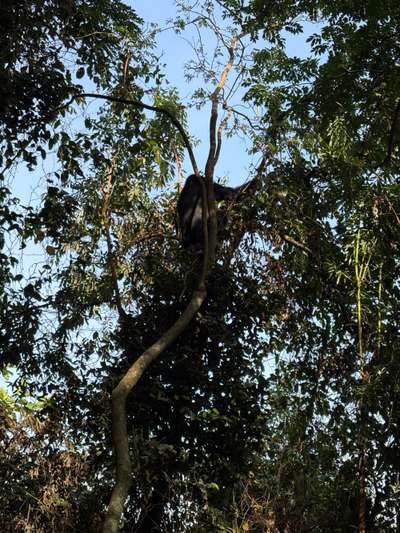
Beyond the beaches, Bugala Island retains significant areas of tropical forest, particularly in its interior and along the less-developed northern coast. These forests support a notable diversity of birdlife — over 100 species have been recorded on the island, including African fish eagles, palm-nut vultures, grey-headed kingfishers, and several species of sunbird. The forest also harbours vervet monkeys, fruit bats whose evening emergence from roosting trees is a spectacle in itself, and a variety of butterfly species that thrive in the humid lakeside conditions. For visitors whose primary Uganda experience has been the montane forests of the southwest, the lowland tropical character of the Ssese forests presents a markedly different ecological profile — warmer, denser, and dominated by palm species rather than the bamboo and hagenia that characterise Bwindi and Mgahinga.
Cycling has emerged as one of the most popular ways to explore Bugala Island. The island’s network of paths and secondary roads connects villages, beaches, and viewpoints across a landscape that is gently undulating rather than mountainous. Several lodges offer bicycle hire, and a full-day cycling circuit of the island’s main road provides encounters with fishing communities, palm oil processing operations, and forest patches that would be missed from a vehicle. The pace suits the island’s character: unhurried, attentive to detail, punctuated by stops for conversation with residents who are curious about visitors but not dependent on them for income in the way that communities near national parks often are.
Island Hopping, Fishing, and Birdwatching — What to Do on the Ssese Islands
Island hopping is the defining activity of the Ssese archipelago. With eighty-four islands spread across the northwestern corner of Lake Victoria, the possibilities for boat-based exploration are extensive, though the practical reality is that most visitors explore a handful of accessible islands within a half-day or full-day excursion from Bugala. Motorboat trips can be arranged through lodges or directly with boat operators at Kalangala and Luku. Traditional wooden canoes, still the primary transport for island fishing communities, offer a slower and more atmospheric alternative for short crossings between adjacent islands.
Popular island-hopping destinations include Banda Island, known for its sandy beaches and relative seclusion; Bukasa Island, the second-largest in the archipelago with its own fishing communities and forest trails; and several smaller islets that serve as nesting sites for waterbirds. The experience of approaching these islands by boat — watching the tree line resolve from a dark smudge on the horizon into distinct palms and fig trees, hearing the calls of fish eagles before you can see them — captures something that overland travel in Uganda does not. The lake imposes a pace and a perspective that land-based itineraries, with their focus on driving times and park gate opening hours, rarely permit.
Fishing on Lake Victoria is both a livelihood for island residents and a recreational activity for visitors. The lake supports significant populations of Nile perch — the introduced predator that transformed Lake Victoria’s ecology in the twentieth century — as well as tilapia and several native species. Sport fishing excursions, targeting Nile perch that can exceed fifty kilograms, are available through operators on Bugala Island. The fishing is typically conducted from motorised boats using trolling lines, and while catches are not guaranteed, the experience of fishing on Africa’s largest lake, with the Ssese Islands arrayed on the horizon and fish eagles circling overhead, has an elemental quality that transcends the catch-per-hour statistics.
Birdwatching on the Ssese Islands benefits from the convergence of forest, shoreline, and open-water habitats within a compact geographic area. The African fish eagle, with its distinctive white head and piercing call, is the archipelago’s most emblematic species and is encountered daily along the shoreline. Papyrus swamps at the edges of several islands host papyrus-specialist species including the papyrus gonolek, shoebill stork sightings are occasionally reported in the broader Lake Victoria wetlands, and the forest interior supports species assemblages typical of Lake Victoria basin lowland forest. For birders, the Ssese Islands complement rather than compete with Uganda’s premier birding destinations — Bwindi for Albertine Rift endemics, Queen Elizabeth for savanna species, Mabamba Swamp for shoebills — by offering a lakeland avifauna that those sites do not replicate.
Sunset cruises on Lake Victoria have become a standard offering at most Ssese Island lodges. These typically last one to two hours, departing in the late afternoon and returning after the sun drops below the western horizon. The sunsets on Lake Victoria are genuinely remarkable — the lake’s vast surface area creates an unobstructed horizon, and the equatorial atmosphere produces colour sequences that range from gold through orange to deep violet. Visitors who have spent days in the enclosed forests of Bwindi or the dense bush of Queen Elizabeth find the open-water panorama particularly striking as a visual counterpoint.
Where to Stay — Accommodation on the Ssese Islands
The accommodation landscape on the Ssese Islands reflects the archipelago’s position as an emerging rather than established tourism destination. Bugala Island hosts the majority of options, ranging from basic guesthouses in Kalangala town to beachfront lodges with lake-view rooms and full-board meal plans. The smaller islands offer eco-camps and community-run guesthouses that prioritise atmosphere over amenities. None of the Ssese properties currently operates at the luxury tier occupied by lodges like Mount Gahinga Lodge or Clouds Mountain Gorilla Lodge in the southwestern highlands — the island tourism market serves a different visitor profile, one that values location and tranquillity over five-star finishes.
Beach lodges on Bugala’s southern shore constitute the most popular category for international visitors. These properties typically offer detached cottages or banda-style rooms set back from the waterline, with verandas facing the lake. Meal service is usually included, as the limited restaurant options on the island make self-catering impractical for most visitors. The quality of these lodges varies — some maintain their grounds and rooms to a standard that would satisfy travellers accustomed to mid-range safari lodges, while others show the wear that a humid lakeside environment inflicts on buildings without consistent maintenance investment. Reading recent reviews and, where possible, requesting current photographs before booking is advisable for visitors with specific expectations.
Budget accommodation in Kalangala town serves primarily domestic visitors, researchers, and NGO workers. These guesthouses offer clean but simple rooms with mosquito nets, shared or en-suite bathrooms, and proximity to the town’s market and transport links. For travellers on backpacker budgets, Kalangala provides a functional base from which to explore the island by bicycle or motorcycle taxi, with costs substantially below what the beachfront lodges charge. Camping is available at several locations on Bugala, including designated sites at some lodges and informal arrangements with landowners along the beach.
Uganda’s national accommodation statistics provide context for the Ssese Islands’ place in the broader lodging market. The country has approximately 350,550 rooms across all accommodation categories, with 117 facilities having achieved formal grading under the Uganda Tourism Board’s classification system. The hotel and restaurant sector contributes 3,110 billion UGX to GDP annually, a figure that reflects both the sector’s economic significance and the scale of investment flowing into hospitality infrastructure nationwide. The Ssese Islands capture a small but growing share of this market, driven by increasing domestic tourism — Kampala residents seeking weekend beach escapes — and by international visitors adding lakeside days to wildlife-focused itineraries.
Advance booking is strongly advisable during peak periods. The December-January holiday season, when schools are closed and Kampala’s professional class heads for the lake, fills the better lodges on Bugala to capacity. Easter weekends and the August long weekend see similar surges. Outside these periods, availability is rarely a problem, and some lodges offer discounted rates during the wet-season months of March to May. The combination of limited room inventory and seasonal demand concentration means that the Ssese Islands — unlike Uganda’s major safari destinations, where new lodges open regularly — can feel fully booked even with relatively modest visitor numbers.
Beyond the Islands — Mabira Forest, Entebbe, and the Safari Connection
The Ssese Islands do not exist in geographic isolation, and visitors who treat them as part of a broader Ugandan itinerary rather than a standalone destination will find the surrounding region rich in complementary experiences. Mabira Forest Reserve, a 306-square-kilometre tract of semi-deciduous tropical forest located fifty-four kilometres east of Kampala along the Jinja highway, offers a mainland forest experience that contrasts with the island forests of the Ssese archipelago. Founded in 1932 as a protected area, Mabira is one of the largest surviving natural forests in central Uganda and supports over 300 bird species, 200 butterfly species, and populations of grey-cheeked mangabey and red-tailed monkey. Guided walks on Mabira’s network of trails range from one-hour introductory loops to full-day treks that reach the forest interior. For visitors transiting between Kampala and the Jinja area — or simply looking for a half-day excursion from the capital — Mabira provides accessible forest immersion without the travel commitment that southwestern Uganda demands.
Entebbe, situated on a peninsula extending into Lake Victoria roughly thirty-five kilometres south of Kampala, serves as Uganda’s aviation gateway and as a lakeside destination in its own right. The town’s botanical gardens, established in 1898, occupy forty hectares of landscaped and semi-natural lakefront land that featured as a filming location in the 1952 film adaptation of Tarzan. The Uganda Wildlife Education Centre, located adjacent to the botanical gardens, houses rescued and orphaned animals including chimpanzees, lions, and shoebills, providing educational encounters that complement the wild sightings available in the national parks. Entebbe’s waterfront restaurants and hotels make it a practical overnight stop for visitors catching early-morning flights or beginning overland journeys to the Ssese Islands via Bukakata.
The connection between the Ssese Islands and Uganda’s safari circuit is primarily logistical rather than ecological. The islands share none of the big-game wildlife that defines Murchison Falls, Queen Elizabeth, or Kidepo Valley national parks. What they offer instead is a tonal shift — from the vigilance and exertion of wildlife tracking to the unstructured calm of a lakeside environment. Experienced safari operators in Uganda increasingly build Ssese Islands stays into extended itineraries, positioning two or three nights on Bugala Island as a decompression phase between intensive game drives or gorilla treks and the international flight home from Entebbe. The logic is sound: a traveller who has spent a week in 4x4 vehicles, waking at five in the morning for game drives, and hiking at altitude through Bwindi’s undergrowth benefits from days that involve nothing more demanding than a beach walk, a book, and a sunset cruise.
A typical combined itinerary might begin with two nights in Bwindi for gorilla trekking, continue to Queen Elizabeth National Park for two nights of game drives and a boat safari on the Kazinga Channel, then route through Masaka to Bukakata for two nights on the Ssese Islands before returning to Entebbe. This ten-day framework covers Uganda’s three signature experiences — primates, savanna wildlife, and lake — without the rushed pace that shorter itineraries impose. Variations include adding Kibale National Park for chimpanzee tracking, Lake Mburo for walking safaris, or Mgahinga for golden monkey trekking, each of which extends the itinerary by one to two days while maintaining the Ssese Islands as the concluding relaxation component.
Field Notes — What the Ssese Islands Mean in Context
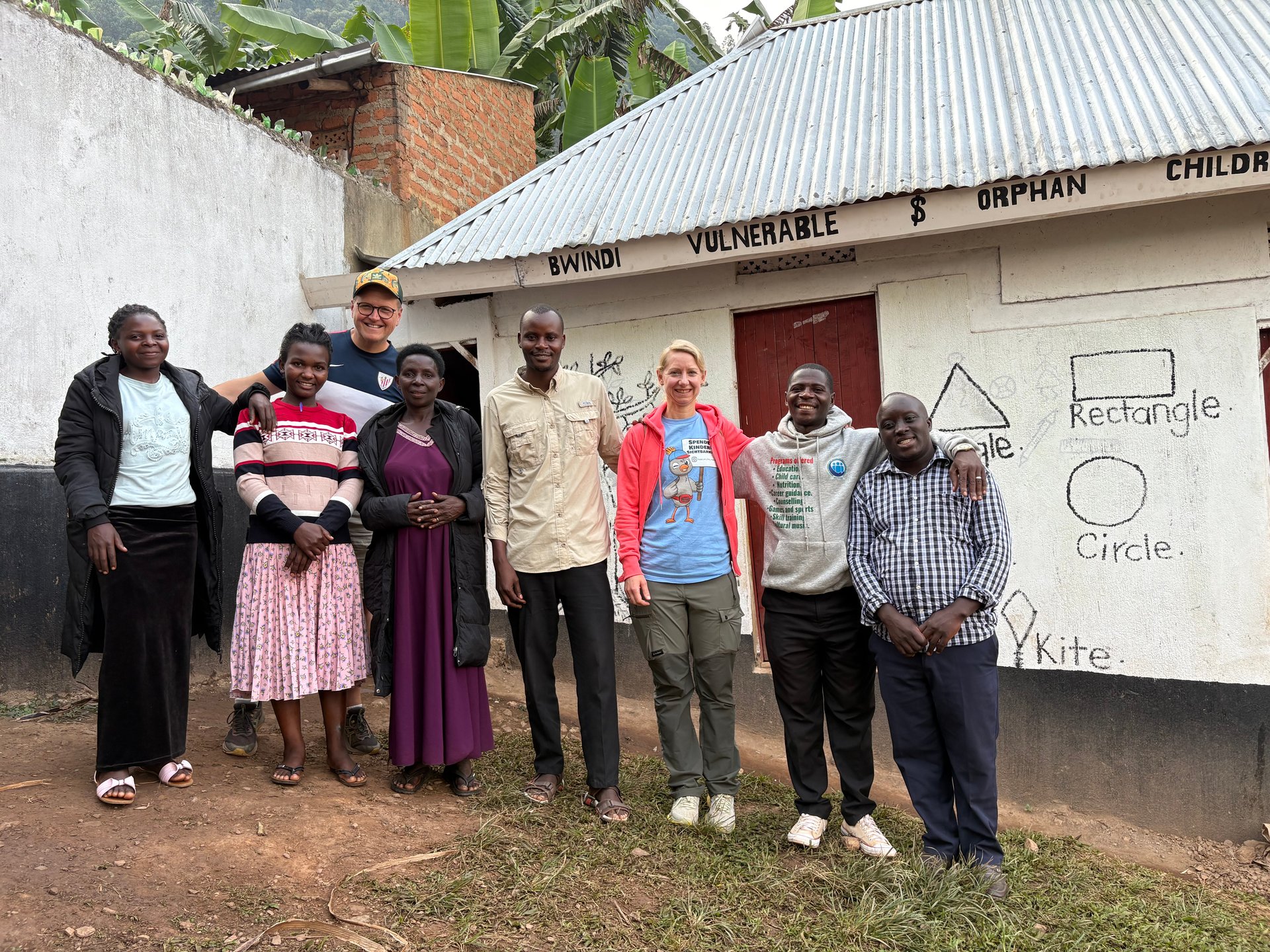
My own experience of Uganda has been weighted toward the southwest — the gorilla trekking corridor, the community projects we support around Buhoma, the lodges and operators I have come to know through repeated visits. During gorilla trekking in January 2026, we found the first gorilla family after approximately one hour of hiking, an encounter that remained vivid for days afterwards. That intensity is what draws visitors to Uganda, and rightly so. But intensity sustained without interruption becomes exhausting, and it was in thinking about how to structure longer stays in the country that the Ssese Islands began to make sense to me not as an alternative to the safari experience but as its necessary complement.
The children who appear in the photograph at the top of this article — shy, watchful, ultimately accepting of the invitation to share food — represent a dimension of Uganda that neither safari parks nor beach islands fully capture. They represent the human fabric of a country whose tourism economy generates billions of shillings in GDP but whose benefits reach different communities at different speeds. The gorilla permits fund ranger patrols and community revenue sharing around Bwindi. The lodge bookings employ staff from Kisoro to Kampala. The ferry tickets to the Ssese Islands support the boat crews and the food vendors at Bukakata. Each transaction is small in isolation and meaningful in aggregate, and the traveller who moves through Uganda with some awareness of these connections will experience a richer country than the one presented in brochure summaries.
The Ssese Islands are not Uganda’s most famous destination, and they are unlikely to become so. They lack the singular wildlife encounters that generate magazine covers and social media virality. What they offer instead is something quieter and, for the right traveller at the right moment in an itinerary, equally valuable: the sound of lake water at night, the sight of fishing boats silhouetted against a Victoria sunset, the unhurried company of communities that live by the lake’s rhythms rather than the tourism calendar’s demands. For visitors who have tracked gorillas through the mist, watched tree-climbing lions in Ishasha, and felt the spray of Murchison Falls from the boat below, the Ssese Islands provide the space to absorb what they have seen before boarding the flight home.
Sources consulted for this article include the Uganda Bureau of Statistics tourism satellite accounts, the Uganda Wildlife Authority permit and revenue data, Kalangala District local government planning documents, the Uganda Tourism Board accommodation grading reports, and direct observation during fourteen documented visits to Uganda between October 2024 and January 2026. Accommodation statistics (350,550 rooms nationally, 117 graded facilities, hotel/restaurant GDP of 3,110 billion UGX) are drawn from the most recent national tourism data available as of early 2026. Ferry schedules and infrastructure development plans reflect information current at the time of writing and are subject to change.
Frequently Asked Questions — Ssese Islands Guide
How do you get to the Ssese Islands from Kampala?
The most common route is to drive from Kampala to Bukakata landing site in Masaka District, approximately 200 kilometres southwest of the capital (three to four hours by private vehicle). From Bukakata, a regular ferry service crosses Lake Victoria to Luku on Bugala Island, the largest Ssese island, in approximately three and a half hours. Speedboat services cover the crossing in roughly one hour. Domestic flights from Entebbe to nearby airstrips offer a faster but more expensive alternative.
What is the best time to visit the Ssese Islands?
The dry seasons from June to September and December to February offer the most reliable weather for beach activities and island hopping. Lake Victoria generates its own microclimate, so afternoon showers are possible even in dry months. The wet seasons (March to May, October to November) bring fewer visitors and lush landscapes but heavier rainfall. Water conditions are typically calmer during the dry season, making boat transfers between islands more comfortable.
What activities are available on the Ssese Islands?
Activities include beach relaxation, island hopping by motorboat or traditional canoe, sport fishing for Nile perch and tilapia, birdwatching (over 100 species including African fish eagles), forest walks, cycling on Bugala Island, sunset cruises on Lake Victoria, and cultural visits to fishing villages. The archipelago suits travellers seeking relaxation and nature-based activities rather than intensive wildlife encounters.
Are there accommodation options on the Ssese Islands?
Yes. Bugala Island has the widest range, from budget guesthouses in Kalangala town to mid-range beachfront lodges along the southern shore. Most lodges offer full-board packages. Smaller islands have eco-camps and community-run guesthouses. Camping is available at several locations. Advance booking is advisable during peak periods (December to January, Easter, and August), when domestic tourism from Kampala fills the better properties.
Can you combine a Ssese Islands visit with a Uganda safari?
Absolutely. The Ssese Islands work well as a relaxation component at the end of a safari itinerary. A common combination is gorilla trekking at Bwindi followed by two to three nights on the islands before returning to Entebbe. The drive from Bwindi to Bukakata takes approximately eight hours via Mbarara and Masaka. Safari operators increasingly position Ssese stays as a decompression phase between intensive wildlife tracking and the flight home, and a ten-day itinerary can comfortably cover primates, savanna wildlife, and lakeside relaxation.