MICE Infrastructure Development in Amuria: Business Tourism Potential for Uganda's Teso Sub-Region
By Mark Suer · Published 12 July 2026 · Based on 8 documented visits (17 days on-site) between October 2024 and June 2026
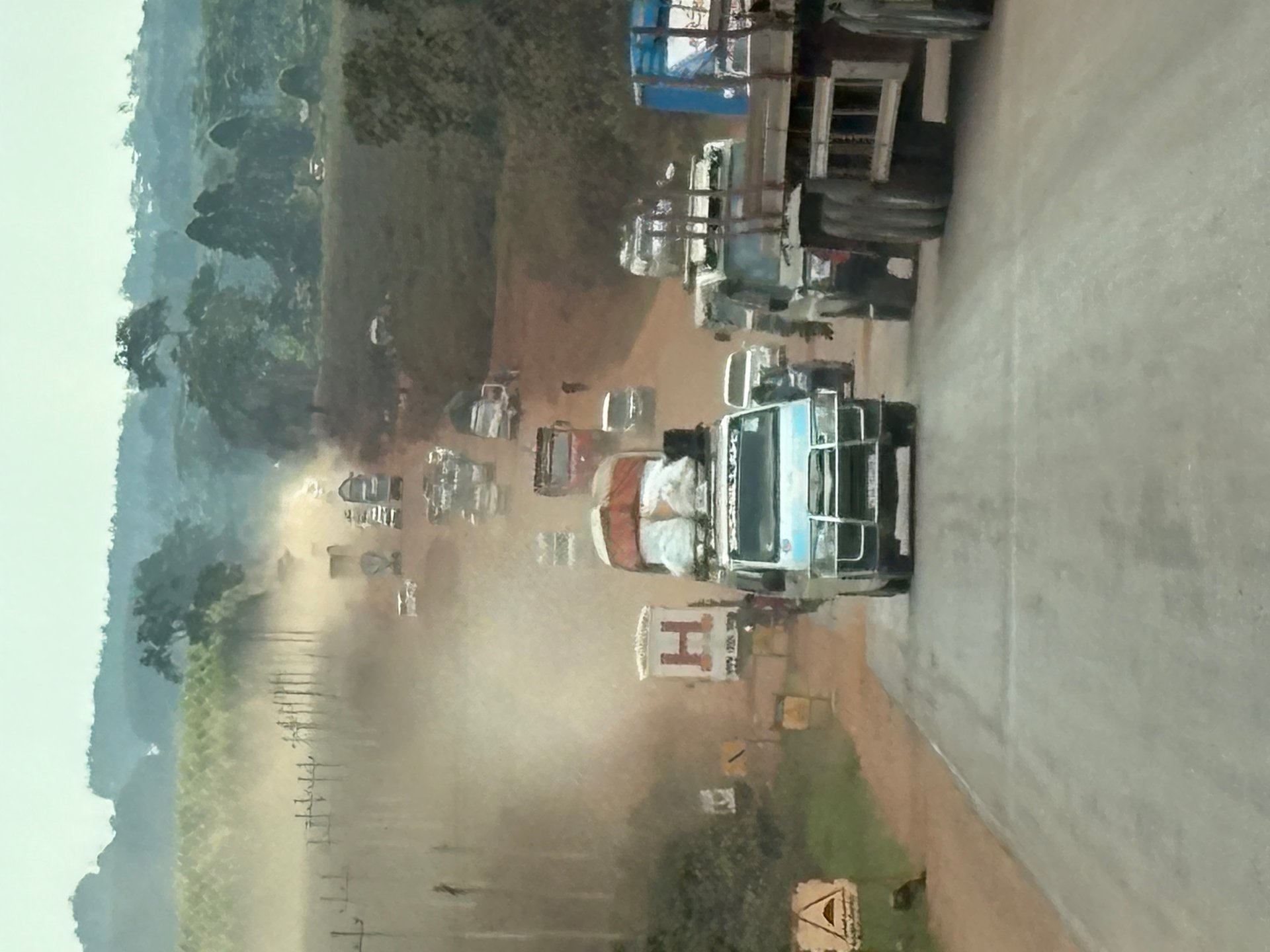
The Masaka Highway was being rebuilt when I drove it in January 2026. Long stretches of the road were still raw sand and dust, unpaved and choked with traffic. Trucks, cars, jeeps, and boda-bodas all shared the same narrow lane, kicking up clouds that coated everything within fifty metres. It was a main artery of Uganda — one of the country's most important transport corridors — and it looked like a construction site that had swallowed a traffic jam. That scene, mundane as it was, captured something essential about Uganda's current moment: the country is building, visibly and ambitiously, but the work is far from finished.
During my visits across multiple regions of Uganda between October 2024 and June 2026 — eight separate trips totalling seventeen days on the ground — I saw this pattern repeated everywhere. New asphalt appeared where red dirt had been. Visitor centres materialised at national park entrances. Power lines extended into areas that had none a year earlier. The infrastructure transformation is real, documented in my GPS-tagged photographs taken at locations I physically visited. But that transformation is concentrated along a handful of corridors. Vast stretches of the country, particularly in the northeast, remain underserved. Amuria District in the Teso Sub-Region is one such place — a district with genuine eco-tourism assets and a stated ambition to develop Meetings, Incentives, Conferences, and Events (MICE) facilities, but where the gap between aspiration and current reality remains wide.
This article examines what MICE infrastructure development means for Amuria, what exists today, what the district's development plans envision, and what a realistic timeline looks like for business tourism in Uganda's northeastern districts. The assessment draws on the Amuria District Development Plan, on my own observations during repeated travel across Uganda's road network, and on the broader context of Uganda's tourism infrastructure investment programme.
Understanding MICE Tourism in the Ugandan Context
MICE tourism — the business of hosting meetings, incentive trips, conferences, and events — is one of the highest-value segments of the global travel industry. A single conference delegate typically spends three to five times more per day than a leisure tourist. They require accommodation, catering, transport, audio-visual equipment, reliable internet, and comfortable meeting spaces. They often extend their stays for pre- or post-conference tourism. And they tend to return, bringing colleagues or choosing the same destination for future events. For a country like Uganda, which receives roughly 1.5 to 2 million international visitors annually but generates a disproportionate share of its tourism revenue from a small number of high-end safari lodges, MICE represents a strategic opportunity to broaden the economic base of the tourism sector.
Kampala already functions as Uganda's primary MICE destination. Hotels in the capital host government conferences, NGO workshops, diplomatic events, and corporate retreats on a daily basis. The Kampala Serena Hotel, Sheraton Kampala, and a growing number of mid-range business hotels offer conference facilities that meet international standards. But the concentration of MICE activity in Kampala means that the economic benefits — jobs, supply chain spending, infrastructure investment — remain heavily centralised. Districts outside the capital see little of this revenue.
The logic behind developing MICE capacity in districts like Amuria is straightforward: if conference organisers can be offered a venue that combines functional meeting space with an experience unavailable in Kampala — contact with nature, community cultural encounters, the appeal of a destination that feels genuinely remote — then some share of MICE spending can be redirected to areas that need it most. This is not a theoretical proposition. Rwanda has demonstrated it with Kigali Convention Centre. Kenya has done it with venues at Lake Naivasha and in the Maasai Mara conservancies. The question for Amuria is whether the preconditions for this kind of development are in place, or whether they remain years away.
The Amuria District Development Plan IV identifies MICE infrastructure as a strategic priority, linked to the district's six designated eco-tourism sites. The plan envisions facilities that can host workshops, retreats, and small conferences in settings that showcase the Teso Sub-Region's wetland ecosystems, savannah landscapes, and cultural heritage. The ambition is clear. The plan acknowledges, however, that physical infrastructure — roads, power supply, telecommunications, water systems — must come first. Conference delegates who cannot reach the venue reliably, who cannot charge their laptops, or who cannot access the internet are not coming back.
The Infrastructure Reality: Roads, Power, and Connectivity
Infrastructure determines whether a MICE destination is viable or aspirational. Having travelled Uganda's road network repeatedly, I can report that the country's investment in trunk roads is visible and substantial — but the benefits have not yet reached secondary routes in districts like Amuria with any consistency.
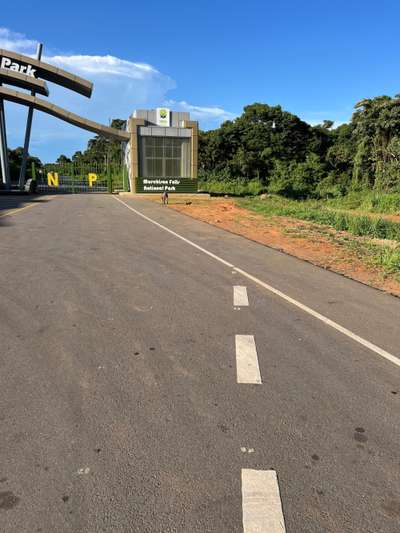
When I stopped briefly at the entrance to Murchison Falls National Park in October 2024, the contrast was striking. The access road was a new build — smooth asphalt with white lane markings, a modern visitor centre, clear signage. It looked like infrastructure you would find in a European national park. That road exists because Murchison Falls is one of Uganda's flagship tourism assets, attracting tens of thousands of visitors annually and generating revenue that justifies the investment. The same logic has driven improvements at Queen Elizabeth National Park, Bwindi Impenetrable National Park, and along the Kampala-Entebbe corridor.
Amuria District does not yet have a comparable tourism anchor. Its eco-tourism sites are locally valued but nationally unknown. Without a critical mass of visitors, the business case for high-quality road construction is harder to make to central government planners who must allocate limited resources across dozens of competing districts. This is the chicken-and-egg problem that faces every emerging tourism destination: you need infrastructure to attract visitors, but you need visitors to justify infrastructure spending.
The road from Kampala to Amuria follows a route through Jinja, Mbale, and Soroti. The first half of this journey — Kampala to Jinja and onward to Mbale — is generally on decent tarmac, though traffic through Jinja town can add an hour to the journey during peak times. Beyond Mbale, conditions become less predictable. The road to Soroti is passable but uneven in places, and the final stretch from Soroti to Amuria depends on whether the district feeder roads have been graded recently. During the rainy season, some rural roads become impassable for vehicles without four-wheel drive. A conference organiser evaluating Amuria as a venue would need to account for these realities in their logistics planning.
Power supply presents a similar challenge. Uganda's national electricity grid has expanded considerably in the past decade, driven by hydroelectric projects on the Nile and smaller solar installations in rural areas. However, grid reliability in the northeast remains lower than in the central and western regions. Brownouts and blackouts are common, and any MICE facility in Amuria would require backup generators and potentially solar battery systems to guarantee uninterrupted power for lighting, air conditioning, audio-visual equipment, and device charging. These are solvable problems — generators and solar panels are available throughout Uganda — but they add to the capital cost of developing a venue.
Internet connectivity has improved across Uganda through mobile network expansion by operators including MTN Uganda and Airtel Uganda. 4G coverage now reaches most district towns, including Soroti, and mobile data speeds in urban centres are adequate for video calls and basic cloud services. In rural areas around Amuria's eco-tourism sites, coverage drops to 3G or lower, and signal strength can be intermittent. A functional MICE facility would likely need a dedicated internet connection — either a fixed-line service, which may not be available, or a satellite-based solution like those increasingly deployed by safari lodges in remote parts of western Uganda. [RECHERCHE NOETIG: Current specific internet coverage data for Amuria town and surrounding areas.]
Amuria's Six Eco-Tourism Sites and Their MICE Potential
The Amuria District Development Plan identifies six eco-tourism sites as the foundation for the district's tourism strategy. These sites encompass wetland systems, savannah grasslands, and areas of cultural significance to the Iteso people, who form the majority population of the Teso Sub-Region. The diversity of landscapes is a genuine asset — it means that a MICE event hosted in Amuria could offer delegates a range of outdoor experiences without requiring long transfers between sites.
Wetland ecosystems in the Amuria area support bird populations that, if properly documented and promoted, could attract specialist birding groups. Uganda is already one of the top birding destinations in Africa, with over 1,000 recorded species nationally. The northeastern wetlands are less visited than the established birding circuits around Bwindi, Queen Elizabeth, and Murchison Falls, which is both a limitation (fewer guides, less infrastructure) and an opportunity (undiscovered habitat, potential for new species records, a genuine sense of exploration). For MICE delegates, a guided birding walk before or after conference sessions offers an experience that a Kampala hotel simply cannot match.
The savannah landscapes around Amuria provide space for team-building activities, nature walks, and cultural immersion programmes that are increasingly popular components of corporate retreats. The Iteso cultural heritage — including traditional music, dance, and artisanal crafts — could be woven into MICE programming in a way that is both respectful and commercially viable, provided that local communities are involved in the planning and share in the revenue. Uganda's community-based tourism model, which has been successfully implemented in districts near Bwindi and Kibale National Parks, offers a template for how this can work.
However, the current state of these eco-tourism sites must be assessed honestly. During my travels across Uganda, I have visited districts at every stage of tourism development — from the well-established infrastructure of Bwindi to the barely accessible sites in newly created districts. The sites that succeed are those where a minimum threshold of investment has been met: a passable access road, a place to stay that meets basic comfort standards, a local guide who can communicate in English, and a reason to come that is specific enough to justify the journey. Amuria's eco-tourism sites are, by available accounts, still below this threshold. The natural assets exist. The human capacity exists. The infrastructure does not — yet.
[QUOTE: local guide on first impressions of Amuria's eco-tourism sites — to be collected on a future visit]
What Needs to Happen: A Realistic Development Pathway
Developing MICE infrastructure in Amuria is not a matter of building a conference centre and waiting for bookings. It requires a sequenced investment programme that addresses prerequisites before amenities, and that builds demand incrementally rather than speculatively. Based on what I have observed across Uganda's tourism landscape — the successes, the stalled projects, the white elephants — I would outline the following stages.
The first stage is road access. Without a reliable, all-weather road connecting Amuria's eco-tourism sites to the Soroti-Amuria highway, no MICE development is credible. This does not necessarily mean asphalt — a well-graded murram road with proper drainage can be adequate for the volume of traffic that early-stage tourism generates. What it does mean is that a 4x4 vehicle should be able to reach the site within a predictable timeframe, year-round, including during the rainy season. Road investment of this kind is a district and national government responsibility, but it can be accelerated if there is a clear tourism business case to present to the Uganda National Roads Authority and development partners.
The second stage is basic accommodation. MICE delegates need a place to sleep, eat, and shower. This does not need to be a five-star lodge. A well-maintained guesthouse with clean rooms, reliable hot water, mosquito nets, and decent food is sufficient for the workshop and retreat market that Amuria should target initially. Several Uganda districts that are further along in their tourism development — Alebtong, for example — have demonstrated that even modest accommodation can attract visitors if the experience surrounding it is compelling. Private investment is the most likely path here, potentially supported by Uganda Investment Authority incentives or NGO-funded community tourism projects.
The third stage is a functional meeting space. This can be as simple as a covered, well-ventilated hall with reliable electricity, basic audio-visual capability (a projector, a sound system, adequate lighting), and seating for 30 to 100 people. Many of Uganda's successful bush conference venues started exactly this way — a tented camp or a permanent open-sided structure adjacent to a lodge, where the natural environment serves as the backdrop. The key investment here is not in bricks and mortar but in power reliability (generator or solar backup), internet access, and catering capacity.
The fourth stage is programming and marketing. A venue without a reputation is invisible. Amuria would need to host a series of government, NGO, or corporate events at subsidised rates to build a track record. District government workshops, regional planning meetings, and agricultural extension conferences are low-hanging fruit — they bring delegates who are already travelling to the region and require only modest facilities. Each successful event generates word-of-mouth referrals and, crucially, creates a body of experience that helps the venue operators refine their service delivery before targeting higher-value clients.
The fifth stage, and the most distant, is integration into Uganda's mainstream MICE circuit. This would require the kind of destination marketing that is currently beyond any single district's capacity — participation in trade shows, listings in international conference venue directories, partnerships with safari operators who could package a post-conference safari extension. This stage is years away for Amuria, but it is worth keeping in view as the long-term aspiration, because it shapes the decisions made at every earlier stage. A meeting hall built with cheap materials and no thought to aesthetics becomes a liability when the district tries to attract international clients five years later.
Lessons from Uganda's Broader Infrastructure Investment Programme
Uganda's infrastructure transformation offers both encouragement and cautionary lessons for districts like Amuria. The country has committed enormous resources to road construction, energy generation, and urban development over the past decade. The results are tangible. The Masaka Highway, despite its current state of partial completion, will eventually be a four-lane divided highway connecting Kampala to the western tourism circuit. The entrance road to Murchison Falls National Park, which I photographed in October 2024, is a finished example of what Ugandan road construction can achieve when the political will and funding align.
But the lessons are not all positive. Infrastructure projects in Uganda frequently take longer than planned, cost more than budgeted, and deliver benefits unevenly across regions. The northeast — including the Teso Sub-Region where Amuria sits — has historically received less infrastructure investment per capita than the central and western regions. This is partly a function of population density (the west has more established tourism assets that generate quicker returns) and partly a legacy of the political instability that affected northern and northeastern Uganda during the Lord's Resistance Army conflict. Although that conflict ended years ago, its effects on infrastructure development are still measurable in the relative quality of roads, health facilities, and schools across the affected districts.
For MICE development in Amuria, the practical implication is that the district cannot rely on central government to build tourism infrastructure on a timeline that matches the development plan's ambitions. Successful tourism districts in Uganda have typically combined government road investment with private-sector initiative. In Bwindi, for example, the government built the main access roads, but individual lodge operators invested in the final kilometres of track leading to their properties. In the Murchison Falls area, the Uganda Wildlife Authority invested in park infrastructure, but private concessions funded the construction of lodges and camps within the park boundaries. A similar public-private model would be necessary for Amuria.
Renewable energy offers a particularly relevant opportunity. Solar power systems have become dramatically cheaper in the past five years, and Uganda's equatorial location provides consistent solar irradiance year-round. A MICE facility in Amuria that operates primarily on solar power with battery storage would reduce its dependence on the national grid and diesel generators simultaneously. Several eco-lodges in western Uganda have already made this transition, and the operational savings — no fuel costs, no generator maintenance, no noise pollution — are substantial. For a conference venue in a rural setting, the quiet of a solar-powered facility is itself a selling point. Delegates accustomed to the constant hum of diesel generators at other venues would notice the difference immediately.
Water infrastructure is another prerequisite that is easy to overlook in planning documents but impossible to ignore in practice. Conference catering requires clean water in quantities that domestic boreholes may not supply during dry spells. Sanitation facilities must accommodate the volume of users that a conference generates — a facility designed for 20 overnight guests cannot serve 80 conference delegates without additional toilet blocks and wastewater management. These are prosaic details, but they are the details that determine whether a venue earns repeat bookings or one-star reviews.
Frequently Asked Questions
What is MICE tourism and why does it matter for Amuria District?
MICE stands for Meetings, Incentives, Conferences, and Events. It refers to a segment of business tourism where organisations hold professional gatherings at destination venues. For Amuria District, MICE development matters because it diversifies the local economy beyond subsistence agriculture, brings higher-spending visitors who stay longer than leisure tourists, and creates year-round demand that is less dependent on seasonal weather patterns. Amuria's six designated eco-tourism sites offer a foundation for developing MICE-capable venues that combine conference facilities with nature-based experiences. The Amuria District Development Plan IV identifies this as a strategic priority for the district's economic future.
How do you reach Amuria District from Kampala?
Amuria District lies in Uganda's Teso Sub-Region, approximately 350 to 400 kilometres northeast of Kampala. The journey by road takes between six and eight hours depending on route and conditions. Travellers typically drive north through Jinja and Mbale, then continue northeast through Soroti. The first half of the journey is on reasonable tarmac, though traffic through Jinja town can be slow. Beyond Mbale, road surfaces become less consistent, and the final stretch from Soroti to Amuria depends on recent grading. During the rainy season, some rural feeder roads become difficult without four-wheel drive. There is no scheduled commercial air service to Amuria.
What conference facilities currently exist in the Amuria area?
As of mid-2026, dedicated conference facilities in Amuria District remain limited. Most meetings and events are hosted in multi-purpose halls attached to hotels, government buildings, or community centres. The nearby town of Soroti offers somewhat more developed options, with a small number of hotels that have conference rooms accommodating up to 100 to 200 delegates. Purpose-built MICE venues with professional audio-visual equipment, breakout rooms, and large-scale catering capacity do not yet exist in Amuria itself. This gap is precisely what the district's development plans aim to address through combined public infrastructure investment and private-sector participation.
What eco-tourism sites in Amuria could support MICE development?
Amuria District has identified six eco-tourism sites with potential for integrated MICE and nature tourism development. These sites encompass wetland ecosystems, savannah landscapes, and cultural heritage locations relevant to the Iteso people. The diversity of landscapes means a MICE event could offer delegates varied outdoor experiences without long transfers. Wetland sites support significant bird populations, while savannah areas provide space for team-building activities and nature walks. The strategic value lies in combining formal conference requirements with experiential tourism that Kampala hotels cannot replicate.
Is Uganda's road infrastructure adequate for business tourism outside Kampala?
Uganda's road infrastructure is undergoing significant investment but remains uneven outside the capital. Major highways like the Masaka Highway are being rehabilitated, and entrance roads to national parks such as Murchison Falls have been upgraded to high-quality tarmac. However, secondary roads connecting district towns to rural tourism sites often remain unpaved and deteriorate during wet seasons. For MICE tourism in districts like Amuria, reliable all-weather road access is a prerequisite that requires continued investment. Based on first-hand observation during eight visits across Uganda between October 2024 and June 2026, the improvements are real but concentrated along flagship tourism routes rather than distributed evenly across all districts.